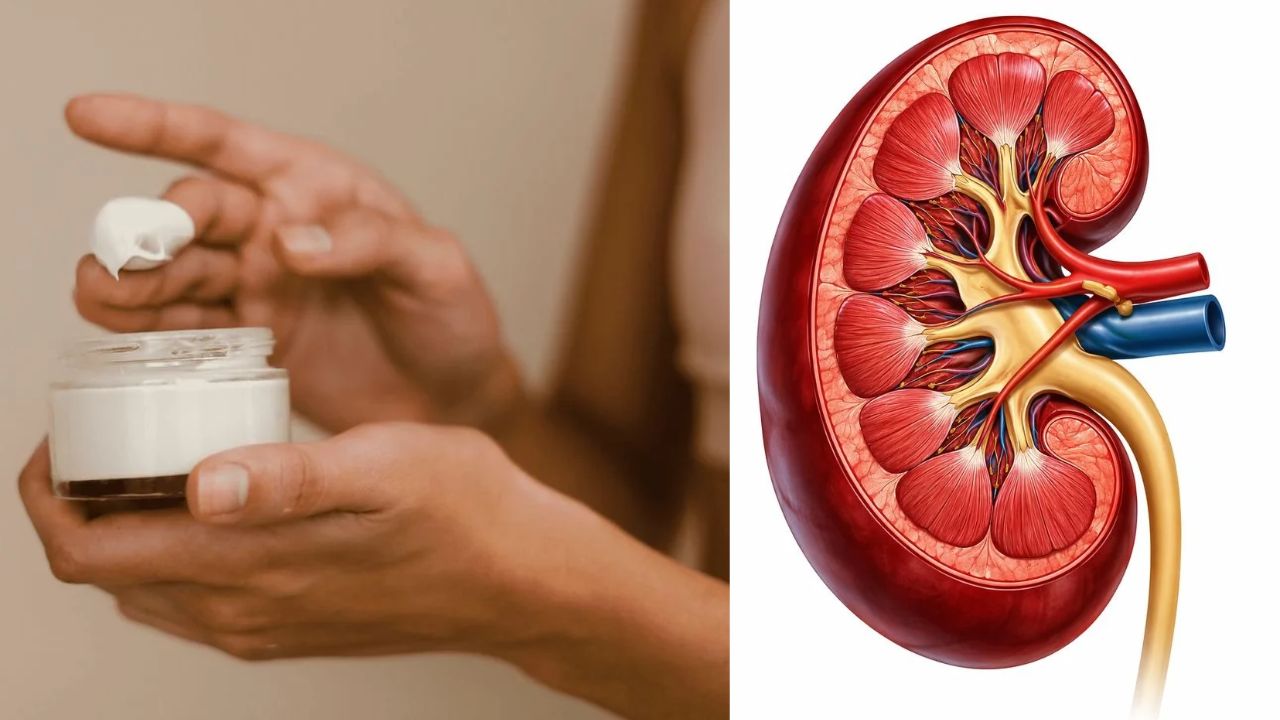
A mercury-laced fairness cream allegedly linked to a serious kidney disorder in a 17-year-old girl has triggered a government investigation in Kerala. (Img: Pinterest)
Thiruvananthapuram: The Kerala government has ordered an investigation into the sale of fairness creams containing toxic levels of mercury after a 17-year-old girl from Malappuram developed a serious kidney disorder allegedly linked to prolonged use of one such product purchased online.
State Health Minister K Muraleedharan said the government would examine the sale and distribution of these cosmetic products and consider regulatory measures to prevent consumers from being exposed to potentially hazardous ingredients. He also cautioned people against purchasing skin-lightening products without verifying their safety.
The teenager is currently recovering at a private hospital in Malappuram, where she was diagnosed with membranous nephropathy, a kidney condition that affects the organ's filtering units and causes excessive protein loss through urine.
According to hospital sources, laboratory analysis of the cream used by the girl detected mercury at a concentration of 1.25 per cent, equivalent to 12,500 parts per million (ppm). This is substantially higher than the permissible limit of one ppm under India's Cosmetics Rules, 2020.
The girl had reportedly been using the product for nearly a year after coming across its promotion on social media. Advertisements by influencers claimed that regular application could help eliminate pimples, dark spots and skin pigmentation.
Doctors said the teenager developed swelling in different parts of her body, along with other complications, before medical investigations revealed abnormally elevated mercury levels in her system. Further examination of the cosmetic product established it as the suspected source of exposure.
The medical team treating her attributed the kidney condition to prolonged exposure to mercury through the cream. Mercury toxicity can damage the kidneys' filtering structures, resulting in significant protein loss and fluid accumulation in the body. In severe cases, untreated exposure can lead to lasting kidney damage and neurological complications.
The incident has also brought renewed attention to the potential health consequences of unregulated skin-lightening products, with Malayalam singer Salim Kodathoor claiming that he too developed membranous nephropathy after using a fairness cream containing high levels of mercury.
In a video shared on social media, Kodathoor recounted that he had started using the product on the recommendation of a friend and noticed a visible change in his complexion within a month. However, he subsequently began experiencing health problems.
He said what initially appeared to be a urinary infection was followed by swelling in different parts of his body. Medical investigations revealed excessive protein loss and linked his condition to mercury exposure from the cream. He added that he was yet to make a complete recovery.
Membranous nephropathy is a kidney disorder in which damage to the glomeruli the tiny filtering structures in the kidneys allows proteins to leak into urine. The condition can cause swelling, particularly in the feet, legs and face, and may lead to nephrotic syndrome.
Mercury exposure is recognised as one of the possible causes of secondary membranous nephropathy. Prolonged exposure to the toxic metal can have serious consequences for kidney function and other organs.
Under the Cosmetics Rules, 2020, the permissible level of unintentional mercury in finished cosmetic products, except those intended exclusively for the eye area, is restricted to one ppm. The concentration detected in the Malappuram teenager's cream was therefore 12,500 times the prescribed limit.
India is also a signatory to the Minamata Convention on Mercury, an international agreement aimed at protecting human health and the environment from the adverse effects of mercury.
The latest incident is not the first reported case of mercury-associated kidney disease in Kerala. A 2022 study published in the Indian Journal of Dermatology documented a case involving a 47-year-old woman who developed membranous nephropathy following prolonged application of a skin-lightening cream.
The woman had reportedly used the product on her face and forearms for approximately two years before developing swelling in her feet. A kidney biopsy confirmed the condition, while laboratory analysis detected mercury at 7,590 ppm in the cream.
The study highlighted the potential dangers of mercury-containing skin-lightening products, noting that the metal can suppress melanin production but also cause serious toxic effects, including kidney damage, skin reactions, tremors, headaches and fatigue.
The latest case has once again raised concerns over the availability and online promotion of cosmetic products containing hazardous substances, particularly those marketed to young consumers with promises of rapid changes in skin tone and appearance.

