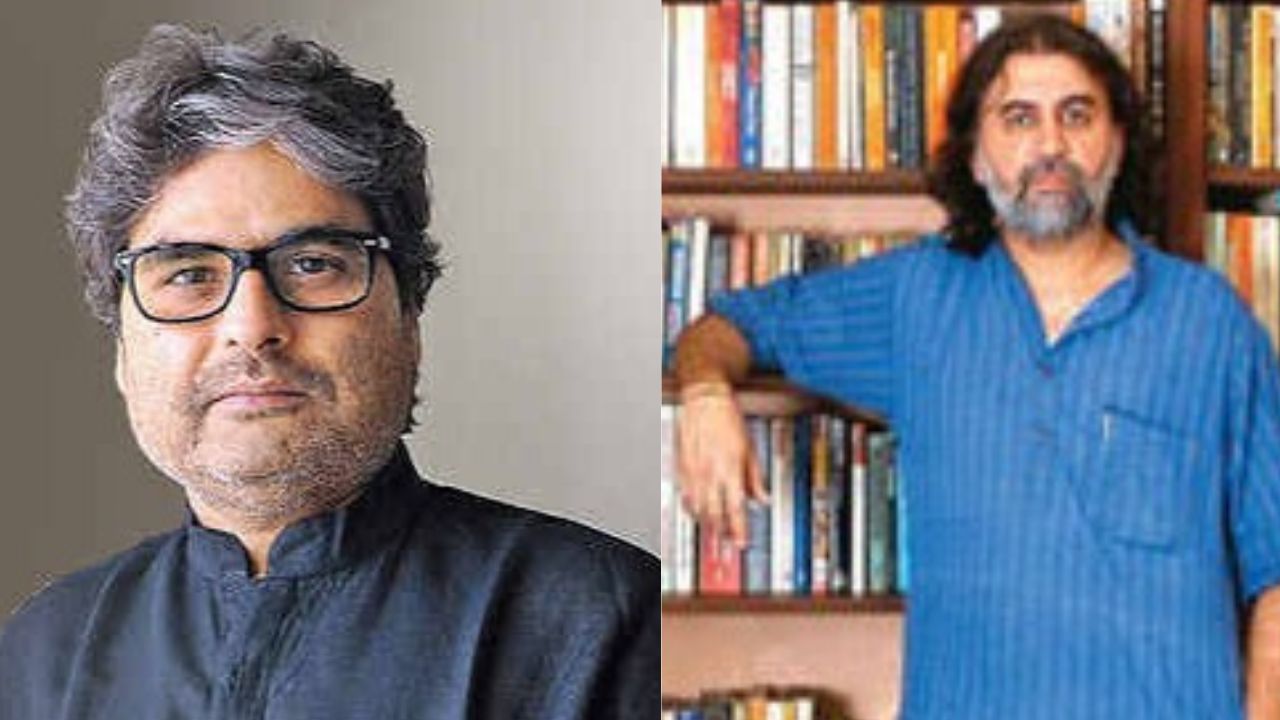
Mumbai: Acclaimed filmmaker Vishal Bhardwaj has turned his eyes on the high-profile Goa sexual assault case of 2013, which recently led to the conviction and 10-year sentence to former Tehelka editor Tarun Tejpal, bringing together courtroom drama, legal complexities and multiple perspectives in a Rashomon-style narrative.
The filmmaker, known for exploring morally challenging stories and complicated human relationships through movies like Maqbool, Omkara, Haider and Talvar, is now turning his attention towards one of India’s most debated criminal cases involving former Tehelka editor Tarun Tejpal, famously known as the "Che Guevara" of Indian journalism.
The project comes after a major legal development in the decade-old case, when the Goa Bench of the Bombay High Court overturned the trial court’s acquittal order and convicted Tejpal, sentencing him to 10 years of rigorous imprisonment. The upcoming film is expected to examine the case through different viewpoints, focusing on the legal battle, evidence analysis, courtroom arguments, personal experiences and the complicated process of understanding truth in criminal investigations.
Bhardwaj reportedly travelled to Goa during the court proceedings and closely studied the 527-page trial court judgment multiple times. The filmmaker was particularly influenced by the differences between the trial court’s decision and the Bombay High Court’s verdict. The contrasting interpretation of evidence, witness statements, legal principles and circumstances surrounding the case became the creative foundation for his upcoming project.
Instead of presenting the case as a simple crime story, Bhardwaj aims to explore how the same incident can be interpreted differently by investigators, lawyers, judges, accused persons, survivors and society. The film is expected to highlight the complexity of judicial processes, where facts, testimonies and documentary evidence often become subjects of legal interpretation.
The storytelling approach planned by Vishal Bhardwaj is inspired by Japanese filmmaker Akira Kurosawa’s iconic 1950 movie Rashomon. The Rashomon technique presents different versions of the same event through multiple characters, showing how memory, perspective and personal experiences can influence the understanding of truth.
This format is often used in crime dramas and courtroom stories where evidence and testimony create multiple interpretations of an incident. Bhardwaj’s planned adaptation is expected to follow a similar structure, allowing audiences to view the Tarun Tejpal case from different angles rather than following only one narrative.
Vishal has earlier explored complex criminal investigations through his writing. He wrote the screenplay for Meghna Gulzar’s critically acclaimed flick Talvar, which was based on the Aarushi Talwar murder case. The film used a Rashomon-inspired structure by presenting different investigative theories and highlighting how the same evidence can lead to different conclusions.
With the Tarun Tejpal project, Bhardwaj appears to be returning to a similar storytelling format where legal documents, investigations and conflicting viewpoints become central elements of the narrative.
The case dates back to November 2013, when a junior female colleague accused Tarun Tejpal of sexually assaulting her inside a hotel elevator during an event in Goa. Following the allegations, police registered an FIR and Tejpal faced criminal proceedings under provisions related to sexual assault, sexual harassment and abuse of authority.
The investigation involved witness statements, electronic communications, documentary evidence and detailed courtroom arguments from both prosecution and defence sides. The case remained in legal proceedings for several years before a Goa sessions court acquitted Tejpal of all charges in 2021. The Goa government challenged the acquittal before the Bombay High Court, arguing that the trial court’s findings required judicial examination.
In August 2026, the Goa Bench of the Bombay High Court reversed the acquittal decision and convicted Tejpal, awarding him a sentence of 10 years of rigorous imprisonment. The High Court examined issues related to evidence evaluation, survivor testimony and the legal understanding of responses to trauma. After the conviction, Tejpal maintained that he was wrongly convicted and indicated that he would approach the Supreme Court against the Bombay High Court order. The case may continue to remain under judicial scrutiny as further legal proceedings are expected.
Vishal Bhardwaj is reportedly planning to approach the project as a neutral observer and avoid beginning the film with a fixed conclusion. The filmmaker wants the story to examine different perspectives connected with the case and allow audiences to understand the complexities involved in a high-profile criminal trial.
For the lead role, Bhardwaj is reportedly looking for an actor who can approach the character without being influenced by existing public debates or court judgments. The movie is expected to be produced by Vishal Bhardwaj along with a major Bollywood production house, although the production studio, cast and release date have not been officially revealed.
With its combination of crime, law, media controversy and questions surrounding justice, the upcoming film could become one of the most discussed Bollywood projects in the coming years. The venture is also expected to spark fresh conversations around criminal justice systems, workplace safety, media ethics, courtroom interpretation and the difficult relationship between law, evidence and public perception.

