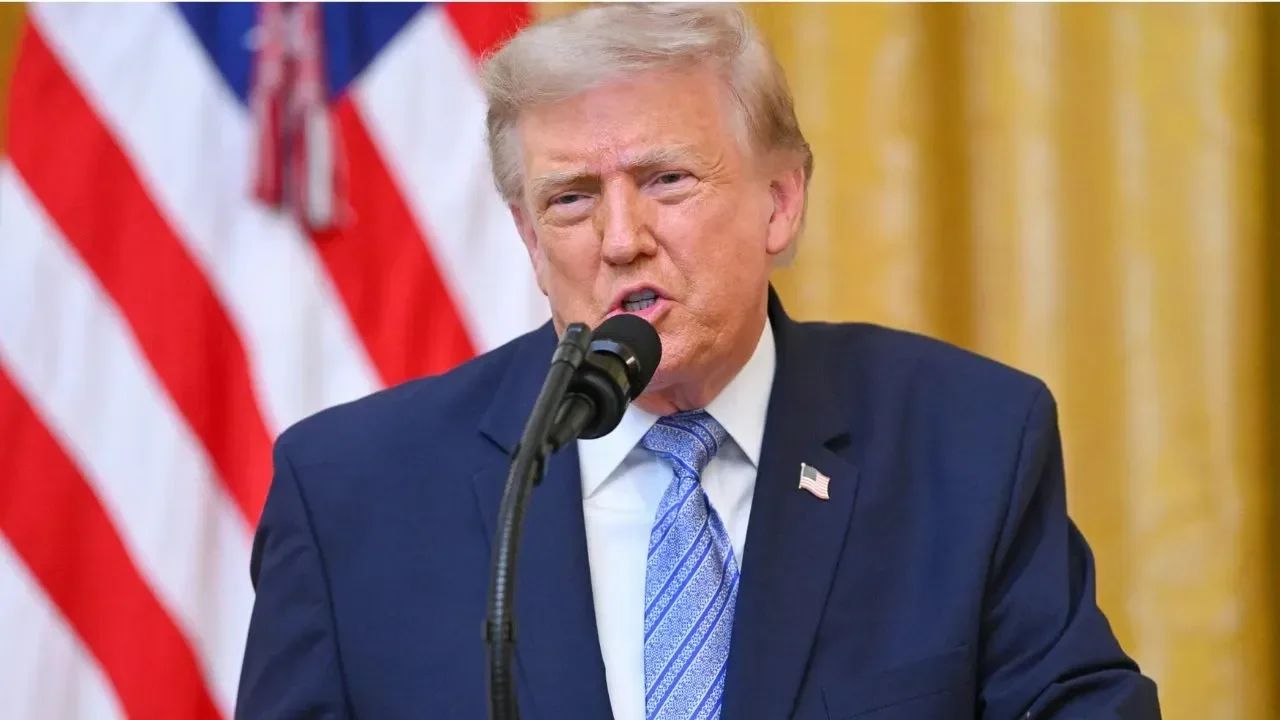
India faces fresh US tariff threat over Russian oil (Img: Dynamite News)
India is facing a fresh tariff threat from the Donald Trump administration after the US House of Representatives approved a sweeping package of sanctions aimed at Russian officials and major sectors of the country’s economy.
The Lindsey O. Graham Sanctioning Russia and Iran Act of 2026 could give US President Donald Trump the authority to impose tariffs of up to 100 per cent on countries buying Russian energy, including India and China. The legislation, which cleared the US Senate last month, passed the House 262-159 and now goes to Trump for his signature.
The legislation has faced resistance in the House, including from Democrats who argued that it would give the president excessive authority over tariffs. An amendment moved by Democratic Congressman Steny Hoyer specifically identifies 10 countries — China, India, the UAE, Turkiye, Singapore, Azerbaijan, Kazakhstan, Hungary, Kyrgyzstan and Slovakia — as potentially subject to tariffs of up to 100 per cent under the bill’s secondary tariff provisions.
Importantly, the amendment does not automatically impose a 100 per cent tariff on India. Such duties could be imposed only if the legislation becomes law and Trump decides to use the authority granted to him.
Explaining his amendment, Hoyer told lawmakers they could not control the president’s actions but could make their position on the Ukraine war clear. "If we fail to pass this bill, there will be cheers in the Kremlin and tears in Kyiv," he said.
He said the amendment would "tighten the scope of the legal tariff authority by naming the countries."
India’s purchases of Russian oil reached an 11-month high in April this year following the US and Israel’s war with Iran, adding further significance to the proposed measures.
The legislation seeks sanctions against Russia’s leadership and energy sector, while also targeting the "shadow fleet" of vessels used to help Moscow bypass sanctions on oil shipments.
It would also authorise Trump to impose substantial tariffs on India, China and other countries to discourage their reliance on Russian oil and gas, alongside additional sanctions against Iran.
"China and India, you better buy your oil and gas somewhere else," Democratic Senator Richard Blumenthal told reporters after the bill’s passage.
Democratic Senator Jeanne Shaheen said, "Russia is getting that oil and gas sold by using the shadow fleet, which means that it's being bought at less than market rates, and it's going mostly to countries like China and India."
"China is the top user of Russian oil and gas, and we need to send a very strong message, not just to Putin, but to China, and to anybody who is buying Russian oil and gas, that they are going to pay a price for that," Shaheen said.
The legislation has drawn strong criticism from several Democrats. Gregory Meeks, the top Democrat on the House Foreign Affairs Committee, called the bill "deeply flawed."
"White House lawyers drafted the current text to maximise President Trump's authority to impose new import taxes on the American people, and to minimise any obligation to actually impose new sanctions on Russia or its enablers," he said.
Meeks said he would back the bill if the secondary tariff provisions were removed, but Republicans rejected efforts to narrow those powers.
House Democratic leader Hakeem Jeffries said Democrats would continue supporting Ukraine until victory is achieved, "but this bill does not provide a path to secure that."
The House vote reflected divisions within both parties. A total of 58 Democrats supported the legislation while 152 opposed it. Among Republicans, 203 voted in favour and seven against.
Economists have warned that any increase in US tariffs could affect India’s growth outlook. Aditi Nayar, Chief Economist at ICRA Ltd, told Fortune India, "Any imposition of higher tariffs by the US, and the associated uncertainty, would cast a downside on Indian growth prospects."
The actual impact on India will depend on whether the legislation becomes law and whether Trump chooses to exercise the powers it provides. Even so, the proposal adds another source of uncertainty to already complicated India-US trade relations.
India’s relationship with Russia has strengthened since the Ukraine war, largely due to increased Russian oil exports. At the same time, trade ties between New Delhi and Washington have faced tensions.
In August last year, Trump imposed an additional 25 per cent tariff on Indian imports of Russian crude, on top of an existing 25 per cent reciprocal tariff. The additional Russia-related duty was removed in February 2026, while the reciprocal tariff was reduced to 18 per cent under a US-India trade framework that remains unresolved.
If Trump eventually imposes a 100 per cent tariff on Indian goods under the new legislation, it would represent the highest US duties India has faced during his presidency. This would be in addition to the 10 per cent tariff currently imposed by the US on Indian imports as a penalty for what Washington says is insufficient action to prevent imports of goods made using forced labour.

