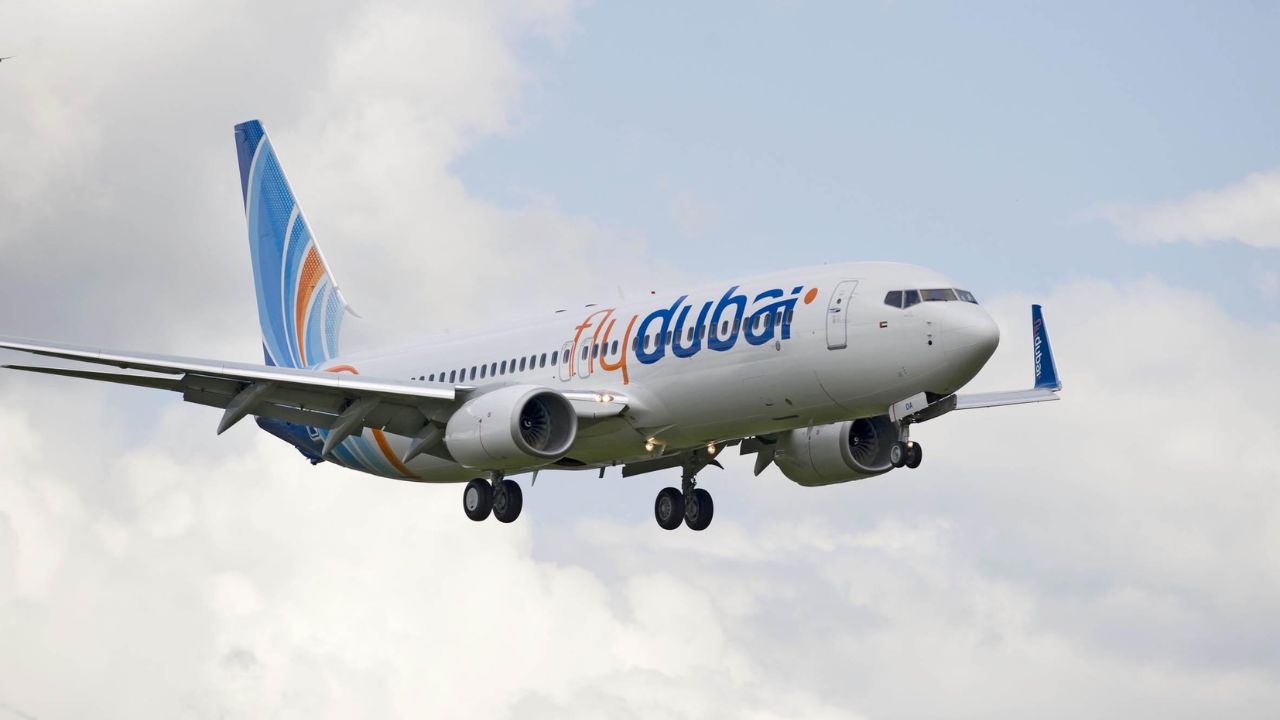
Flydubai flight diverted after hijack alert over Saudi Arabia (Img: X)
Tel Aviv: A flydubai Boeing 737 MAX travelling from Dubai to Tel Aviv turned back over northern Saudi Arabia and landed safely at Tabuk airport after declaring an emergency, according to flight-tracking data.
According to Israeli media reports, the aircraft, carrying around 180 passengers, transmitted an emergency code during the flight. Some flight-tracking services also indicated that it briefly sent a code associated with hijacking or unlawful interference, although that transmission could not be independently confirmed.
According to Flightradar24 data, the aircraft initially squawked 7700, the internationally recognised transponder code used to indicate a general emergency.
Some flight trackers subsequently showed the aircraft briefly switching to 7500, the code associated with hijacking or unlawful interference. However, the reported 7500 transmission could not be confirmed.
The incident prompted a security response in Israel, with Israeli Air Force fighter jets reportedly scrambled towards the aircraft. Israeli media reports also said Prime Minister Benjamin Netanyahu and Defence Minister Israel Katz held emergency consultations.
The aircraft eventually turned back and landed safely at Tabuk airport in Saudi Arabia.
Flightradar24 tracking information showed notable changes in the aircraft’s flight parameters before it changed course.
The aircraft reportedly experienced a sudden drop in altitude, while its ground speed also fluctuated before it turned away from its original route towards Israel.
After changing direction, the aircraft was reportedly flying at an unusually low altitude of around 15,000 feet. It later stopped appearing on several flight-tracking websites and was last seen in the vicinity of Tabuk airport.
Media reported that the aircraft’s transmission of an “unlawful interference" signal, together with the general emergency signal, resulted in an immediate security response.
However, the available tracking information did not establish that the aircraft had actually been hijacked.
As the initial concerns over a possible hijacking emerged, subsequent reports suggested that the incident may have stemmed from an altercation between the pilots rather than an attempt to seize control of the aircraft.
According to Israeli security sources cited by Israeli media, the emergency and unlawful-interference signals were apparently linked to an altercation between the pilots on board.
The precise circumstances surrounding the reported confrontation remain unclear, and there has been no definitive public account explaining why the emergency signals were transmitted.
Meanwhile, Walla reported that the 7500 code was later cancelled and that a technical problem could also have been involved.
Reports say authorities were still trying to establish whether the incident was security-related or caused by a technical issue.
The Israeli military also conducted an assessment following the incident. IDF Chief of Staff Lt. General Eyal Zamir held a review with senior military officers, according to reports.
Those involved included Israeli Air Force chief Major General Omer Tischler, Operations Directorate chief Major General Itzik Cohen and Intelligence Directorate chief Major General Shlomi Binder.
No further details from the military assessment were immediately available.
The incident occurred amid heightened sensitivity surrounding aviation routes across the region. Israel’s aviation authority currently has several active notices affecting operations in the Tel Aviv flight information region, including restrictions and warnings covering parts of the area.
With the aircraft safely on the ground in Saudi Arabia, the circumstances behind the emergency declaration, the reported 7500 transmission and the subsequent diversion remain under examination.

