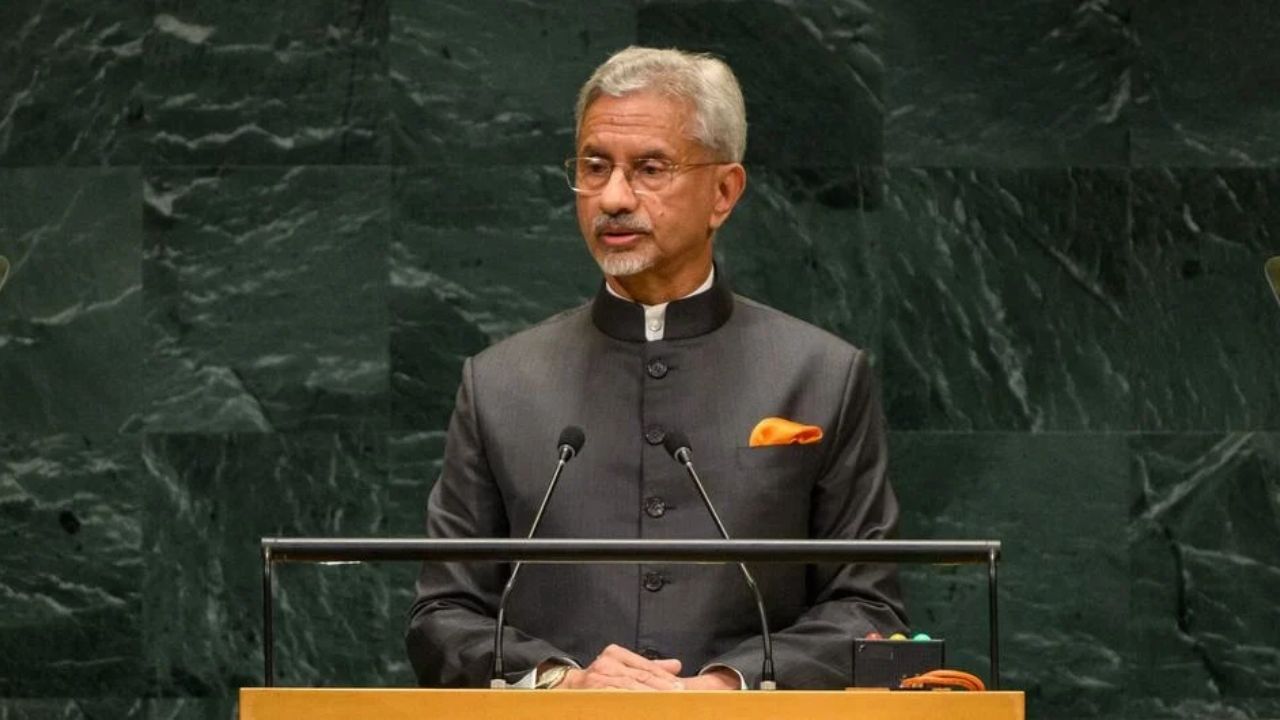
India’s External Affairs Minister speaks on global conflicts and changing power equations at United Nations. (Img: UN)
New York:
External Affairs Minister Dr. S. Jaishankar has delivered a strong message at the 81st United Nations General Assembly, highlighting that the world is entering a new phase of geopolitical transformation where power is becoming more distributed and global institutions face growing pressure to adapt.
At a time when conflicts, economic uncertainty and strategic competition are dominating international affairs, India has called for a reformed global system that gives wider representation to countries and ensures transparent decision-making.
Jaishankar said the post-1945 international order is facing new realities as multiple centres of power emerge across the world. He highlighted that the transition towards a multipolar world will bring challenges but cannot be stopped as nations seek a more balanced global framework.
The External Affairs Minister’s remarks come amid growing concerns over wars, supply chain disruptions, energy insecurity and increasing tensions between major powers. His address focused on how global crises are affecting not only countries involved in conflicts but also nations far away from battle zones.
## India’s Big Message at UN: Global Institutions Need Change
Addressing world leaders at the UN General Assembly, Jaishankar said international peace cannot be maintained without broader participation and meaningful reforms.
He stressed that a diverse global community requires dialogue, consultation and transparent processes instead of decisions being controlled by a limited group of countries.
India has repeatedly argued for reforms in global institutions, including greater representation for developing nations in international decision-making bodies.
According to Jaishankar, the changing geopolitical environment shows that existing structures need to reflect current realities rather than the situation of decades ago.
## Gulf Tensions, Maritime Security and West Asia Crisis
During his address, Jaishankar raised concerns over continuing instability in West Asia and tensions affecting international shipping routes.
He highlighted the importance of protecting commercial vessels and maritime workers, as disruptions in key waterways can impact global trade, energy supplies and economic stability.
On the Israel-Palestine issue, India maintained that a lasting solution requires efforts towards a two-State framework, along with protection of civilians, reduction of tensions and uninterrupted movement of humanitarian assistance, energy and commerce.
The External Affairs Minister also spoke about the Russia-Ukraine conflict, expressing concern over the continuation of hostilities and the wider impact of the war on global food security, fuel prices and economic conditions.
## ‘Everything Is Being Weaponised’: Jaishankar’s Warning on Global Competition
Jaishankar highlighted another major challenge facing the international system — the increasing use of economic and technological tools as instruments of strategic pressure.
He pointed towards finance, market access, technology, supply chains, resources and connectivity as areas where competition among nations is intensifying.
According to India’s External Affairs Minister, countries are increasingly focusing on de-risking and diversification strategies to protect their interests. However, this environment has also created uncertainty and reduced trust between nations.
Developing economies have been among the most affected due to rising costs, energy challenges, food security concerns and difficulties in accessing financial resources.
## Terrorism Remains a Major Challenge for Global Security
Jaishankar also highlighted terrorism as one of the biggest threats to international peace and stability.
India has maintained that cross-border terrorism requires a coordinated global response and that countries supporting terrorist activities must face accountability.
At the UN platform, India reiterated its position that there should be no compromise on efforts to counter terrorism.
## India Highlights Growth, Digital Infrastructure and Global Support
While discussing India’s development journey, Jaishankar highlighted the country’s economic progress, digital transformation and inclusive growth model.
He pointed out the role of digital public infrastructure in improving governance, financial inclusion and delivery of public services.
India’s international development cooperation was also highlighted, with projects focused on areas such as renewable energy, infrastructure development, agriculture, technology and capacity building in partner countries.
Jaishankar said India’s growth story has implications beyond its borders as the progress of a country representing a significant share of humanity contributes to global development goals.
## Changing Definition of Global Power
The External Affairs Minister also explained that power in today’s world is no longer measured only through military capability.
Economic strength, technological innovation, manufacturing capacity, energy security, resources and skilled human talent have become important elements of national influence.
He said globalisation has transformed the way countries compete and cooperate, making it essential for nations to strengthen domestic capabilities while remaining connected with the world.
For India, strengthening manufacturing, technology ecosystems and innovation capacity remains a key priority in the changing global environment.
## What Happens Next?
Jaishankar’s UNGA address reflects India’s broader diplomatic push for a larger role for developing countries in global decision-making.
As geopolitical tensions continue and international institutions face questions over representation and effectiveness, the debate over reforms in global governance is expected to remain a major issue in international diplomacy.
India’s message at the UN focuses on building a system where cooperation, dialogue and wider participation become central to addressing global challenges.

