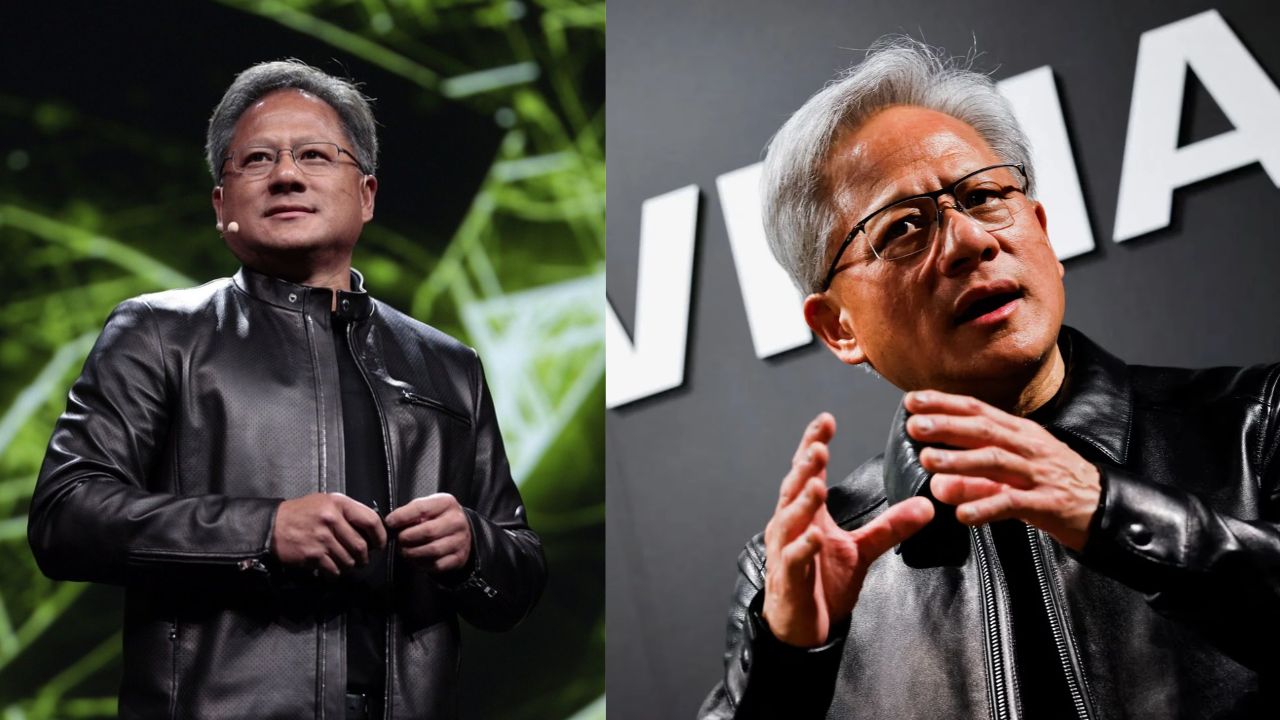
Jensen Huang's potential comeback faces challenges amid allegations, regulatory scrutiny and questions over corporate governance. (Img: Pinterest)
Santa Clara: Jensen Huang's potential return to Nvidia as chief executive officer (CEO) has triggered an unprecedented debate over corporate leadership, boardroom accountability and the future of the global artificial intelligence industry. A growing campaign involving Tesla CEO Elon Musk, leading technology executives, Nvidia employees and more than 158,000 petition signatories is urging the semiconductor giant to reconsider its decision to remove Huang from the top position.
According to a Financial Times report, the former Nvidia chief executive is exploring avenues to regain control of the company just days after his departure. An associate of Huang reportedly revealed that his supporters are assembling a task force comprising influential technology executives to build momentum for his reinstatement.
The campaign is also expected to seek support from the White House, with Huang reportedly backing efforts to persuade influential political and business figures to intervene in the leadership controversy.
Huang's departure has created considerable uncertainty around the leadership of one of the world's most valuable technology companies, particularly at a time when demand for artificial intelligence processors, advanced computing infrastructure and data-centre technologies continues to reshape the global technology landscape.
The campaign to bring Huang back gathered momentum over the weekend, with an open letter appealing to Nvidia's board of directors to reverse its decision. Among the prominent supporters endorsing the initiative are Elon Musk, who leads Tesla and SpaceX, and Epic Games CEO Tim Sweeney.
The online petition has reportedly attracted more than 158,000 signatures, reflecting the considerable support Huang continues to command within sections of the technology industry. His supporters believe that Nvidia's remarkable growth, technological dominance and strategic positioning in the global semiconductor market are closely associated with his leadership.
Several Nvidia employees have also expressed support for his reinstatement. Following his departure, members of the workforce reportedly called for his return through public appeals and an open letter. An associate of Huang indicated that influential figures across the technology ecosystem remain sympathetic to his leadership, although executives associated with companies developing the most advanced artificial intelligence models may have different strategic considerations.
The campaign has also attracted the attention of influential institutional investors. On November 13, Altimeter Capital founder Brad Gerstner and Atreides Management chief Gavin Baker issued a letter urging Nvidia's board to examine every available option, including the possibility of bringing Huang back.
The investors highlighted the company's extraordinary performance under his leadership and expressed concerns about the strategic uncertainty created by his sudden departure. Their intervention has intensified pressure on Nvidia's board, which must balance shareholder expectations, corporate governance obligations and the company's long-term business interests.
However, support for Huang's reinstatement is not without reservations. Even some participants in the campaign reportedly acknowledge that allegations involving an inappropriate relationship with a subordinate could create serious corporate governance complications and potentially provide grounds for disciplinary action. The controversy therefore extends beyond a conventional CEO succession dispute, raising questions about executive conduct, workplace policies and the standards of accountability expected from senior corporate leaders.
The campaign to reinstate Huang could face resistance from influential members of the US administration. US Treasury Secretary Scott Bessent reportedly called for a radical restructuring of Nvidia's leadership on November 15, signalling that some senior officials may prefer a broader management overhaul rather than Huang's return.
Bessent's position adds another dimension to the controversy, particularly because Nvidia occupies a strategically important position in the US technology and national security landscape. The company is central to the global artificial intelligence supply chain, with its graphics processing units (GPUs) powering advanced AI models, hyperscale data centres, scientific computing and other critical digital infrastructure.
The leadership dispute is therefore unfolding against the backdrop of intense geopolitical competition over semiconductor manufacturing, advanced computing capabilities and restrictions on technology exports to China.
Huang's departure followed reports concerning his alleged relationship with Alice Huang, a Chinese businesswoman reportedly suspected by US authorities of having links to Chinese intelligence activities.
The allegations have not been independently established in the material cited in the report. Nevertheless, the controversy has intensified scrutiny of Nvidia's internal governance, executive relationships and regulatory compliance mechanisms.
Separate allegations concerning relationships with subordinates have also complicated the former CEO's position. The reported association with Alice Huang has raised additional questions about Nvidia's compliance with US regulations governing the export and sale of advanced artificial intelligence chips to Asian customers, particularly entities that could have connections with China.
Washington has maintained strict controls on the export of advanced semiconductor technology to China because of its potential military, surveillance and strategic applications. Consequently, any potential conflict-of-interest concerns involving senior executives at a company as strategically significant as Nvidia could attract heightened regulatory and national security scrutiny.
Nvidia announced Huang's departure on November 12 and appointed company Chief Financial Officer Colette Kress as interim chief executive. Kress is now responsible for maintaining operational continuity, investor confidence and strategic stability during a particularly sensitive period for the semiconductor industry.
The company is also preparing to announce its quarterly financial results on Tuesday, making the timing of the leadership controversy especially significant. Investors will be closely monitoring Nvidia's financial performance, management commentary, artificial intelligence demand and business outlook for indications of how the leadership transition could affect its growth trajectory.
A prolonged succession dispute could potentially introduce additional uncertainty into market expectations surrounding the company's future direction.
While Huang's supporters are campaigning for his reinstatement, Nvidia's board is also understood to be considering alternative candidates. A media report published on November 13 indicated that directors had approached Arm CEO Rene Haas as a potential successor.
Haas leads Arm, a major semiconductor intellectual property and chip-design company whose architecture is widely used across smartphones, computing devices, data centres and other technology platforms.
His reported consideration highlights the importance Nvidia's board is placing on identifying an experienced technology executive capable of navigating the increasingly competitive artificial intelligence and semiconductor markets. However, Nvidia's board informed the Financial Times that a formal CEO selection process had not yet commenced.
Unlike several prominent technology entrepreneurs who retain controlling stakes in their companies, Huang does not possess a shareholding structure that would allow him to independently overturn the board's decision.
His potential return would therefore depend heavily on the willingness of Nvidia's directors to reconsider their position and the ability of his supporters to demonstrate that reinstatement would serve the company's long-term interests.
The board must also evaluate the implications of the allegations, potential regulatory exposure, employee sentiment and investor confidence before making any leadership decision. The coming days could prove crucial for Nvidia as it navigates an increasingly complicated corporate governance crisis.
With Elon Musk and thousands of technology supporters backing Huang, major investors pressing for reconsideration and US officials calling for a leadership overhaul, the controversy has evolved into a significant test of corporate accountability and boardroom authority.
Whether Huang manages to return to the company he helped build or Nvidia moves towards a new leadership structure remains uncertain. The outcome could have implications extending beyond the company's executive succession, particularly for the global artificial intelligence and semiconductor industries.

