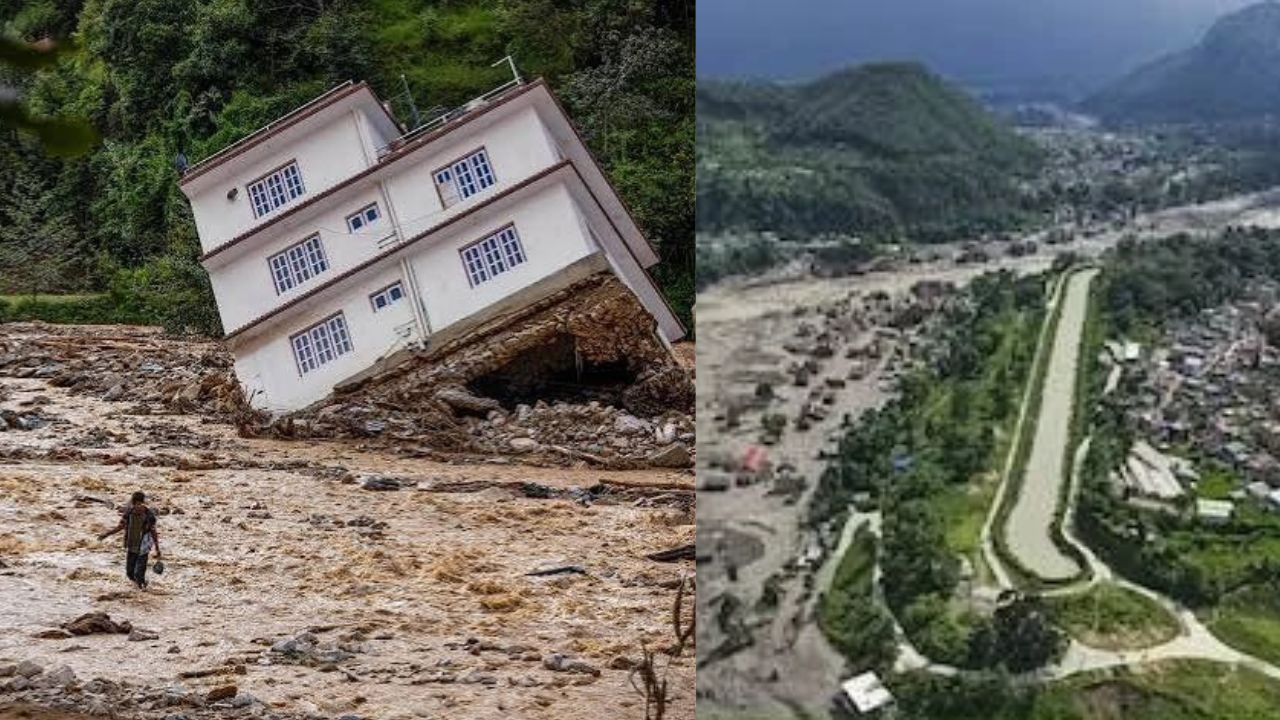
From destroyed villages to underground rescue missions, Nepal is facing one of its biggest humanitarian crises in years.
Kathmandu: A massive rescue operation is underway after devastating flash floods and mudslides along the Nepal-China border killed 1,385 people and left more than 5,500 missing. As entire communities struggle with destruction, rescuers are racing against time to locate survivors, including workers trapped inside debris-filled hydropower tunnels.
The disaster has emerged as one of the deadliest Himalayan catastrophes in recent years, affecting Nepal and China’s Xizang Autonomous Region, also known as Tibet. Thousands of families have been displaced, critical infrastructure has been destroyed and rescue teams are facing some of the most challenging conditions in the mountainous terrain.
According to Nepal’s National Disaster Risk Reduction and Management Authority, around 5,000 people remain unaccounted for in Nepal alone, including 589 foreign nationals. More than 13,000 people have already been rescued from flood-affected areas as emergency teams continue operations across the worst-hit regions.
Official figures from Nepal and China indicate that around 850 foreign nationals are among those still missing, highlighting the international scale of the disaster.
The deadly floods and landslides struck after extreme weather conditions triggered massive water flows, mudslides and debris movement across vulnerable Himalayan areas. Several settlements located near river systems were overwhelmed, leaving behind widespread destruction.
Nepal has recorded the majority of casualties, with more than 1,300 deaths reported from the disaster. In China’s southwestern Xizang Autonomous Region, at least 43 people have been confirmed dead, while 519 others remain missing.
The rising death toll has intensified pressure on authorities as rescue agencies continue searching through damaged villages, riverbanks and infrastructure sites.
The scale of the destruction has made recovery efforts extremely difficult, with blocked roads, unstable slopes and damaged communication networks slowing down emergency response operations.
One of the biggest challenges for rescue teams is reaching people trapped inside hydropower tunnels buried under massive amounts of mud, rocks and debris.
Several workers are believed to remain trapped inside underground tunnels connected to major hydropower projects. Rescue operations are continuing in these high-risk areas as teams attempt to clear debris and create access routes. A major breakthrough came when three workers were rescued from tunnel sites after days of uncertainty.
Two Nepali workers were pulled out alive from the Trishuli 3A hydropower project tunnel, while a Chinese national was rescued from a tunnel linked to the Upper Trishuli I hydropower project after reportedly surviving nearly 10 days underground.
The rescues brought a moment of hope amid the widespread devastation and highlighted the extraordinary efforts of emergency teams working in dangerous conditions.
An Indian tunnel-rescue team has joined hands with the Nepal Army in one of the most challenging phases of the rescue operation. The Indian team, working alongside Nepalese forces, has constructed a temporary track inside the Chilime tunnel in Nepal’s Rasuwa district. The newly built route is expected to allow heavy machinery to enter deeper sections of the tunnel buried beneath layers of debris.
The move is aimed at accelerating excavation work and improving access to areas where trapped workers and survivors may still be located. The cooperation between India and Nepal has become a key part of the ongoing emergency response as both countries work together to tackle the unprecedented disaster.
Amid the ongoing rescue operations, Nepal observed a national day of mourning to honour those who lost their lives in the tragedy. The mourning period coincided with the 13th day after the disaster, a significant observance in Hindu traditions when families perform rituals in memory of the deceased.
The Nepal government lowered the national flag at government offices across the country and at Nepali diplomatic missions abroad as a mark of respect. For thousands of families waiting for news about missing relatives, the mourning day became a moment of grief, remembrance and uncertainty.
The floods and mudslides have caused extensive damage across northern and central Nepal, destroying homes, roads, bridges, hydropower facilities and other essential infrastructure.
Thousands of families have been forced to leave their homes, while local economies dependent on agriculture, tourism and small businesses have suffered major setbacks.
The destruction of transport networks has also created challenges for relief agencies trying to deliver food, medicine and emergency assistance to remote communities.
The Nepal Army, Nepal Police, Armed Police Force and disaster response agencies are leading rescue, recovery and relief operations across affected regions. Authorities are focusing on locating missing people, recovering victims, providing medical assistance and supporting displaced families.
However, officials have warned that rebuilding damaged communities will require significant time and resources due to the scale of destruction and the difficult Himalayan landscape.
Experts have also raised concerns over the increasing frequency of extreme weather events in mountain regions, highlighting the need for stronger early warning systems and disaster preparedness measures.
The Nepal flood tragedy has once again highlighted the vulnerability of Himalayan regions to sudden weather changes, landslides and flash floods. Environmental experts have stressed the importance of improving disaster monitoring systems, strengthening infrastructure safety and developing climate-resilient strategies to protect communities living in high-risk areas.
The disaster has also renewed discussions about the safety of hydropower projects located in fragile mountain zones and the need for better emergency response mechanisms.
The immediate priority remains finding missing people, rescuing those trapped and providing relief to thousands affected by the disaster. Authorities are expected to continue large-scale search operations in villages, river areas and hydropower tunnels until all possible survivors are located.
For Nepal, the challenge ahead extends beyond rescue operations. The country now faces the difficult task of rebuilding damaged communities, restoring infrastructure and helping survivors recover from one of the most devastating disasters in its modern history.

