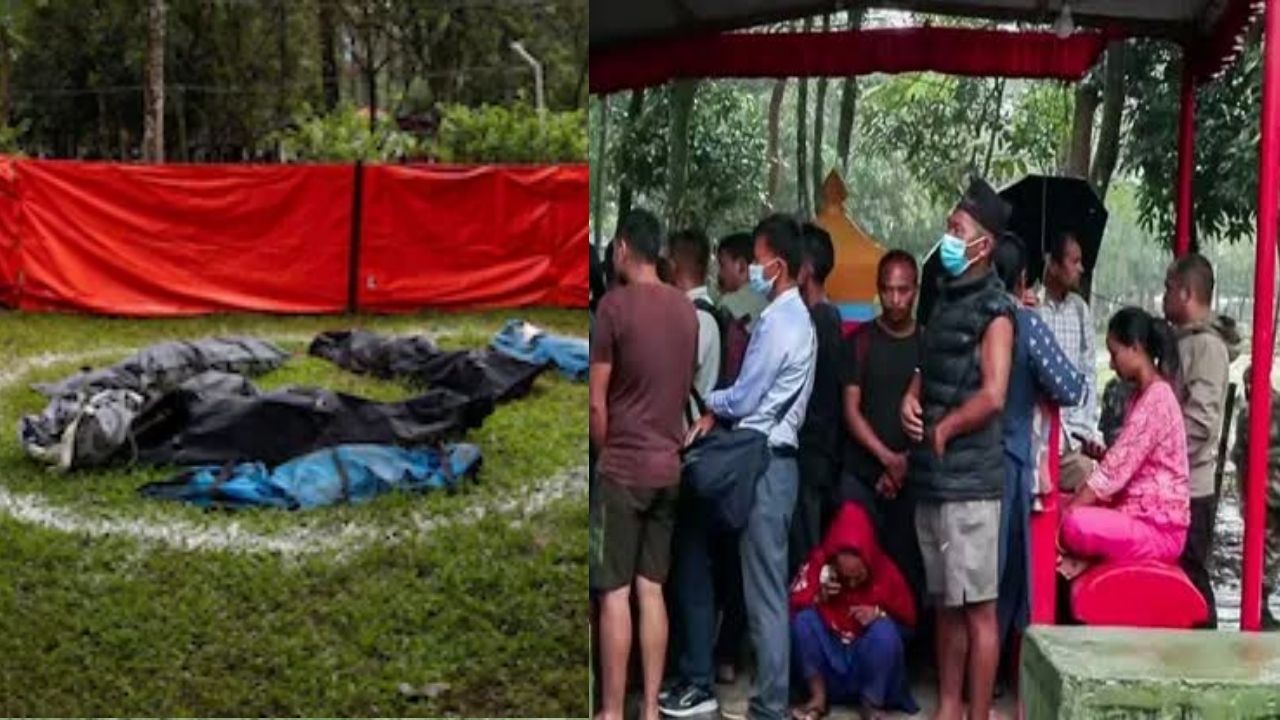
Unidentified Bodies Buried With DNA Records (Img: X)
New Delhi: The devastating floods that swept across Nepal have left hundreds of people dead and thousands missing. As rescue teams continue searching for survivors, authorities are now facing another major challenge identifying the bodies recovered from the disaster zones.
With many victims still unidentified and bodies deteriorating due to lack of storage facilities, Nepal authorities have decided to bury unclaimed bodies while preserving DNA samples and detailed records to help families identify their loved ones in the future.
The flash floods that hit several parts of Nepal caused massive destruction, washing away homes, roads, bridges and entire settlements. Officials said that at least 675 bodies have been recovered so far, while more than 2,400 people remain missing.
Chitwan district, located in southern Nepal near the Indian border, has reported one of the highest numbers of recovered bodies, with hundreds of remains brought to temporary facilities.
However, authorities faced a serious problem as hospitals and storage centres ran out of space to preserve the bodies. With decomposition increasing and health risks rising, officials decided to begin the burial process.
Before burying any unidentified body, authorities are collecting DNA samples and assigning a unique identification number.
Each body is being documented with:
This system will allow relatives searching for missing family members to provide their DNA samples later. If a match is found, authorities will be able to locate and identify the buried remains.
Officials said DNA profiling has already been completed for several bodies, making it possible for families to recover their relatives even after burial.
Authorities are preparing burial sites carefully so that bodies can be recovered in the future if identification is confirmed.
The burial pits are being dug around 1.5 metres deep, with enough space between bodies to allow individual remains to be removed without disturbing others.
Each body is placed inside a marked bag carrying its identification number. Concrete platforms and signboards are also being installed at burial locations. Officials are recording the entire burial process through photographs and videos, while GPS tagging is being used to ensure the exact location can be traced later.
Relatives searching for missing family members will be able to provide DNA samples at designated hospitals across Nepal.
The samples will be compared with DNA collected from unidentified bodies. If a match is established, police and health officials will identify the burial location and begin the process of handing over remains to families.

