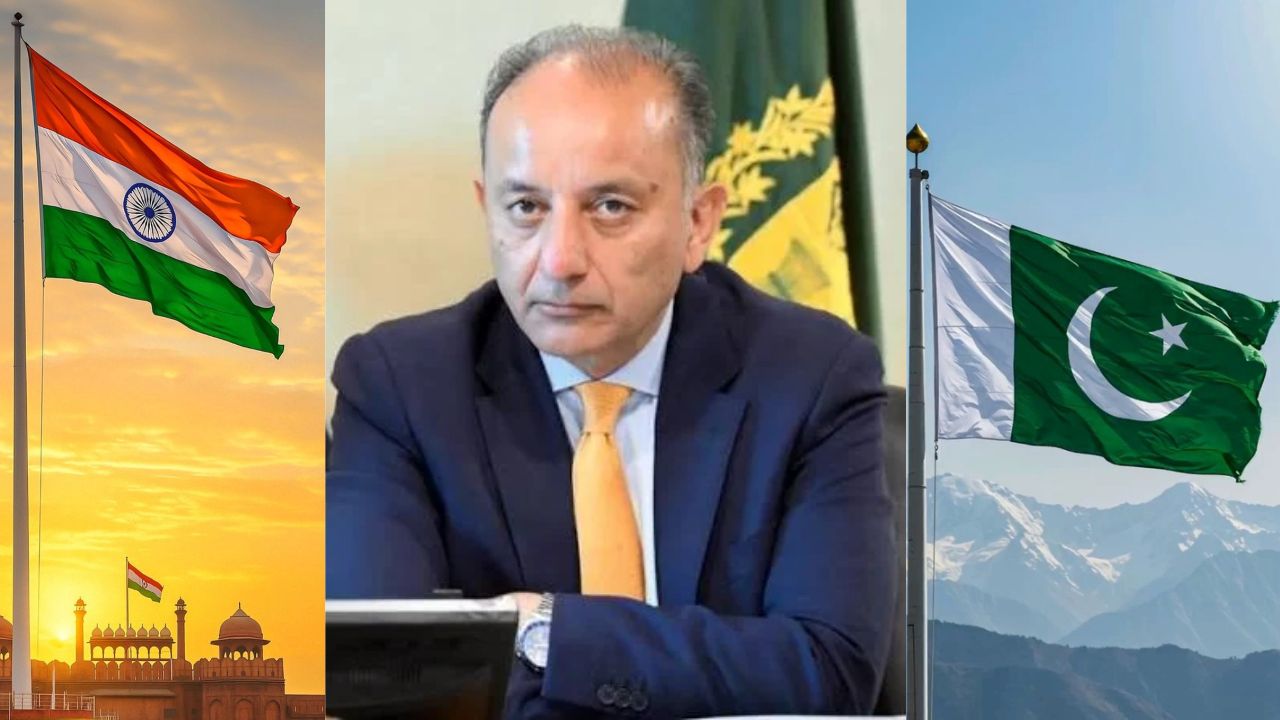
A Pakistani federal minister's proposed India visit marks a significant diplomatic development amid continuing bilateral tensions. (Img: X)
New Delhi: In a significant diplomatic development amid prolonged tensions between India and Pakistan, Islamabad has announced that a federal minister will travel to India later this month to attend a regional multilateral conference in New Delhi. The visit is being closely watched as it would mark the first arrival of a Pakistani federal minister in India since May 2023, preceding the military confrontation between the two countries in May 2025.
Pakistan's Climate Change Minister Musadik Masood Malik will represent Islamabad at the Shanghai Cooperation Organisation (SCO) Civilisational Dialogue, scheduled to take place in New Delhi from November 20 to 22, 2026. Pakistan's Foreign Ministry announced the nomination on Saturday, November 14, confirming the country's participation in the three-day diplomatic engagement.
The proposed visit assumes considerable geopolitical significance given the deteriorating bilateral relationship, the continuing diplomatic standoff and the absence of substantive high-level political engagement between New Delhi and Islamabad following Operation Sindoor.
Musadik Malik's proposed journey to New Delhi represents a rare instance of ministerial-level engagement between the two neighbouring countries after an extended period of diplomatic estrangement. The last visit to India by a Pakistani federal minister was undertaken by former Foreign Minister Bilawal Bhutto Zardari, who travelled to Goa in May 2023 to participate in the Shanghai Cooperation Organisation Council of Foreign Ministers' meeting.
More than three years later, Malik's participation in the upcoming SCO dialogue will bring a Pakistani minister to Indian territory for an official multilateral engagement for the first time since that visit. The diplomatic significance of the development stems from its timing. India-Pakistan relations have remained particularly strained since the deadly terror attack in Pahalgam in April 2025 and the subsequent military confrontation between the two countries.
Although the proposed visit is taking place under a multilateral framework rather than through a bilateral diplomatic initiative, it highlights the continued relevance of regional institutions in facilitating engagement between countries with difficult political relationships.
Pakistan's Foreign Ministry confirmed that Musadik Malik would represent the country at the SCO Civilisational Dialogue in New Delhi from November 20 to 22. Islamabad has reiterated its commitment to encouraging dialogue among civilisations, strengthening cultural understanding and promoting people-to-people contacts through the regional organisation.
The Pakistani government's stated position emphasises mutual respect and constructive engagement among participating countries within the SCO framework. The upcoming conference is expected to bring together representatives of member countries to deliberate on civilisational exchanges, cultural cooperation and broader regional engagement.
India had announced on October 28 that invitations had been extended to all SCO member states to participate in the event, in keeping with the organisation's established multilateral engagement practices. Malik's nomination follows that invitation and reflects Pakistan's decision to participate despite the continuing political and security differences between the two countries.
The proposed ministerial visit comes against the backdrop of one of the most serious military confrontations between India and Pakistan in recent years. Bilateral relations deteriorated sharply following the April 22, 2025, terror attack in Pahalgam, Jammu and Kashmir, in which 26 people, mostly tourists, were killed.
India accused Pakistan of supporting cross-border terrorism and held Islamabad responsible for its alleged role in the attack. Pakistan strongly rejected the allegations. Following the attack, India launched Operation Sindoor on May 7, 2025, targeting terror infrastructure in Pakistan and Pakistan-occupied Kashmir.
The military escalation subsequently involved exchanges of missile strikes, drone activity and artillery fire between the two countries. The four-day confrontation ended on May 10 after an understanding was reached between the military authorities of both sides.
The conflict resulted in more than 70 deaths, according to the reports cited in the source material, intensifying security concerns across the region. The aftermath of the confrontation further complicated diplomatic relations, with reciprocal measures and heightened political rhetoric contributing to the continuing impasse. Against this background, the arrival of a Pakistani minister in New Delhi for an official regional engagement carries significance beyond the conference's stated agenda.
Despite the deterioration in bilateral relations, India and Pakistan remain members of the Shanghai Cooperation Organisation, an influential Eurasian grouping that provides a multilateral platform for regional cooperation. The organisation brings together 10 member countries: India, Pakistan, China, Russia, Kazakhstan, Kyrgyzstan, Tajikistan, Uzbekistan, Iran and Belarus.
Its areas of engagement include regional security, economic cooperation, cultural exchanges, counterterrorism coordination and connectivity. India has consistently used multilateral platforms, including the SCO, to raise concerns about cross-border terrorism and the financing of terrorist activities. New Delhi has also advocated a collective regional approach to addressing security threats.
The organisation therefore presents an institutional setting in which countries can continue participating in regional discussions even when bilateral political relations remain strained. For India and Pakistan, this distinction is particularly important. Participation in an SCO event does not necessarily indicate a shift in bilateral policy or the resumption of formal peace negotiations. However, such engagements preserve opportunities for diplomatic communication within an established international framework.
The upcoming New Delhi dialogue also assumes importance in view of Pakistan's preparations to host the SCO Council of Heads of State summit in 2027. Islamabad has begun preliminary arrangements for the high-level gathering, which is expected to bring together leaders of the organisation's member countries.
India has continued participating in the grouping's preparatory engagements despite the absence of substantive bilateral diplomatic interaction with Pakistan. In September 2026, India sent its SCO National Coordinator, Alok Dimri, to Islamabad for a preparatory meeting connected with the forthcoming summit.
The visit demonstrated that institutional engagement within the SCO framework has continued even as the two countries maintain their separate positions on contentious bilateral matters. Pakistan's participation in the November Civilisational Dialogue in New Delhi is another development in this broader pattern of multilateral interaction.
The proposed visit is likely to attract attention from diplomatic observers, particularly because of its timing and the sensitivity surrounding India-Pakistan relations. However, the engagement should primarily be viewed in the context of the SCO's multilateral activities rather than as evidence of an imminent diplomatic breakthrough.
There has been no announcement in the supplied information indicating that Malik's visit will include formal bilateral discussions with Indian political leadership or that the two governments are preparing to restart comprehensive dialogue. Nevertheless, the presence of a Pakistani federal minister in New Delhi could provide an opportunity for informal diplomatic interaction on the sidelines of the conference.
The larger significance lies in the ability of regional institutions to sustain limited channels of engagement during periods of geopolitical uncertainty. With Pakistan preparing to host the SCO leaders' summit in 2027 and India continuing its participation in the grouping, both countries will remain connected through the organisation's institutional calendar.

