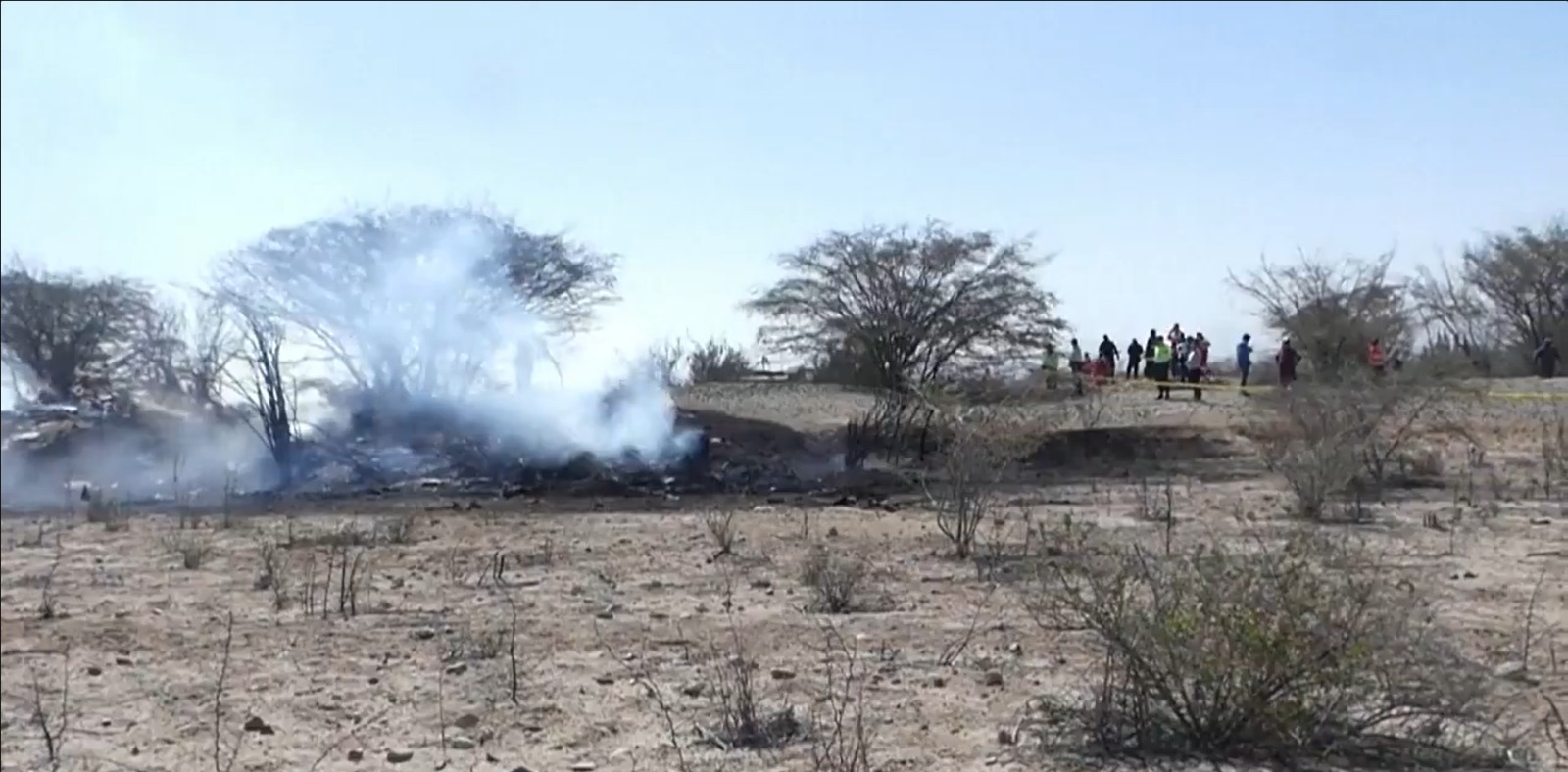
Tourist plane crashes in Peru's Nazca Lines. XC
Nazca: A small tourist aircraft crashed near the world-famous Nazca Lines archaeological site in Peru, killing all 13 people on board. The accident occurred during a sightseeing flight over the ancient desert geoglyphs, leaving international tourists, local residents and authorities shocked. Following the crash, Peruvian aviation authorities launched a comprehensive safety investigation to determine the exact cause behind the disaster.
The ill-fated aircraft was a Cessna Caravan C-208 operated by local airline Aerodiana. The plane had taken off from Pisco Airport in Peru’s Ica region at around 12:10 pm local time on Saturday for a tourist flight designed to offer aerial views of the historic Nazca Lines. According to officials, the aircraft was carrying 11 foreign tourists and two crew members, including the pilot and co-pilot.
The crash took place in the Pueblo Viejo area, approximately six kilometres from Nazca city and several kilometres away from the Nazca Lines site. The aircraft reportedly encountered an emergency situation while conducting the sightseeing operation and preparing for its return journey. The crew informed the Nasca Airport control tower about the emergency around 1 pm, after which communication with the aircraft was lost. Shortly afterward, the plane crashed on farmland and caught fire.
Emergency response teams, including firefighters, police personnel, medical units and municipal rescue workers, immediately reached the crash location. However, the intensity of the impact and the fire that broke out after the crash made rescue operations impossible. Authorities secured the accident site, controlled the flames and began recovery operations under challenging conditions.
Officials confirmed that all passengers and crew members died in the accident. The victims included seven Italian tourists, two German nationals and two Spanish visitors, along with the two Peruvian crew members operating the aircraft. The Ministry of Transport and Communications and tourism authorities are coordinating with local agencies to complete identification procedures and provide assistance to the victims’ families.
Peruvian aviation regulators have started a detailed technical investigation into the crash. The inquiry will examine multiple factors, including aircraft maintenance history, airworthiness certification, engine performance, flight data, weather conditions, pilot qualifications, operational procedures and communication records between the aircraft and air traffic control.
Investigators are also analysing whether technical failure, adverse weather conditions, operational errors or other aviation-related factors contributed to the accident. Authorities have not announced any preliminary conclusion, and the final findings will be released only after forensic examination, wreckage analysis and expert assessment are completed.
The accident has once again raised concerns about the safety standards of tourist aviation operations in Peru, particularly flights conducted over the Nazca Lines region. The archaeological site is among Peru’s biggest tourism attractions, drawing nearly 100,000 visitors every year. Many international tourists choose small aircraft flights to witness the massive ancient drawings, animal figures and geometric patterns carved into the desert landscape from the sky.
The Nazca Lines, created by the ancient Nazca civilisation nearly 1,600 years ago, are recognised as a UNESCO World Heritage Site and remain one of the world’s most mysterious archaeological landmarks. The aerial sightseeing industry around the site plays a major role in the local economy, but repeated aviation incidents have triggered demands for stronger safety monitoring and stricter regulatory oversight.
Weather conditions had also become a concern in the region before the accident. Flights from the nearby Maria Reiche Airport were reportedly suspended earlier due to strong winds exceeding 25 miles per hour, which created dust storms and reduced visibility. Some tourist aircraft were forced to divert to alternative airports because of difficult flying conditions.
Airline Aerodiana expressed condolences to the families of those who lost their lives and confirmed that it was cooperating with government agencies and aviation investigators. The company said it would review its flight operations according to instructions issued by aviation authorities following the crash.

