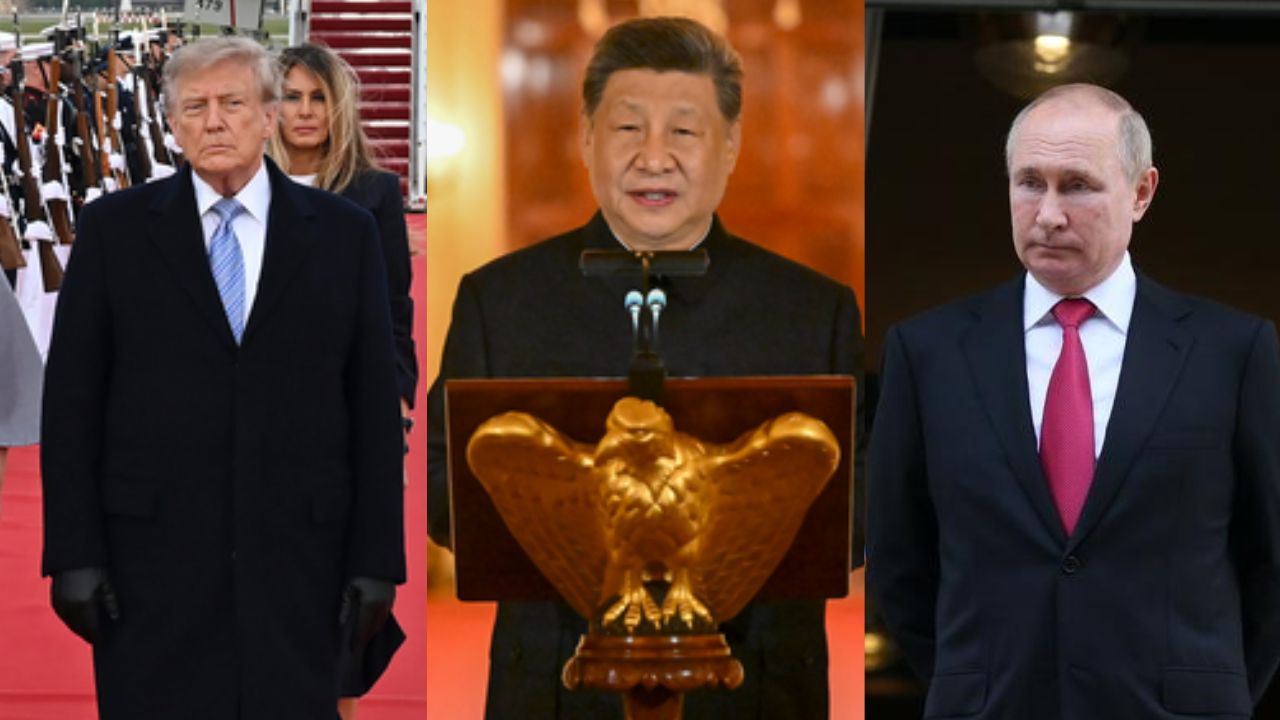
Trump, Putin And Xi Prepare For Historic Trilateral Summit (Img: X)
New Delhi: US President Donald Trump, Chinese President Xi Jinping and Russian President Vladimir Putin are set to hold their first trilateral meeting on the sidelines of the Asia-Pacific Economic Cooperation (APEC) summit in Shenzhen, China, on November 18-19.
The White House has confirmed Trump's participation, with nuclear weapons reduction expected to be a key subject of discussion. However, the meeting comes at a time of heightened international tensions, with the war involving the US, Israel and Iran, Russia's ongoing conflict with Ukraine and the continuing economic rivalry between Washington and Beijing.
Although each country has its own diplomatic and strategic priorities, three major issues are expected to dominate the discussions: nuclear arms control, the Iran conflict and US-China trade relations.
One of the most significant issues is the New Strategic Arms Reduction Treaty (New START), which expired in February. Signed in 2010, the agreement placed limits on the strategic nuclear arsenals of Russia and the US.
Russia has the world's largest nuclear arsenal, followed by the US, while China is rapidly expanding its capabilities.
Also Read: US Flight Chaos Deepens: Two Planes Collide On Miami Airport Tarmac, Passengers Injured
Trump rejected Moscow's proposal to extend the existing agreement and instead called for a new, modernised treaty that would also include China. Beijing, however, has resisted joining negotiations over an agreement it did not help formulate.
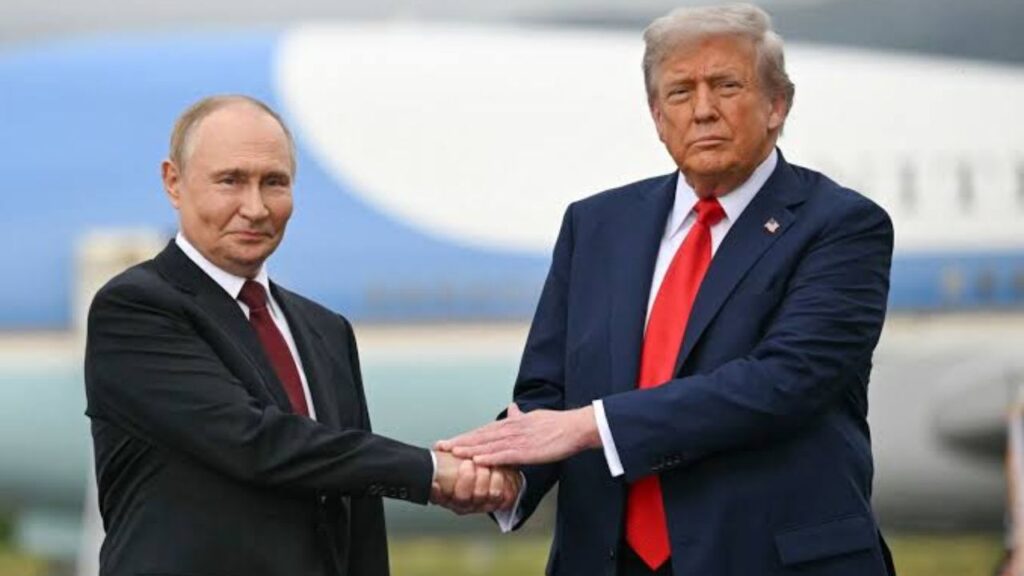
Nuclear Disarmament To Top Agenda At the Meet (Img: X)
US officials have indicated that nuclear disarmament will open the discussions, although they do not expect an agreement to emerge from the meeting.
The conflict involving the US, Israel and Iran is another important issue. Although large-scale military strikes have stopped for now, tensions remain high, particularly around the Strait of Hormuz.
The disruption has affected international oil and gas supplies, with energy prices remaining volatile. China has a significant stake in the situation because around one-third of its crude oil imports passed through the strategic waterway before the conflict.
Also Read: Yogi Adityanath Announces 25 Lakh Tablets for UP Youth in Major Digital Push
Russia, meanwhile, has benefited from higher energy prices and changes in US sanctions policy, making the situation strategically and economically important for Moscow.
Trade tensions between Washington and Beijing are another major concern. Last year, Trump imposed tariffs of 145 per cent on Chinese imports, prompting Beijing to retaliate with 125 per cent duties on American goods.
Disagreements over rare earth minerals, essential for advanced semiconductor manufacturing and artificial intelligence technology, have further strained relations. Both countries have since reduced tariffs and reached several trade understandings. However, competition over advanced chips and allegations of industrial espionage continue to create friction.
The Ukraine conflict is unlikely to receive significant attention during the trilateral meeting. Washington has indicated that Trump does not intend to raise the issue, as separate peace negotiations are already underway between American, Russian and Ukrainian representatives.
Also Read: ‘Bharat Badnaam Summit’: BJP Slams Rahul Gandhi, Accuses Him Of Defaming India
China, which maintains close ties with Moscow, has consistently maintained that the conflict should be treated as a European issue.
Trump has also criticised Ukrainian President Volodymyr Zelenskyy over the continuation of the war, while taking steps to ease certain restrictions affecting Russian energy exports. These developments have strengthened Moscow's diplomatic position ahead of the meeting.
Russia: Putin is expected to use the meeting to demonstrate Russia's global influence and reinforce its position alongside the world's two largest economic powers. It could also help Moscow project strength internationally while keeping the Ukraine conflict away from the centre of discussions.
China: Beijing wants stability in the Middle East, particularly to protect its energy supplies. It is also expected to resist American pressure to join nuclear disarmament negotiations without an agreement that considers its existing security position.
United States: Trump wants China and Russia to participate in a broader nuclear arms reduction framework. The meeting could also help him demonstrate diplomatic influence and present himself as a leader capable of engaging rival global powers.
The proposed summit has drawn comparisons with the 1945 Yalta Conference, where the leaders of the US, Soviet Union and Britain discussed Europe's post-war arrangements and helped shape the emerging international order.
Also Read: Lalit Modi Acquires British Citizenship, Formally Becomes UK Citizen
Some Russian political figures have suggested that the upcoming meeting could similarly influence global power relations. However, expectations of a major geopolitical settlement remain limited.
The three countries have competing interests, and their differences over security, trade and regional conflicts are unlikely to disappear after one meeting.
The summit could nevertheless provide an important diplomatic platform for the three leaders to communicate directly, manage tensions and explore areas of cooperation. Its biggest outcome may be the symbolism of bringing Washington, Beijing and Moscow together rather than any immediate breakthrough.


