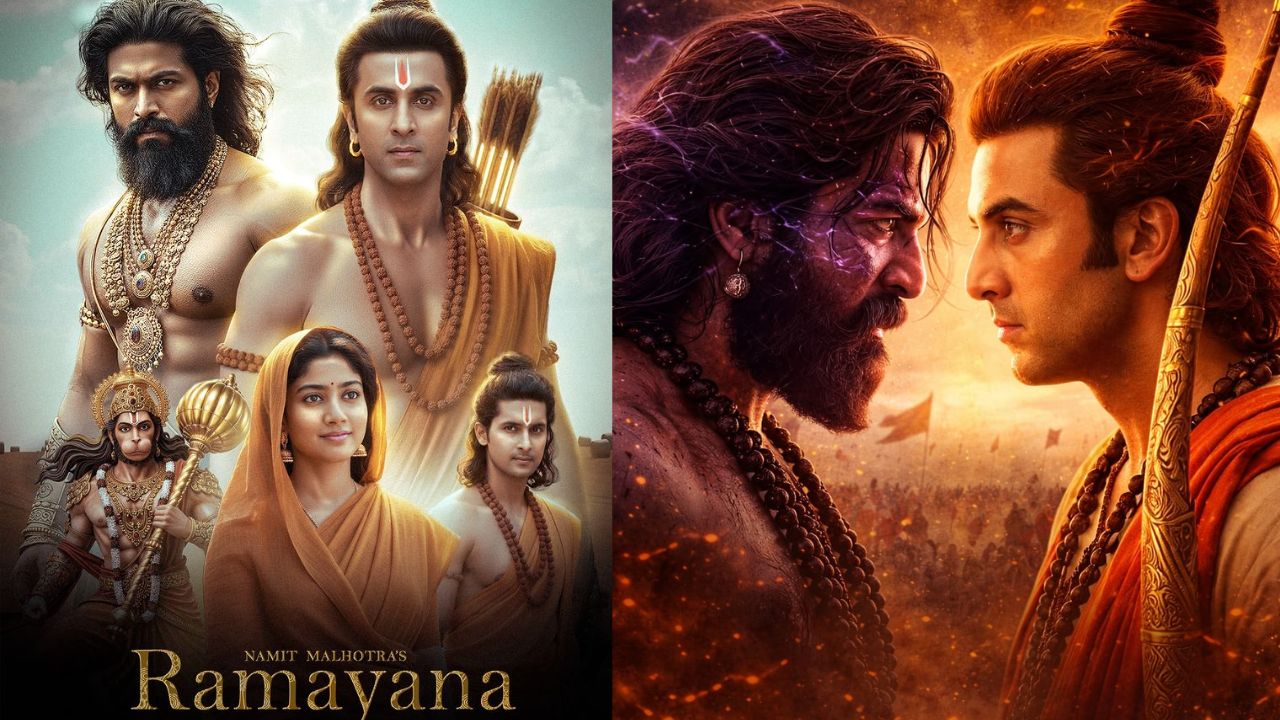
The Ramayana's global journey: Ancient Indian traditions continue to inspire cultures across Asia and beyond. (Img: X)
New Delhi: The Ramayana, one of India's greatest literary and spiritual epics, has transcended geographical boundaries to become an enduring cultural treasure across Asia, Africa and the Caribbean. As India celebrates Diwali 2026 and renewed global interest in the epic follows the big-screen adaptation Ramayana, the ancient Sanskrit narrative of Lord Rama continues to find expression through distinctive traditions, religious practices, classical dance, theatre, literature and temple architecture across the world.
From Thailand's Ramakien and Cambodia's Reamker to Indonesia's Kakawin Ramayana and Laos' Phra Lak Phra Ram, the epic has undergone fascinating regional adaptations while retaining its central themes of righteousness, devotion, courage, sacrifice and the triumph of good over evil.
Although these versions incorporate indigenous folklore, Buddhist philosophy, local customs and artistic traditions, their narrative foundations remain closely connected to the Indian epic. The Ramayana's extraordinary international journey also extends beyond Asia, reaching countries such as Mauritius, Fiji, Trinidad and Tobago, Guyana and Suriname through generations of Indian indentured labourers and their descendants.
Diwali is traditionally associated with Lord Rama's return to Ayodhya after 14 years of exile and his victory over Ravana, the king of Lanka. According to the Ramayana tradition, the people of Ayodhya illuminated their homes with earthen lamps to celebrate the return of Rama, Sita and Lakshmana, establishing the enduring association between the festival of lights and the victory of dharma over adharma.
The festival's cultural significance extends well beyond religious observance. It represents the triumph of righteousness, the restoration of justice, the importance of family values and the enduring power of faith.
The epic has also become an important vehicle of cultural transmission, travelling across countries through ancient trade networks, religious exchanges, literary adaptations, migration and performing arts.
The renewed attention surrounding the cinematic adaptation Ramayana, featuring Ranbir Kapoor as Lord Rama and Sai Pallavi as Goddess Sita, has brought this extraordinary international legacy into focus. The film's reported international distribution across more than 100 countries and approximately 50,000 screens worldwide, alongside an additional 9,000 screens in India, reflects the growing global commercial and cultural interest in Indian mythological storytelling.
However, the Ramayana's international influence predates contemporary cinema by centuries. Its characters, philosophical ideas and dramatic episodes have been incorporated into the cultural identities of several countries.
One of the most fascinating cultural connections associated with the Ramayana's wider geographical legacy involves South Korea and the ancient Indian city of Ayodhya. A traditional Korean historical account describes the journey of an Indian princess, Suriratna, also known as Heo Hwang-ok, who travelled from an ancient kingdom identified in the legend as Ayuta to Korea in 48 AD.
According to the account, she married King Kim Suro, the founder of the Geumgwan Gaya kingdom in south-eastern Korea. The royal couple is traditionally believed to have had 10 children, establishing a lineage that remains significant in Korean ancestral traditions.
The princess is associated with prominent Korean clans, including the Gimhae Kim and Heo lineages. Some genealogical traditions also connect the Lee lineage to this ancestry.
Millions of South Koreans have historically associated their family heritage with Queen Heo Hwang-ok, making the Ayodhya connection an important subject of cultural and historical interest between India and South Korea.
The Indian government issued a commemorative postage stamp honouring the legendary princess in 2019, further highlighting the cultural significance of the traditional connection. While the historical details of the voyage remain debated and cannot be treated as conclusively established, the legend continues to provide a distinctive cultural bridge between the two countries.
Thailand has one of the most elaborate and deeply institutionalised adaptations of the Ramayana, known as Ramakien, meaning The Glory of Rama. Although rooted in the Indian epic, the Thai version incorporates indigenous mythology, local folklore, Buddhist influences and distinctive elements of Thai royal culture.
The story is believed to have travelled to the region through centuries of cultural and religious exchange, particularly during the Khmer and Ayutthaya periods. The Ramakien acquired its formal literary shape during the reign of King Rama I, the founder of Thailand's Chakri dynasty.
The monarch undertook an extensive adaptation of the narrative to reflect Thai cultural sensibilities and literary traditions. King Rama II subsequently contributed to its poetic and theatrical development. The epic remains an integral part of Thailand's national cultural heritage.
One of its most spectacular manifestations is Khon, a traditional masked dance-drama in which performers recreate episodes from the Ramayana through elaborate costumes, stylised movements, expressive gestures and carefully choreographed sequences. The art form combines classical dance, music, theatrical storytelling and traditional masks to bring characters such as Rama, Sita, Hanuman and Ravana to life.
The Ramakien is also prominently depicted in the magnificent murals at Wat Phra Kaew, the Temple of the Emerald Buddha in Bangkok. These extensive paintings illustrate episodes from the epic and represent an important achievement in Thai religious and visual art. The continued use of the regnal title Rama by Thailand's Chakri monarchs further reflects the enduring influence of the epic on the country's royal and cultural traditions.
In Cambodia, the Ramayana is known as Reamker, which translates as The Glory of Rama. The Khmer adaptation preserves the central narrative of the Indian epic while introducing distinctive characters, episodes and cultural interpretations rooted in Cambodian traditions.
One of its most fascinating episodes involves Suvannamaccha, a mermaid princess who develops a romantic relationship with Hanuman. This narrative variation demonstrates how the original epic was reinterpreted through local folklore and imagination, creating a distinctive Southeast Asian literary tradition.
The Ramayana's influence is particularly visible at Angkor Wat, the magnificent 12th-century temple complex commissioned during the reign of King Suryavarman II. The temple's elaborate bas-reliefs and sculptural representations depict episodes from Hindu mythology, including scenes associated with the Ramayana. These artistic representations demonstrate the historical significance of Indian religious narratives in the development of Khmer civilisation.
Beyond temple architecture, Reamker continues to influence Cambodian performing arts. Its episodes are presented through classical Khmer dance-drama, masked theatrical performances and traditional shadow puppetry. These artistic traditions preserve the epic's narrative heritage while transmitting cultural knowledge to younger generations.
Indonesia offers one of the most remarkable examples of the Ramayana's ability to transcend religious and geographical boundaries. Despite being the world's largest Muslim-majority country, Indonesia has preserved a rich Ramayana tradition, particularly across the islands of Java and Bali. The epic is represented through Kakawin Ramayana, an influential Old Javanese literary adaptation that incorporates Sanskrit literary traditions and local cultural influences.
One of the most prominent ways in which the story survives is through Wayang Kulit, the traditional Indonesian shadow-puppet theatre. In these performances, intricately crafted leather puppets are manipulated behind an illuminated screen, creating dramatic silhouettes that narrate episodes from the Ramayana. The performances combine storytelling, music, symbolism and traditional Javanese philosophy.
Another major cultural attraction is the Ramayana Ballet at Prambanan Temple in Yogyakarta. Performed against the spectacular backdrop of the historic Hindu temple complex, the production brings the epic to life through classical dance, elaborate costumes, music and theatrical choreography.
In Bali, the Ramayana also finds expression through Kecak, a distinctive performance tradition involving rhythmic vocal chanting by a large group of male performers. The Kecak Ramayana presents dramatic episodes from the epic, including the conflict between Rama and Ravana, through synchronised chanting, expressive movements and theatrical staging. These traditions demonstrate how the Ramayana continues to occupy an important place in Indonesia's cultural landscape despite the country's diverse religious composition.
In Laos, the Ramayana is known as Phra Lak Phra Ram, a title referring to the brothers Lakshmana and Rama. The Lao adaptation incorporates Buddhist philosophical principles, local folklore and regional traditions, giving the ancient Indian narrative a distinctive religious and cultural interpretation.
One of its notable features is the portrayal of Rama as a previous incarnation of Gautama Buddha, reflecting the influence of Buddhist Jataka traditions on the evolution of the story.
The narrative also draws upon the geographical and cultural setting of the Mekong River region, adapting the epic to the local environment. Traditionally, Phra Lak Phra Ram has been preserved through religious recitations, dance performances and theatrical storytelling.
The Royal Ballet Theatre of Luang Prabang has played an important role in preserving and reviving the country's classical performance traditions associated with the epic. The Lao version illustrates how the Ramayana was not merely translated into different languages but also absorbed into local religious philosophies and cultural frameworks.
In Myanmar, the Ramayana is known as Yama Zatdaw, with Lord Rama represented as Yama and Goddess Sita as Thida. The Burmese adaptation draws heavily from the Indian narrative while incorporating indigenous folklore, Buddhist traditions and local storytelling conventions.
Over generations, the epic has become an important part of Myanmar's traditional theatrical and performing arts. Its characters and episodes are presented through dance, drama and elaborate stage productions, preserving the narrative through oral and visual traditions. The adaptation also demonstrates the historical interaction between Indian literary influences and Myanmar's cultural and religious landscape.
The Ramayana's cultural journey also extends to China, where elements of the epic entered regional folklore and Buddhist literary traditions. The Dai ethnic community, particularly in China's Yunnan region, has preserved versions of the narrative through traditional literary and oral forms.
Adaptations such as Lang Ka Sip Ho and Ta Lamma contain characters and narrative elements resembling those of the Indian epic, although their geographical settings, chronology and religious interpretations differ.
The Chinese transmission of the Ramayana also reflects the historical movement of Buddhist literature and religious ideas across Asia. As the epic travelled through different linguistic and cultural environments, its narrative was adapted to local traditions, demonstrating the interconnectedness of ancient Asian civilisations.
The Ramayana's international journey did not end in Southeast Asia. It travelled across oceans to Africa, the Caribbean and other parts of the world through Indian migration during the colonial era. One of the most important factors behind this expansion was the movement of Indian indentured labourers, popularly known as Girmitiyas.
Between 1838 and 1917, large numbers of Indians were transported under indenture agreements to British, Dutch and French colonies to work primarily on sugar plantations. The term Girmitiya emerged from the word agreement, which was pronounced and understood as girmit among the labourers. Major destinations included Mauritius, Fiji, Trinidad and Tobago, Guyana and Suriname.
A significant proportion of these workers originated from present-day Uttar Pradesh and Bihar. Along with their labour and skills, they carried their languages, religious practices, festivals, folk traditions and literary heritage to their new homes.
An especially important cultural possession was the Ramcharitmanas, the celebrated Awadhi retelling of the Ramayana composed by Goswami Tulsidas. The text became a source of spiritual guidance, community identity and cultural continuity for Indian-origin populations living thousands of kilometres away from the subcontinent. Over generations, the Ramayana became deeply embedded in diaspora traditions through temple worship, Ramleela performances, religious recitations and Diwali celebrations.
Mauritius has developed a particularly strong tradition of preserving the Ramayana through religious institutions, cultural organisations and public celebrations. The Ramayana Centre in Mauritius represents an important institutional effort to promote the teachings and cultural heritage associated with the epic.
The Ramcharitmanas continues to occupy an important place in religious gatherings, while Ramleela performances and Diwali celebrations reinforce the connection between younger generations and their ancestral traditions.
In Fiji, the Ramayana became an important source of cultural continuity among descendants of Indian indentured labourers. Religious recitations, temple celebrations, Ramleela performances and community gatherings have helped preserve the epic across generations.
The Ramcharitmanas remains particularly significant among sections of the Indo-Fijian population, connecting contemporary communities with their ancestral languages and traditions.
Trinidad and Tobago has developed one of the Caribbean's most visible Ramayana-based cultural traditions. Ramleela performances, particularly during the period preceding Diwali, recreate important episodes from the life of Lord Rama.
These community productions combine religious storytelling, traditional music, costumes and theatrical performances, attracting audiences from different cultural backgrounds. The tradition has also become an important expression of Indo-Caribbean identity and cultural heritage.
In Guyana and Suriname, the Ramayana continues to influence religious practices and community celebrations among people of Indian ancestry. Temple-based recitations, Ramcharitmanas readings, Ramleela productions and Diwali festivities help preserve the narrative.
Despite geographical separation from India, these communities have maintained connections with their ancestral religious and literary traditions through intergenerational cultural transmission. The continued popularity of the epic across these countries demonstrates how literature and faith can sustain collective identity even after centuries of migration.
The international journey of the Ramayana reflects centuries of interaction between Indian civilisation and neighbouring societies. Its transmission was facilitated by maritime trade routes, Buddhist and Hindu religious networks, royal patronage, literary translations, temple architecture and performing arts.
Rather than remaining confined to a single religious or linguistic framework, the epic evolved through regional adaptations that incorporated local folklore, philosophical traditions and indigenous artistic expressions.
Thailand's Khon performances, Cambodia's Reamker dance-drama, Indonesia's Wayang Kulit, Laos' Buddhist interpretation and Myanmar's Yama Zatdaw illustrate the extraordinary diversity of this cultural exchange.
The Ramayana also demonstrates the role of epics in shaping collective memory, moral values and artistic traditions. Its central themes of dharma, loyalty, devotion, sacrifice, justice and the triumph of good over evil continue to resonate with audiences across generations and geographical boundaries.
As Diwali 2026 brings the story of Lord Rama back into the spotlight, the Ramayana's global legacy offers a reminder that India's ancient literary traditions have influenced cultures far beyond the country's borders. From the temples of Southeast Asia to the Caribbean's Ramleela celebrations, the epic continues to live through communities that have adopted, adapted and preserved its timeless narrative.

