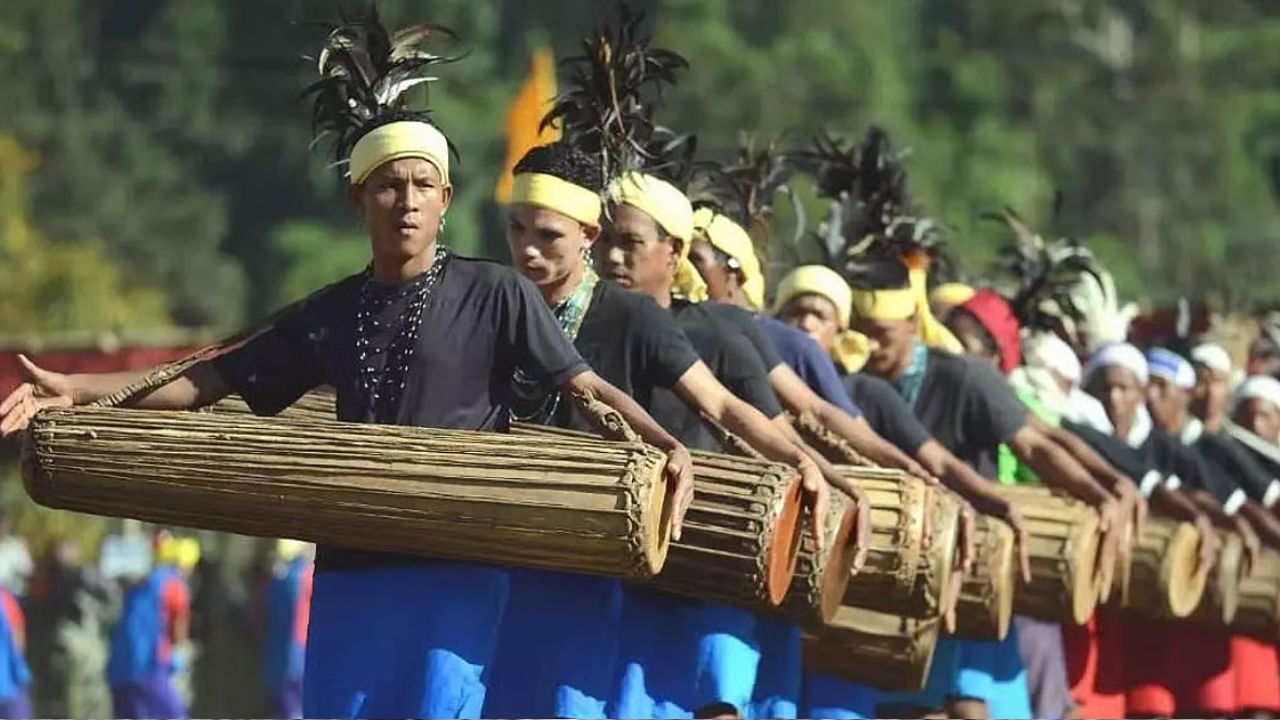
Representational Image
New Delhi: Meghalaya, the enchanting northeastern state of India, continues to mesmerize the world with its rich culture and vibrant traditions.
Among its many cultural treasures, the Wangala festival of the Garo tribe stands out as a spectacular celebration, with its centerpiece—the Wangala dance—earning the nickname ‘Dance of 100 Drums.’
This mesmerizing dance is more than just a visual spectacle; it is a profound expression of the Garo community’s faith and gratitude. Performed after the harvest season, the Wangala dance honors Saljong, the Sun God, revered as the harbinger of prosperity and abundant harvests. Through this celebration, the community offers heartfelt thanks for nature’s bounty.
The Music of Life
The heartbeat of the Wangala festival lies in its music. The dance is accompanied by the resonant rhythms of traditional long drums called Dama, while flutes crafted from buffalo horns add melodic charm. Together, they create an intoxicating atmosphere that sweeps both performers and spectators into joyous celebration.
A Feast for the Eyes
Equally striking is the traditional attire of the performers. Men don colorful headgear and vibrant garments, while women don intricately crafted outfits and jewelry, often dyed with natural pigments. The attire itself is a testament to the Garo tribe’s rich artistry and craftsmanship.
A Celebration of Unity and Heritage
Beyond its visual and musical appeal, the Wangala festival is a vital thread that binds the Garo community. It reinforces social cohesion, preserves cultural heritage, and connects the younger generation with their ancestral roots, ensuring that the traditions of the past thrive in the present.
The Wangala festival, with its rhythmic drums and vibrant dance, is not just a harvest celebration—it is a living testament to Meghalaya’s cultural splendor, inviting all to witness the joy, faith, and unity of the Garo people.

