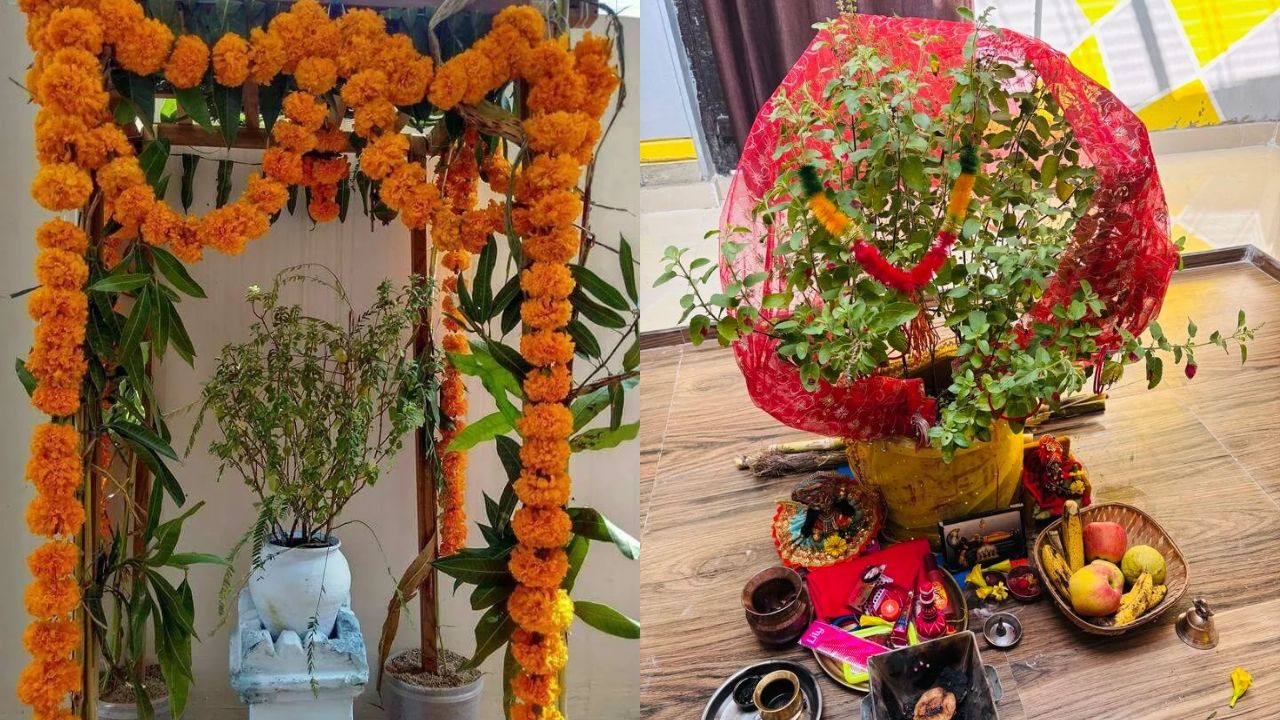
Tulsi and Shaligram: Celebrating a sacred union in Hindu tradition. (Img: Pinterest)
New Delhi: Tulsi Vivah holds a special place in Sanatan Dharma, symbolising the divine union of Goddess Tulsi with Lord Vishnu in his Shaligram form. Observed around Devuthani Ekadashi and Kartik Shukla Dwadashi, the sacred ceremony marks the conclusion of Chaturmas and the traditional reopening of the auspicious Hindu wedding season.
According to Hindu religious traditions, the ceremonial marriage of Tulsi Mata and Shaligram Bhagwan signifies the restoration of divine order, marital sanctity and spiritual abundance. Devotees perform the ritual with traditional Vedic customs, devotional bhajans, mangal geet, diya lighting and offerings to seek the blessings of Shri Hari and Goddess Lakshmi.
The observance is associated with the legend of Tulsi's divine transformation and Lord Vishnu's blessings. Religious beliefs hold that performing Tulsi Vivah with devotion brings spiritual merit comparable to the punya associated with Kanyadaan. The sacred basil plant is also revered as an embodiment of divine purity and an auspicious presence in Hindu households.
For devotees observing Tulsi Vivah in 2026, certain traditional offerings are considered especially auspicious. These include bridal adornments, sacred food offerings and articles associated with marital well-being. Here are five important items traditionally offered to Tulsi Mata during the ceremony.
Panchamrit occupies an important position in Hindu puja vidhi and abhishek rituals. During Tulsi Vivah, devotees traditionally prepare this sacred mixture using milk, curd, ghee, sugar and Gangajal.
The ritual bathing is performed as an expression of reverence and spiritual purification. Panchamrit is regarded as a symbol of nourishment, auspiciousness and divine grace in Hindu worship.
Devotees who celebrate Tulsi Vivah on Kartik Shukla Dwadashi may perform the ritual according to their family traditions and the prescribed puja vidhan. The offering is believed to invite Tulsi Mata's blessings and promote peace and harmony within the household.
Care should be taken while performing abhishek on a living Tulsi plant. Rather than pouring excessive quantities of dairy products directly into its soil, devotees can offer Panchamrit symbolically in a separate vessel.
A red chunari is among the most significant offerings associated with Tulsi Vivah. Red is traditionally regarded as an auspicious colour in Hindu marriage ceremonies and symbolises saubhagya, prosperity, energy and marital well-being.
Just as a bride is adorned with a red veil during her wedding rituals, devotees ceremonially drape Tulsi Mata with a beautiful red chunari during the divine wedding with Shaligram Bhagwan.
According to traditional beliefs, offering a chunari during Tulsi Vivah is associated with marital happiness and the blessings of Goddess Lakshmi. It is also customary in some households to keep the chunari around the Tulsi plant throughout the winter season.
The covering should, however, be arranged carefully so that it does not damage the plant or obstruct sunlight and air circulation. The devotional significance of the offering remains central to the ritual.
The ceremonial adornment of Tulsi Mata is an important feature of the wedding celebrations. Devotees traditionally offer items associated with solah shringar, the sixteen traditional elements of bridal decoration in Hindu culture.
These may include red bangles, bindi, mehendi, sindoor, alta and other customary adornments. Each item carries symbolic significance associated with saubhagya, marital commitment and feminine auspiciousness.
The offerings are presented as part of the traditional vivah ceremony, during which Tulsi Mata is worshipped as a divine bride. Devotional customs associate these bridal offerings with conjugal harmony, affection and domestic happiness.
Many households also organise a miniature wedding ceremony featuring mandap decoration, floral arrangements, wedding songs, sacred threads and traditional rituals. The atmosphere resembles a Hindu wedding, with Shaligram Bhagwan worshipped as the divine groom.
Food offerings form an integral part of Hindu religious ceremonies and makhana kheer is considered an auspicious bhog for Tulsi Vivah.
According to religious traditions, Tulsi Mata is associated with Goddess Lakshmi, while kheer is regarded as a traditional sweet offering in Vaishnava worship. Prepared using makhana, milk, sugar and dry fruits, the delicacy is offered with devotion during the puja. Makhana, also known as fox nuts, is widely used in Hindu fasting preparations and is associated with vrat-friendly food traditions.
Devotees may also offer singhara, or water chestnut, and other seasonal aquatic produce. Their association with water is sometimes linked to the Samudra Manthan legend, from which Goddess Lakshmi emerged, making such offerings symbolically significant in certain devotional traditions. After the puja, the bhog is distributed as prasad among family members and devotees.
The mangalsutra is another important offering associated with Tulsi Vivah. In Hindu marriage traditions, it represents the sacred marital bond, commitment and the blessings of a prosperous household. Devotees offer a mangalsutra to Tulsi Mata as part of the bridal adornment ceremony, seeking blessings for marital stability, mutual affection and family well-being.
Sindoor is also traditionally offered alongside the mangalsutra, reflecting the symbolism of Hindu suhaag customs. Some devotees additionally present a Tulsi mala as an expression of devotion and reverence. According to popular religious beliefs, these offerings are associated with marital harmony, domestic prosperity and the continued grace of Goddess Lakshmi.
Tulsi Vivah is closely connected with the conclusion of Chaturmas, the four-month period traditionally associated with spiritual discipline, fasting, austerity and restraint. According to Hindu mythology, Lord Vishnu enters Yoga Nidra on Devshayani Ekadashi and awakens on Devuthani Ekadashi, also known as Prabodhini Ekadashi. His awakening marks an important transition in the Hindu religious calendar.
The subsequent Tulsi Vivah celebrations symbolise the divine marriage of Tulsi and Shaligram, heralding the return of auspicious ceremonies, including weddings and other mangalik occasions.
The ritual also reflects the spiritual relationship between Tulsi and Vishnu in Vaishnava traditions. Tulsi leaves hold a particularly sacred position in Vishnu puja, and devotees traditionally regard them as indispensable offerings during the worship of Shri Hari. For Hindu households, Tulsi Vivah is more than a ceremonial observance. It represents devotion, family unity, spiritual renewal and the hope of prosperity.

