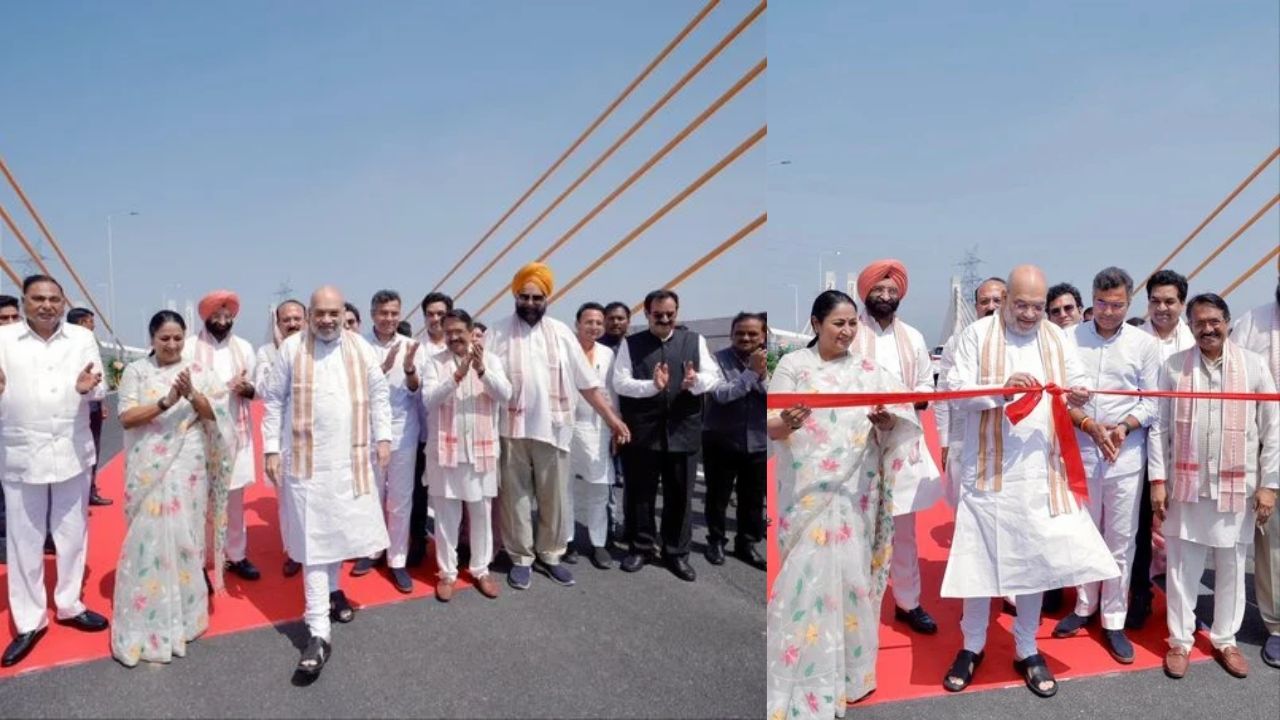
Delhi’s new Barapullah Phase-III corridor opens a faster route between East Delhi and South Delhi. (Img: X)
New Delhi: Commuters in the national capital have received a major infrastructure boost as the Barapullah Phase-III elevated corridor has been opened, creating a signal-free connection between Mayur Vihar Phase-I and AIIMS. The 9-km elevated stretch is trending because it promises faster movement between East Delhi, Noida and South Delhi, potentially reducing long daily traffic delays for thousands of commuters.
The newly opened corridor connects with the existing Barapullah flyover at Sarai Kale Khan, completing a crucial elevated route designed to improve traffic flow across the national capital.
The Barapullah Phase-III elevated corridor is among Delhi’s most awaited road infrastructure projects. Developed as part of the larger Barapullah corridor network, the project aims to provide seamless connectivity between eastern and southern parts of Delhi.
The corridor allows commuters travelling from Mayur Vihar Phase-I, Noida and nearby areas to reach Sarai Kale Khan, AIIMS and other parts of South Delhi without depending on multiple traffic signals.
With increasing traffic congestion across Delhi roads, the opening of this elevated route is expected to provide relief to daily office commuters, students, patients travelling towards AIIMS and residents moving between East Delhi and South Delhi.
One of the biggest highlights of the Barapullah Phase-III corridor is the expected reduction in travel time. Authorities estimate that the journey between East Delhi and the AIIMS area, which often takes around 35 to 40 minutes due to traffic congestion, could come down to nearly 15 minutes depending on road conditions.
The signal-free corridor allows vehicles to bypass several crowded intersections, reducing waiting time and improving traffic movement.
The route is also expected to benefit commuters from Noida who frequently travel towards South Delhi for work, healthcare facilities and other daily requirements.
The Barapullah Phase-III project is not only focused on vehicle movement but also includes facilities for cyclists and pedestrians.
The elevated corridor features a dedicated cycle track and pedestrian pathways, making it one of Delhi’s significant urban mobility projects.
A major engineering feature of the project is the extra-dosed bridge constructed over the Yamuna floodplain. The bridge has been designed with pillar spans of nearly 125 metres to reduce obstruction in the river zone and maintain the natural flow of the Yamuna.
The design combines modern infrastructure development with environmental considerations while creating a high-capacity transport corridor.
The Barapullah Phase-III project was approved in 2014 and construction began in 2015, with an original completion target of 2017. However, the project faced several delays due to construction challenges, land-related issues, permissions and shifting of utilities. The prolonged timeline also increased the project cost.
The revised cost of the corridor is approximately Rs 1,635 crore. The opening of the project ends a long wait for commuters who have been looking for a faster alternative route between East Delhi and South Delhi.
Union Home Minister Amit Shah inaugurated the Barapullah Phase-III elevated corridor in Delhi. The event was attended by Delhi Chief Minister Rekha Gupta, PWD Minister Parvesh Verma and other senior leaders.
Along with the Barapullah corridor, other major connectivity projects worth around Rs 1,941 crore were also launched. These include the Mukarba Chowk underpass, Modi Mill-Kalkaji flyover, Savitri Cinema half flyover and Loni underpass projects. The projects are aimed at reducing traffic congestion, improving road infrastructure and strengthening Delhi’s urban transport network.
Delhi has been witnessing rising pressure on its roads due to increasing vehicle numbers and expanding urban areas. Elevated corridors and signal-free routes have become an important part of the city’s traffic management strategy.
The Barapullah Phase-III corridor is expected to create a smoother travel experience for commuters by providing an alternative route and reducing dependency on heavily congested roads.
For thousands of people travelling daily between Noida, East Delhi and South Delhi, the new corridor could become a major time-saving route.
After the opening of Barapullah Phase-III, authorities are expected to focus on improving traffic management around connected areas including Sarai Kale Khan, Mayur Vihar and AIIMS.
The completion of this corridor also strengthens Delhi’s network of elevated roads and future mobility projects aimed at reducing congestion in the national capital. As more infrastructure projects become operational, commuters are likely to see changes in travel patterns across Delhi-NCR.

