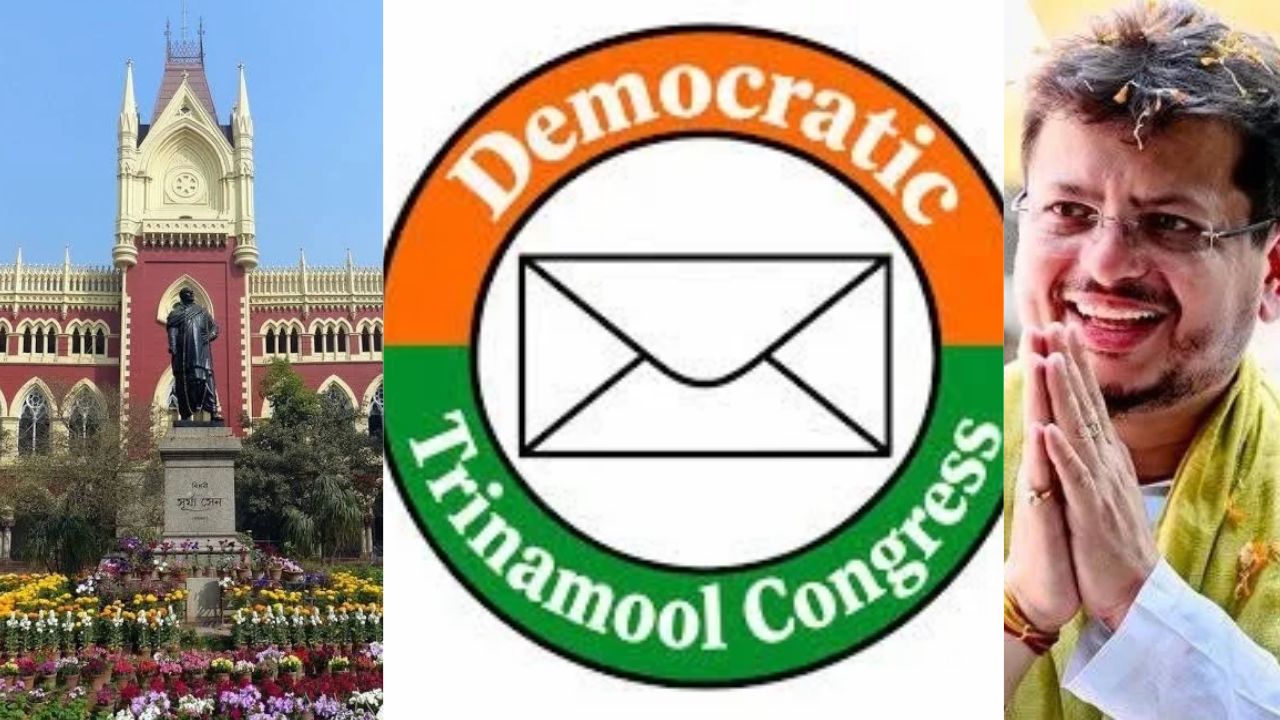
Ritabrata Banerjee-led Democratic Trinamool Congress gets envelope symbol amid ongoing election dispute. (Img: Pinterest)
Kolkata: The Calcutta High Court on Wednesday dismissed the Indian Secular Front’s (ISF) plea challenging the allotment of the ‘Envelope’ election symbol to the Ritabrata Banerjee-led Democratic Trinamool Congress (TMC-D) for the upcoming Nandigram Assembly by-election.
The decision has brought a major legal twist to the West Bengal bypoll, as the symbol dispute had triggered concerns over voter confusion and raised questions about the Election Commission’s process of allotting free symbols during an ongoing election battle.
The ISF had moved the High Court claiming that the envelope symbol was previously associated with the party during elections and that giving the same symbol to another contestant in the Nandigram bypoll could create uncertainty among voters.
The controversy gained momentum after the Election Commission announced interim arrangements following competing claims over the Trinamool Congress identity and election symbol. The poll panel allotted the name Democratic Trinamool Congress and the envelope symbol to the Ritabrata Banerjee-led faction.
Meanwhile, the Mamata Banerjee-led faction received the name Mamata All India Trinamool Congress along with the football player symbol for the by-election.
## Court Questions Election Commission’s Symbol Decision
During the hearing, the Calcutta High Court questioned the Election Commission’s decision to select the envelope symbol despite the availability of several other free symbols.
The court observed that such disputes could have been avoided if another symbol had been allotted, especially when objections had already been raised regarding the previous association of the symbol with the ISF.
The Election Commission told the court that although the envelope symbol had earlier been allotted to the ISF, it was not a reserved symbol. According to the poll body, the ISF is not a recognised political party, and therefore it cannot claim permanent rights over a free election symbol.
The Election Commission’s argument was based on existing election rules under which recognised political parties receive reserved symbols, while unrecognised parties are allotted symbols from the available list during elections.
## ISF Raises Voter Confusion Concern
The ISF argued that election symbols play a crucial role in India’s electoral system, particularly for voter identification and campaign recognition.
The party claimed that it had already built public awareness around the envelope symbol through previous campaigns and that replacing or transferring the symbol during an election period could affect voter perception.
The party also suggested that the Election Commission should freeze the envelope symbol temporarily and allot different symbols to the contesting parties to prevent confusion at polling booths.
The legal challenge highlighted the growing importance of election symbols in Indian politics, where symbols often become closely linked with party identity, campaign messaging and voter recall.
## Background of TMC Symbol Dispute
The envelope symbol controversy is connected with the larger dispute over the Trinamool Congress identity following competing claims from rival factions.
As an interim measure, the Election Commission provided separate names and symbols to the groups involved for the Nandigram bypoll.
Such arrangements are made to ensure that electoral proceedings continue when disputes over party recognition, names or symbols remain unresolved.
The Nandigram Assembly constituency has political significance in West Bengal and has remained one of the most closely watched electoral battlegrounds in recent years.

