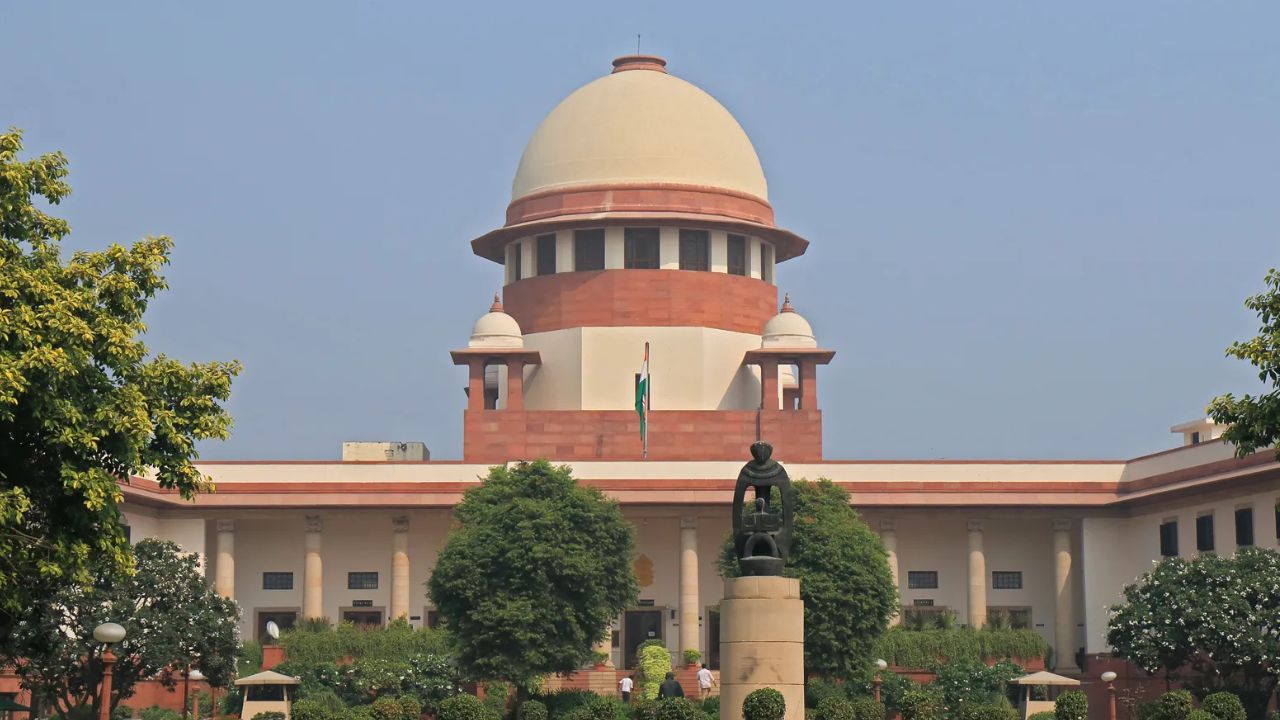
The Supreme Court on Monday stepped into the latest Karnataka-Tamil Nadu Cauvery water dispute, directing Karnataka to comply with the Cauvery Water Management Authority’s (CWMA) water release order.
New Delhi: The Supreme Court on Monday stepped into the latest Karnataka-Tamil Nadu Cauvery water dispute, directing Karnataka to comply with the Cauvery Water Management Authority’s (CWMA) water release order. The case has become a major flashpoint as farmers in both states depend on the river for irrigation, while rainfall shortage and reservoir pressure have intensified the decades-old conflict.
The Bench of Justice Vikram Nath and Justice Sandeep Mehta sought a fresh status report on Cauvery water releases and it would review the matter after one week. Tamil Nadu claimed it was not receiving its allocated share of water, while Karnataka said it was struggling with severe water scarcity in the Cauvery basin.
The apex court passed the order on a petition filed by Tamil Nadu seeking directions to ensure Karnataka follows the CWMA’s instructions on releasing Cauvery river water.
The Tamil Nadu government approached the Supreme Court after alleging that Karnataka was not fully implementing the water release directions issued by regulatory authorities. The dispute has gained widespread attention because the Cauvery river is a crucial water source for millions of people, especially farmers dependent on irrigation in southern India.
The conflict has once again highlighted the challenges of interstate river water sharing, particularly during years when monsoon rainfall remains below expectations and reservoir levels become a matter of concern.
During the hearing, senior advocate CS Vaidyanathan, representing Tamil Nadu, argued that Karnataka had failed to release the required quantity of Cauvery water despite CWMA directions.
Tamil Nadu told the Supreme Court that it had received only around 14 TMC of water against nearly 64 TMC that it claimed was due under the Cauvery Water Disputes Tribunal award.
The state also pointed out that Karnataka’s reservoirs had around 76 per cent live storage capacity and argued that even after considering the impact of a distress water year, Tamil Nadu should have received a proportionate share of water.
According to Tamil Nadu’s calculation, a shortage of nearly 20 TMC has accumulated, creating difficulties for irrigation activities and putting farmers under pressure during the cultivation season.
Karnataka rejected Tamil Nadu’s allegations and told the Supreme Court that the state itself was facing an extreme water shortage situation due to inadequate rainfall in the Cauvery basin. Senior advocate Shyam Divan, appearing for Karnataka, said the state had complied with CWMA directions and had released more water than required under earlier instructions.
Karnataka explained that the first CWMA order required the state to release 3,500 cusecs of water daily for 15 days until August 11. The state claimed that it fulfilled the requirement and disputed the allegation that it had ignored the authority’s order.
The Karnataka government also highlighted the technical aspects of river water management, stating that water released from the Krishna Raja Sagara (KRS) reservoir takes around 48 hours to reach downstream locations near the interstate border. According to Karnataka, officials need to follow scientific reservoir management procedures before making sudden changes in water discharge levels.
During the Supreme Court hearing, Karnataka admitted that the water release remained below the required level during the initial days after the latest CWMA order. The state informed the court that the discharge was around 6,000 cusecs during the first four to five days but assured that the shortfall would be compensated in the following days.
Karnataka later informed the bench that the water flow had increased and reached around 12,607 cusecs on Monday morning after opening reservoir gates. The state assured that it would continue efforts to maintain the CWMA-directed flow of 12,000 cusecs per day despite difficult water availability conditions.
After hearing arguments from both sides, the Supreme Court decided not to issue any immediate additional order. Instead, the bench directed Karnataka to continue following the CWMA instructions and submit updated details regarding water releases. The court will examine reservoir storage levels, actual water discharge figures and compliance with the water-sharing mechanism during the next hearing.
The case relates to Tamil Nadu’s application filed on August 3 seeking enforcement of the CWMA decision based on recommendations made by the Cauvery Water Regulation Committee (CWRC). The committee had directed Karnataka to release water from important reservoirs, including Kabini and Krishna Raja Sagara, to meet Tamil Nadu’s requirements.
The Cauvery water dispute between Karnataka and Tamil Nadu is among India’s longest-running interstate river conflicts. The disagreement dates back to agreements signed in 1892 and 1924 between the erstwhile Madras Presidency and the princely state of Mysore.
After decades of negotiations, the Cauvery Water Disputes Tribunal was established, which issued its final award in 2007 regarding water allocation among Karnataka, Tamil Nadu, Kerala and Puducherry. However, the dispute continued as both Karnataka and Tamil Nadu approached the Supreme Court seeking changes and clarification over water-sharing arrangements.
In 2016, Tamil Nadu again moved the apex court after Karnataka argued that it did not have enough water available for release from its reservoirs. Following legal developments, the Central government established the Cauvery Water Management Authority to monitor implementation of water-sharing decisions and ensure compliance with judicial directions.
While the dispute is being fought through legal arguments and government claims, farmers remain the biggest stakeholders affected by the Cauvery water conflict. For thousands of agricultural families, timely water release determines crop production, irrigation availability and livelihood security.
A delay or reduction in Cauvery water supply can impact paddy cultivation, farming cycles and rural economies across both states. The dispute has also raised larger questions about interstate river management, climate change impact, rainfall uncertainty and increasing demand for water resources.
The Cauvery water dispute has often triggered strong reactions from political parties, farmer groups and local communities in Karnataka and Tamil Nadu. Both states have historically maintained that their farmers’ interests must be protected, making every water-sharing decision highly sensitive.

