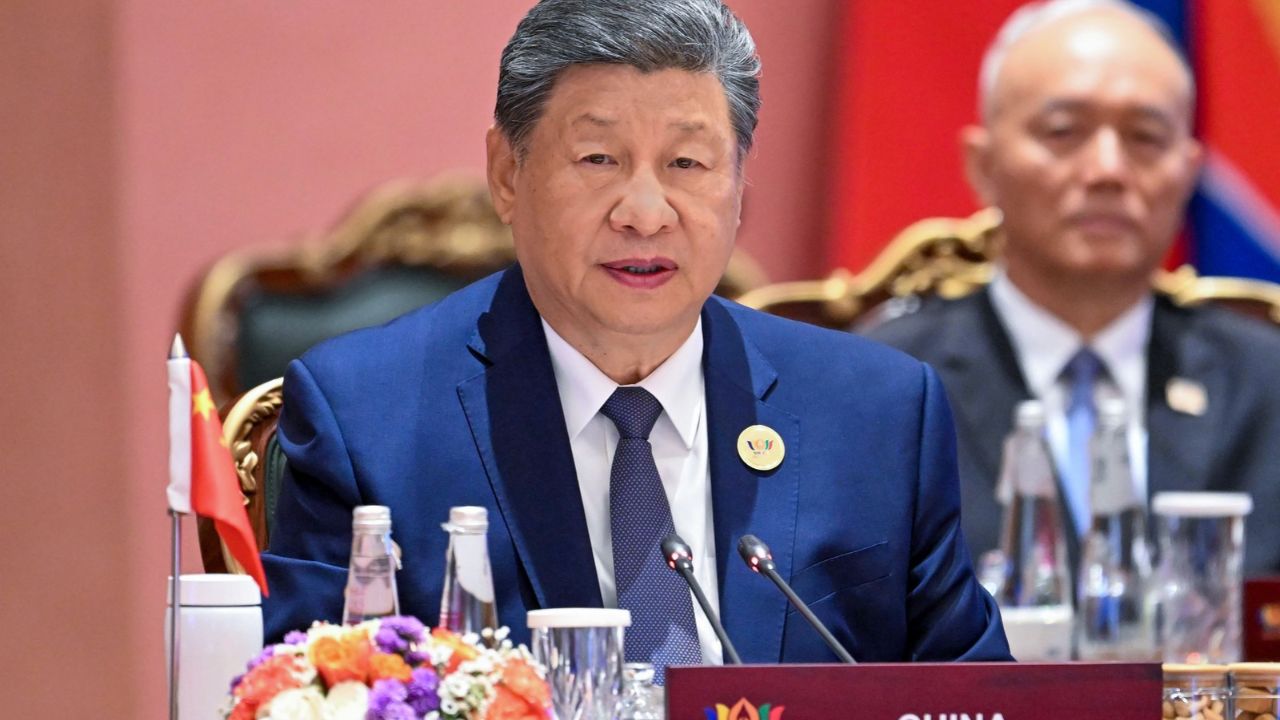
Xi Jinping unveils China’s ambitious AI vision at BRICS Summit in New Delhi. (Img: IANS)
New Delhi: Chinese President Xi Jinping on Sunday proposed a new artificial intelligence and advanced manufacturing framework aimed at accelerating digital growth across BRICS nations. Speaking at the BRICS Summit in New Delhi, Xi highlighted AI, industrial automation and digital transformation as key drivers for the future economy of the Global South.
The Chinese proposal includes creating a BRICS artificial intelligence open-source community, supporting the development of large language models, organising AI training programmes and building a wider digital technology ecosystem. The initiative comes at a time when artificial intelligence has emerged as one of the biggest battlegrounds in global competition, with countries racing to control advanced technology, computing power and semiconductor supply chains.
Xi outlined a broader technology cooperation plan covering artificial intelligence, digital industries, smart manufacturing, scientific talent development and trade facilitation. Under the AI cooperation proposal, China has offered to support BRICS members in developing advanced AI applications and improving access to emerging technologies.
The plan also includes a BRICS digital ecosystem cloud platform, digital skills development programmes, technology exchange initiatives and industrial cooperation models.
China has proposed creating a BRICS engineer cultivation alliance to train future technology professionals and promote cooperation in science and innovation. The focus is to create a technology-driven economic ecosystem where developing nations can participate in the next phase of industrial growth.
A key part of China’s BRICS proposal is the expansion of smart manufacturing capabilities across member countries. China has offered assistance in building intelligent factories, upgrading industrial systems and developing manufacturing standards using artificial intelligence, robotics and automation.
The move comes as countries worldwide attempt to modernise industries, improve productivity and reduce dependence on traditional manufacturing methods. Smart factories are expected to play a crucial role in sectors including automobiles, electronics, renewable energy, defence production and advanced engineering.
China’s AI initiative comes amid an intense technology rivalry with the United States over artificial intelligence development, semiconductor access and digital dominance. While Beijing is promoting open-source AI models and wider technology cooperation, Washington has focused on restricting access to advanced chips and chip-making equipment through export controls.
The competition has created challenges for developing economies that rely on global supply chains for semiconductors, rare earth materials, batteries and advanced industrial components. The BRICS technology agenda reflects an attempt by emerging economies to gain greater influence in the future digital order.
Prime Minister Narendra Modi raised concerns over the growing use of technology and critical minerals as tools of economic pressure. India emphasised that technological progress should remain inclusive, transparent and accessible for all countries.
The warning comes as critical minerals such as lithium, cobalt and rare earth elements become increasingly important for electric vehicles, renewable energy, defence technology and semiconductor industries. India has repeatedly called for resilient global supply chains to prevent excessive dependence on any single country.
Img: IANS
Xi Jinping urged BRICS nations to strengthen cooperation and increase the influence of the Global South in global decision-making. He argued that future rules related to artificial intelligence, digital technology and emerging industries should involve developing countries rather than being decided only by major economies.
According to Xi’s vision, BRICS cooperation could help member nations participate more actively in shaping the future of AI governance, technology standards and digital infrastructure. The proposal comes as BRICS expands its role as a platform representing emerging economies across Asia, Africa and Latin America.
Despite growing cooperation among BRICS members, differences remain over technology dependence, economic interests and geopolitical priorities. Experts believe BRICS countries share common concerns about global economic pressure and technology access but continue to face challenges due to different national strategies.
India’s approach has focused on maintaining cooperation with BRICS while also strengthening ties with Western economies. The debate highlights the difficult balance between technology collaboration, national security and economic independence.
China’s AI initiative could influence the future direction of global technology competition. If implemented successfully, the proposal could give BRICS countries greater access to artificial intelligence tools, digital infrastructure and advanced manufacturing capabilities.
However, questions remain over data security, technology dependence, intellectual property rights and the balance between cooperation and strategic competition. The coming years will determine whether BRICS can emerge as a major force in shaping global AI rules.
China’s AI and smart manufacturing proposals are expected to be discussed further among BRICS member countries. The focus will remain on technology partnerships, digital infrastructure development, AI training and industrial cooperation.
The outcome of these discussions could shape how emerging economies participate in the global artificial intelligence revolution. As the AI race accelerates, BRICS nations are positioning themselves as important players in determining the future of technology and economic power.


