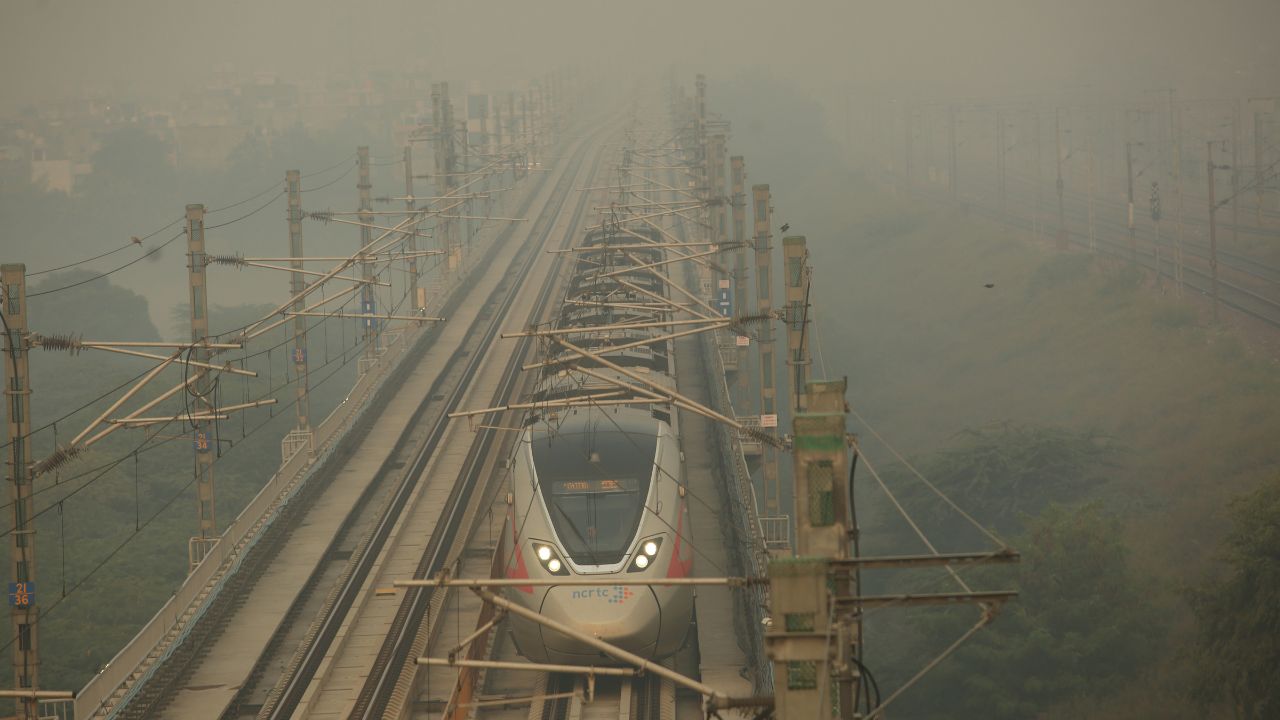
Different AQI readings fuel Delhi's pollution controversy (Img: IANS)
New Delhi: The National Capital woke up to a thick layer of smog the day after Diwali, with the city's overall Air Quality Index (AQI) touching 368 in the 'very poor' category at 7 am on Monday. By 10 am, the AQI had climbed to 371, the highest reading for a post-Diwali day since 2021.
According to the Central Pollution Control Board (CPCB), 15 monitoring stations recorded AQI levels above 400. Delhi Technological University reported the highest reading at 439, followed by Burari Crossing at 433 and Vivek Vihar at 421.
The AQI readings differ across platforms because of the methodology used to measure the pollution.
While CPCB reported an AQI of 371, private air-quality monitoring platforms such as IQAir recorded readings above 1,000 in several neighbourhoods, including Shahdara and Defence Colony.
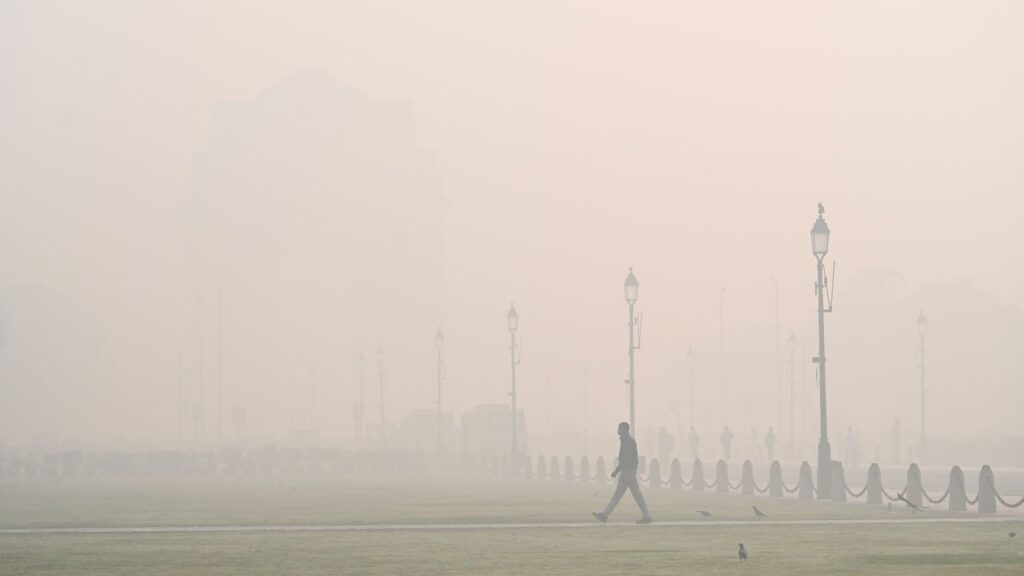
The difference in AQI readings lies in the measurement methodologies used by these platforms (Img: IANS)
The difference lies in the measurement methodologies used by these platforms. The CPCB's AQI scale is capped at 500, meaning any reading exceeding this threshold is reported as 500. The index is primarily designed to communicate public-health risks rather than measure how far pollution levels have crossed the severe category.
Also Read: Ankita Bhandari Case: BJP Minister Admits Slow CBI Probe, Congress Questions Delay
Private platforms use conversions that are based on the US Environmental Protection Agency's framework. As a result, pollution measurements can produce significantly different AQI figures.
The difference in readings became a political flashpoint after the Delhi Pollution Control Committee's (DPCC) website stopped displaying live data from different locations for several hours. On Monday, readings from IIT Delhi and Dwarka Sector 8 were also not available.
Former Delhi minister and AAP president Saurabh Bhardwaj said that monitoring stations were being shut down, 20 new stations had been installed in remote green areas and water was being sprayed over pollution monitors. He demanded the publication of the "true" AQI figures.
Meanwhile, BJP blamed stubble burning in Punjab and accused previous Congress and AAP governments of failing to address Delhi's pollution crisis.
BJP MP Praveen Khandelwal alleged that the Punjab government led by AAP had allowed widespread stubble burning to create a political controversy in Delhi.
CPCB data shows that Delhi experienced its most polluted Diwali in five years, despite the differences in AQI calculations.
Also Read: Trump Admits Immigration Crackdown Went Too Far, Signals Possible Policy Shift
Of the 51 monitoring stations that recorded data, 14 reported air quality in the 'severe' category, four in the 'poor' category and 33 in the 'very poor' category.
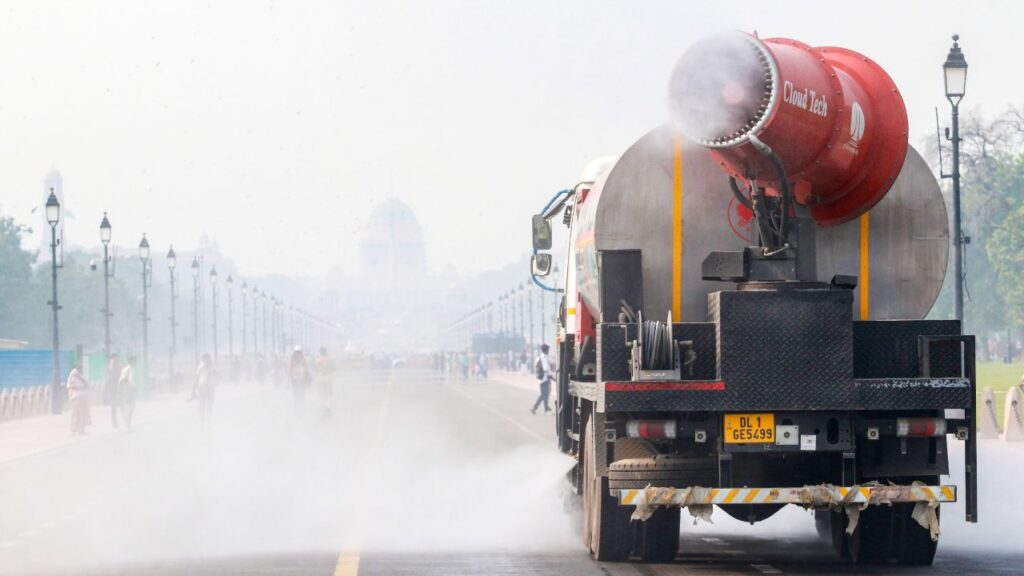
Data shows that Delhi saw its most polluted Diwali in five years (Img: IANS)
Delhi recorded a Diwali-day AQI of 376 this year, compared with 382 in 2021, 312 in 2022, 218 in 2023, 328 in 2024 and 345 in 2025.
The full-day average AQI on the day after Diwali stood at 351 in 2025, 338 in 2024, 360 in 2023, 302 in 2022 and 462 in 2021.


