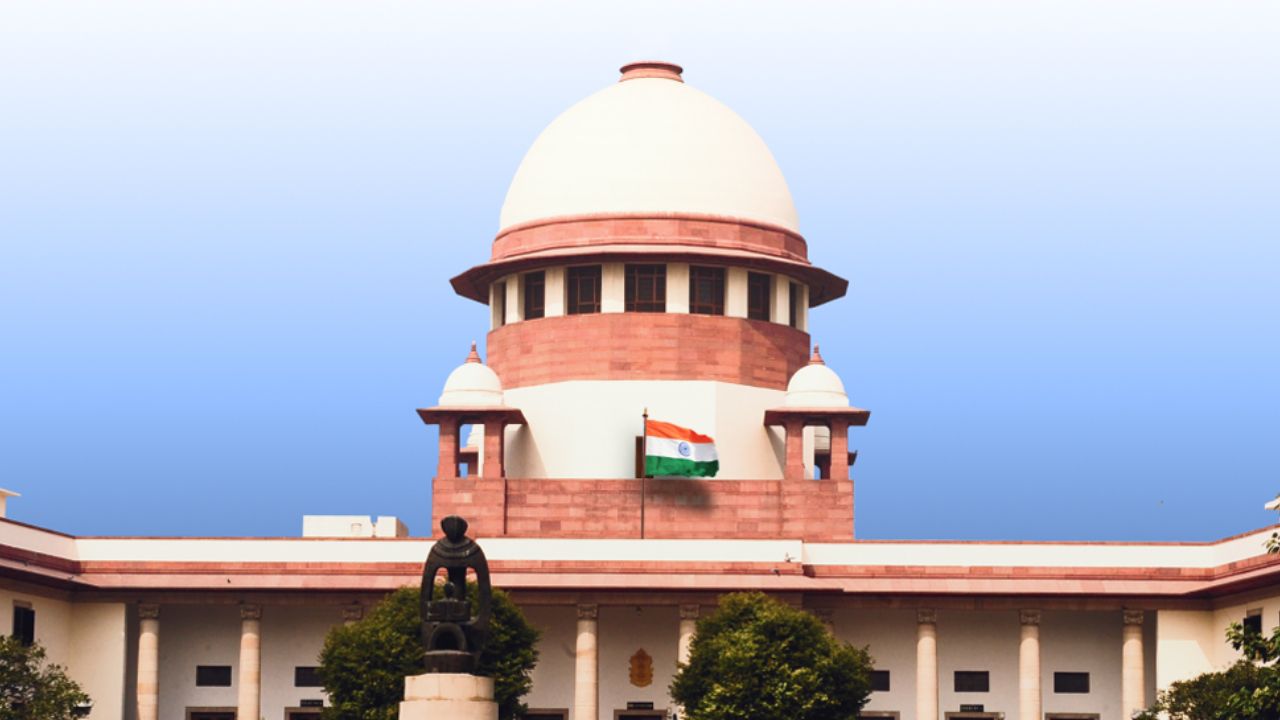
Supreme Court declines to entertain a constitutional challenge to Section 163 of the BNSS amid legal proceedings linked to Delhi protests. (Img: X)
New Delhi: The Supreme Court has refused to entertain a challenge to the constitutional validity of Section 163 of the Bharatiya Nagarik Suraksha Sanhita (BNSS), 2023, which empowers executive magistrates to issue urgent prohibitory orders to prevent potential threats to public peace and safety.
The Bench of Chief Justice of India Surya Kant and Justice Joymalya Bagchi, however, agreed to examine challenges to specific prohibitory orders issued in connection with the recent protests in Delhi on Thursday. The Court also issued notice on a separate plea questioning the constitutionality of Section 172 of the BNSS, which deals with compliance with lawful police directions and empowers the police to detain or remove persons who obstruct the discharge of their duties.
The Bench declined to reopen the constitutional validity of Section 163, observing that the corresponding provision under the erstwhile Code of Criminal Procedure (CrPC) had already been upheld by the Supreme Court.
"Oral submissions were made with regard to the vires of Section 163 BNSS. However, as the pari materia provision of Section 144 CrPC has been upheld in Babulal Parate v. State of Maharashtra, (1961) 3 SCR 423, we are not inclined to entertain the same," the Court observed.
While refusing to entertain the broader challenge to Section 163, the Bench issued notice on a petition filed by Samriddhi Das challenging the constitutional validity of Section 172 of the BNSS.
The Court sought responses from the Union government, the Delhi government, the Delhi Police Commissioner and other concerned authorities. The matter has been listed for further hearing on November 19, 2026.
During the hearing, Senior Advocate Kapil Sibal, appearing for a petitioner, questioned the exercise of powers under the relevant BNSS provisions in the backdrop of restrictions imposed during the Delhi protests.
The Bench clarified that its scrutiny of Section 172 would remain confined to the new statutory provision, rather than extending to the validity of the corresponding legal framework under the earlier criminal procedure law.
Section 172 requires individuals to comply with lawful directions issued by police officers in the discharge of their duties. The challenge raises questions concerning the scope of these powers, including the circumstances in which the police may detain individuals for allegedly disobeying directions or obstructing police functions.
The proceedings stem from a series of petitions concerning police action and restrictions imposed during demonstrations in Delhi against Chief Election Commissioner Gyanesh Kumar over alleged irregularities in the Special Intensive Revision of electoral rolls.
The protests triggered legal challenges relating to prohibitory orders, alleged detentions, restrictions on movement and the exercise of police powers. The Supreme Court has separately issued directions concerning the lawful regulation of public assemblies and the prevention of illegal detention.
Section 163 of the BNSS enables executive magistrates to issue urgent orders in cases of apprehended danger or nuisance, including restrictions on public gatherings where necessary to preserve public order. It succeeds Section 144 of the CrPC, whose constitutional validity has previously been upheld by the Supreme Court.
The latest order leaves the existing legal framework under Section 163 intact while permitting judicial scrutiny of individual orders issued under it and the distinct constitutional challenge to Section 172. The Court has not yet ruled on the merits of the challenge to Section 172 BNSS.

