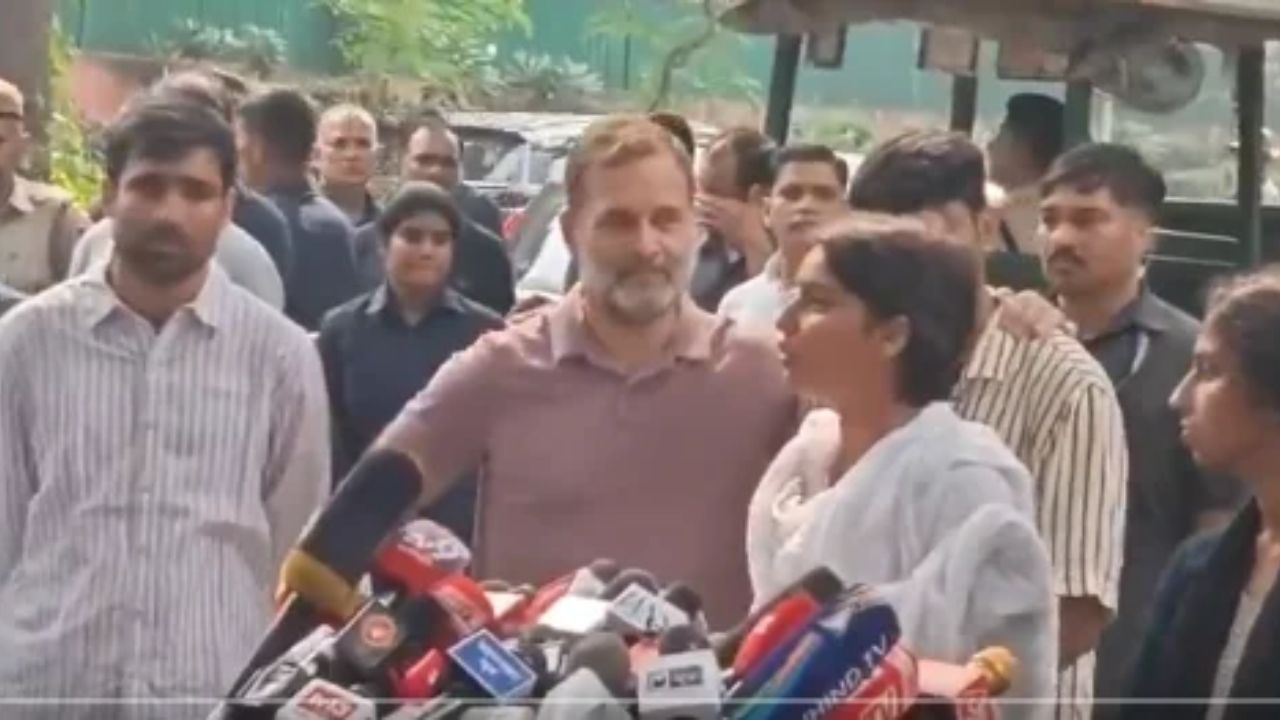
Rahul Gandhi addresses protesters demanding the removal of Chief Election Commissioner Gyanesh Kumar amid the escalating Delhi SIR row, urges students to preserve video evidence. (Img: X)
New Delhi: Leader of the Opposition in the Lok Sabha Rahul Gandhi on Wednesday extended his support to protesters involved in demonstrations demanding the removal of Chief Election Commissioner Gyanesh Kumar.
During a press conference with participants in the protest, Gandhi urged students to document their experiences, preserve video recordings and submit relevant evidence for examination after the controversy concludes.
His remarks came amid allegations of police action against demonstrators and mounting political criticism over the handling of protests connected with the Special Intensive Revision of electoral rolls. Gandhi indicated that evidence would be used to establish accountability and pursue action against those found responsible for wrongdoing.
The Congress leader’s intervention has added momentum to the Opposition’s campaign, with the dispute now extending beyond electoral-roll revision to questions about civil liberties, police conduct and access to designated protest venues.
One of the most emotional moments of the press conference came when protester Dharmendra Goswami described the experience of facing an FIR despite being among the young participants in the demonstration. Goswami said that he and other protesters were only 18 or 19 years old and called for the cases against them to be withdrawn.
He also recounted how meeting Rahul Gandhi had affected him emotionally. According to Goswami, he had spent several days keeping a low profile and concealing his identity by wearing a mask. He said Gandhi’s assurance of support had helped him feel more confident and less fearful about the situation.
Goswami appealed for the withdrawal of what he considered baseless FIRs against the protesters. His account brought the experiences of young demonstrators into the centre of a controversy otherwise dominated by political statements, police action and legal proceedings.
The interaction underscored the personal consequences that criminal complaints and the prospect of legal action can have on young participants in politically sensitive demonstrations. However, the merits of the FIRs and the allegations against individual protesters remain matters for the relevant authorities and courts.
The press conference also featured an unexpected moment when one of the protesters played the flute during the media interaction. The incident offered a brief human-interest element amid the tense political backdrop of the CEC-SIR protest row.
The gathering brought together Rahul Gandhi and demonstrators who had participated in the campaign seeking Gyanesh Kumar’s removal. Their appearance before the media highlighted the protesters’ determination to continue raising questions about electoral processes and the handling of demonstrations in the national capital.
The event also gave the protesters an opportunity to present their accounts directly to journalists and draw attention to their legal concerns.
The latest political developments follow the detention of Cockroach Janta Party (CJP) leaders Saurav Das and Ashutosh Ranka after a demonstration at Delhi’s Jantar Mantar. According to the supplied account, the two were sent to five days of judicial custody following the protest.
CJP members allegedly breached barricades and entered the protest area while demanding the resignation of Chief Election Commissioner Gyanesh Kumar and displaying the national flag. Police cited allegations including trespassing, violation of prohibitory orders, breach of a peace bond and obstruction of a public servant.
Another CJP member, Ajinkya Shinde, was reportedly released on a personal bond of Rs 5,000. The allegations against the detained leaders remain subject to legal proceedings, and the charges should not be treated as established guilt beyond the court’s findings.
The custody of the two activists has become a flashpoint in the wider political dispute, with Opposition leaders questioning whether the authorities’ response was proportionate to the nature of the demonstration.
Rahul Gandhi has criticised the action against the CJP leaders, arguing that peaceful demonstrations and the display of the national flag should not lead to the imprisonment of young protesters. He has also framed the dispute as a broader question of citizens’ constitutional rights and access to public spaces for peaceful dissent.
Several Opposition leaders have expressed solidarity with the detained activists. NCP (Sharadchandra Pawar) spokesperson Anish Gawande questioned the basis of the preventive action and indicated that Opposition parties were preparing to respond to further developments at short notice.
AAP national convenor Arvind Kejriwal also questioned the police action, while DMK president M.K. Stalin expressed solidarity with the detained leaders and offered legal support. Shiv Sena (UBT) leader Aaditya Thackeray signalled support for the continuation of the protest, while Trinamool Congress MP Abhishek Banerjee also criticised the arrests.
The Opposition’s response has brought several parties around a common set of concerns involving electoral processes, the treatment of demonstrators and restrictions on public protest. Their political solidarity, however, does not determine the outcome of the criminal cases, which must be addressed through the legal process.
The dispute has also brought renewed scrutiny to the decision to remove Jantar Mantar from the list of designated protest venues.
Delhi Police told the Delhi High Court that the site had been de-notified in compliance with Supreme Court directions. Authorities identified Ramlila Maidan, Burari Ground and CBD Ground as alternative locations for demonstrations.
The High Court issued notice to the authorities on a plea seeking reconsideration of the decision. A separate challenge to the de-notification was also reported to have been filed in the Supreme Court.
Opposition parties have argued that moving demonstrations away from central Delhi could make protests less accessible and reduce their visibility. Authorities, meanwhile, have pointed to alternative venues and the restrictions governing public assemblies.
The dispute raises broader questions about how authorities balance public order with the right to assemble and express dissent. The outcome of the legal challenges could have implications for how protest venues are designated and accessed in the capital.
CJP founder Abhijeet Dipke has maintained that the organisation intends to operate as an independent pressure group rather than transform itself into a political party.
Dipke has acknowledged a shared cause with the INDIA bloc over opposition to Chief Election Commissioner Gyanesh Kumar while maintaining that the organisation will retain its independent identity. He has also expressed gratitude for Rahul Gandhi’s public support for the detained leaders.
The position reflects an effort to distinguish the group’s activist role from formal electoral politics, even as its campaign overlaps with the Opposition’s criticism of the Election Commission and the SIR exercise. The extent of coordination between the group and Opposition parties, and how the campaign develops, will remain important aspects of the unfolding controversy.
The dispute has evolved into a wider political and legal confrontation involving the Election Commission, Opposition parties, protest organisers and law-enforcement authorities.
At its centre is the controversy surrounding the Special Intensive Revision of electoral rolls, an exercise that has prompted political debate over voter-list accuracy, verification procedures and the protection of eligible voters’ rights. The demand for Gyanesh Kumar’s removal has become a focal point of the protesters’ campaign.
The latest developments have added two further dimensions: the treatment of young demonstrators facing FIRs and the availability of accessible public spaces for political protest. Rahul Gandhi’s appeal to preserve video evidence has placed particular emphasis on documentation and accountability, although any allegations of misconduct would need to be assessed on the evidence available.
For young protesters, the outcome could shape their immediate legal circumstances. For political parties, the episode has become another point of confrontation over electoral administration and civil liberties. For authorities, the challenge is to enforce lawful restrictions while respecting the rights of citizens to demonstrate peacefully.

