English
 English

Festival celebrations across India have been overshadowed by deadly incidents in Kolkata, Gwalior, Balrampur and Hyderabad. (Img: X)
New Delhi: A season of devotion, festive fervour and collective celebration has been overshadowed by a series of devastating accidents across India. From a deadly stampede at a Durga Puja pandal in Kolkata to a truck ploughing into devotees near Gwalior’s Sheetla Mata Temple, a speeding car mowing down villagers outside a Durga temple in Uttar Pradesh’s Balrampur and a lighting structure collapsing during a college Dandiya event in Hyderabad, celebrations have turned into scenes of grief.
The tragedies have claimed dozens of lives and left scores of people injured, raising urgent questions about crowd management, road safety, structural stability and emergency preparedness at crowded public events. Families who stepped out to seek Maa Durga’s blessings, participate in religious festivities or enjoy cultural programmes have instead found themselves confronting unimaginable loss.
The incidents have also placed the spotlight on the responsibility of event organisers, local administrations, police and emergency services to ensure that faith and festivity do not become vulnerable to preventable hazards.
While the circumstances differ from one location to another, a troubling question connects the tragedies: when thousands gather in the spirit of devotion and celebration, are safety arrangements strong enough to protect every life?
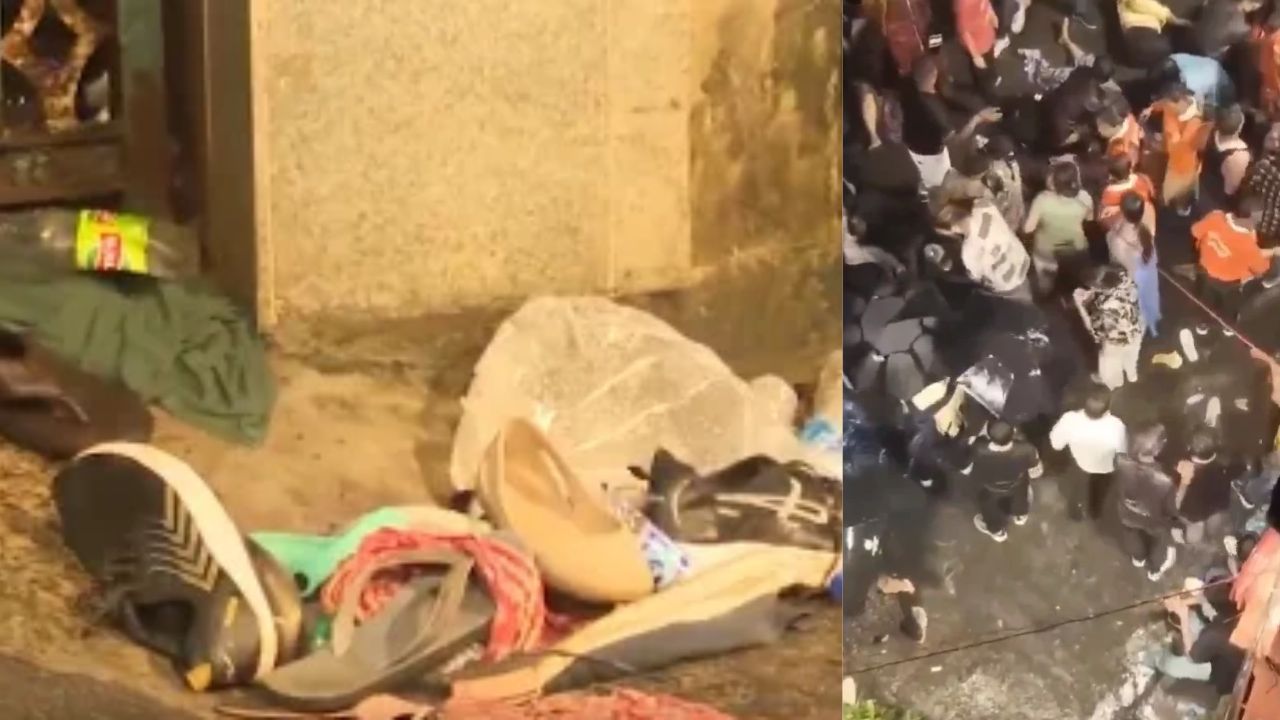
North Kolkata’s Chorbagan Sarbojanin Durga Puja pandal became the site of a devastating stampede on Saturday evening, October 17, when a sudden rush of visitors reportedly left 19 people dead and more than 25 injured.
The incident occurred at around 7:40 pm near the exit of the pandal in the Girish Park police station area. What began as an evening of religious observance and darshan descended into chaos as visitors struggled to move through crowded and reportedly narrow access routes.
Preliminary accounts suggest that heavy rain, a sudden surge in footfall and an announcement warning of a possible pandal collapse may have contributed to the disaster. Investigators are examining whether the combination of restricted movement, panic and crowd pressure triggered the fatal crush.
According to 25-year-old Sonu Pal, a resident of Kumartuli, he had visited the pandal with his mother to offer prayers. When rain began, large numbers of people reportedly sought shelter inside. As visitors near the entrance pushed forward, the crowd became increasingly compressed. People lost their balance and fell over one another, leaving some trapped beneath the mass of bodies.
Pal managed to escape the crush but later found that his mother had died. His account reflects the devastating human cost of a gathering where families had come together in the spirit of devotion to Maa Durga.
Residents have also raised concerns about narrow lanes, inadequate lighting, a shortage of trained crowd-management volunteers and questions about ambulance access. These claims remain subject to verification, but they have intensified scrutiny of the arrangements made for a prominent religious celebration.
Kolkata Police have arrested seven people, including members of the organising committee, while 12 people were initially detained for questioning, according to reports. Investigators are examining CCTV footage, witness accounts and the roles of organisers, private security personnel and officials responsible for crowd management.
The state government has announced a judicial inquiry headed by a sitting judge of the Calcutta High Court. Compensation has also been announced for the families of the deceased and the injured. The reported package includes Rs 25 lakh and a government Group-D job for each deceased person's family, Rs 5 lakh for each injured person and coverage of treatment costs.
Prime Minister Narendra Modi announced assistance of Rs 2 lakh for the next of kin of each deceased person and Rs 50,000 for each injured person from the Prime Minister’s National Relief Fund. Political leaders across party lines expressed grief and demanded an impartial investigation into the circumstances that led to the tragedy.
The stampede occurred during the 91st year of Chorbagan Sarbojanin Durga Puja. The pandal’s theme, AROB, sought to evoke a sense of peace and detachment from the surrounding noise, depicting Goddess Durga and her children in a meditative setting. The irony is stark: a celebration designed to convey tranquillity was overshadowed by panic, death and unanswered questions over public safety.
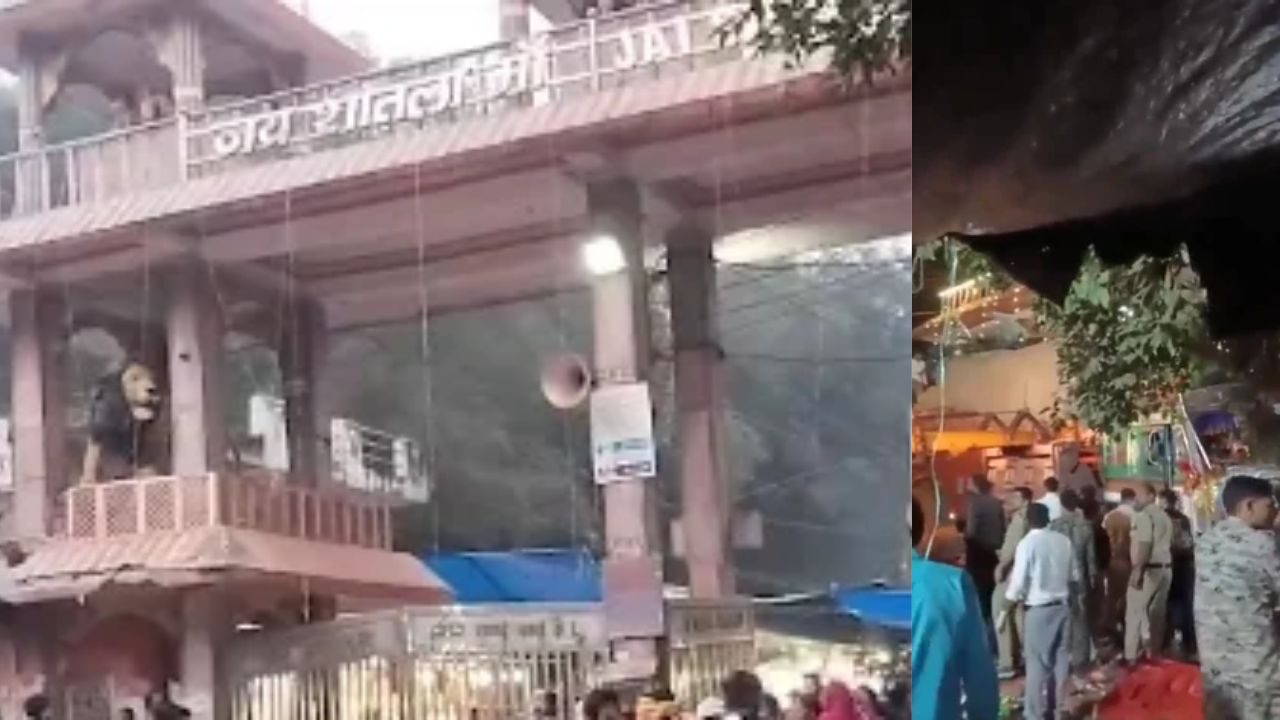
In Madhya Pradesh’s Gwalior, a religious pilgrimage turned fatal when a truck loaded with paddy reportedly lost control and ploughed into devotees near the Sheetla Mata Temple during Navratri.
The accident occurred at around 1:30 am on Sunday on the approach road from the Chhinor side. According to preliminary reports, at least 15 people died, while around 39 to 40 others were injured. Several victims were reported to be in critical condition.
The truck was reportedly travelling down a steep stretch when it moved past barricades and entered an area crowded with pilgrims. It struck devotees and roadside shops before crashing into the temple’s outer wall and entrance gate.
The impact triggered panic as people rushed to rescue those trapped beneath the vehicle and amid damaged structures. Police personnel, ambulances and emergency teams reached the site, and the injured were transported to hospitals in Gwalior. Two police personnel deployed in the area were also reportedly injured.
The incident has raised serious questions about how a heavy vehicle managed to enter a stretch where traffic restrictions were reportedly in force during the festival. The administration is examining the deployment of police personnel, the effectiveness of barricades and the enforcement of restrictions intended to protect pilgrims.
Gwalior District Collector Ruchika Chauhan said emergency teams were dispatched after the administration received information about the accident. Doctors were asked to assess the injured, including through X-rays and CT scans where necessary, and provide appropriate treatment.
A Regional Transport Office team has been asked to inspect the truck mechanically. Investigators are examining whether a mechanical problem, loss of control on the slope or other circumstances contributed to the crash.
The Sheetla Mata Temple, located around 18 kilometres from Gwalior’s district headquarters, attracts large numbers of devotees during Navratri. For pilgrims arriving to offer prayers and seek the blessings of the goddess, the visit ended in devastating loss.
The investigation will need to establish how the truck entered the crowded stretch and whether any lapses in traffic management or enforcement contributed to the tragedy. Until those findings are available, responsibility cannot be conclusively assigned.
In Uttar Pradesh’s Balrampur, a post-aarti gathering outside a Durga temple turned into a deadly accident late Saturday night. The incident took place in the Charangahi-Belha village area under the Dehat police station limits, reportedly at around 11 pm on October 17, although some accounts placed the accident closer to midnight.
After the evening aarti, villagers had gathered beside the road and put up a temporary screen or tent to watch a video. A car approaching from the Gaura Chauraha side reportedly went out of control, struck part of the temporary structure and ploughed into the gathering.
Three men died in the crash: Pateshwari Prasad, also known as Mehta Prasad, aged 42; Manoj Singh, 51; and Ganesh Pandey, 45. Four injured villagers were identified as Chhedi Ram, 50; Ghop Ram, 31; W, 37; and Mukesh Tiwari, 30.
The initial reports described around eight people being struck and five seriously injured, while subsequent detailed accounts identified four injured villagers. Two of the injured were reportedly referred from the District Memorial Hospital in Balrampur to Bahraich for advanced treatment. The other two continued to receive treatment in Balrampur.
The sudden crash triggered panic as residents rushed to help the victims and alerted the police. Chief Medical Officer Dr Mukesh Rastogi visited the hospital and directed doctors to provide appropriate treatment.
Police seized the car and detained the driver. Circle Officer Abhishek Singh said the circumstances of the crash were being investigated. Preliminary information raised the suspicion that the driver may have been under the influence of alcohol, but this has not been confirmed.
Investigators are examining how the car lost control and entered the area where villagers had gathered. The findings will determine whether any offences or other violations warrant further legal action.
The Balrampur tragedy is a grim reminder that roads beside religious venues can become dangerous when vehicles move close to gatherings of worshippers. A moment intended for community bonding after aarti ended with three families mourning their loved ones.
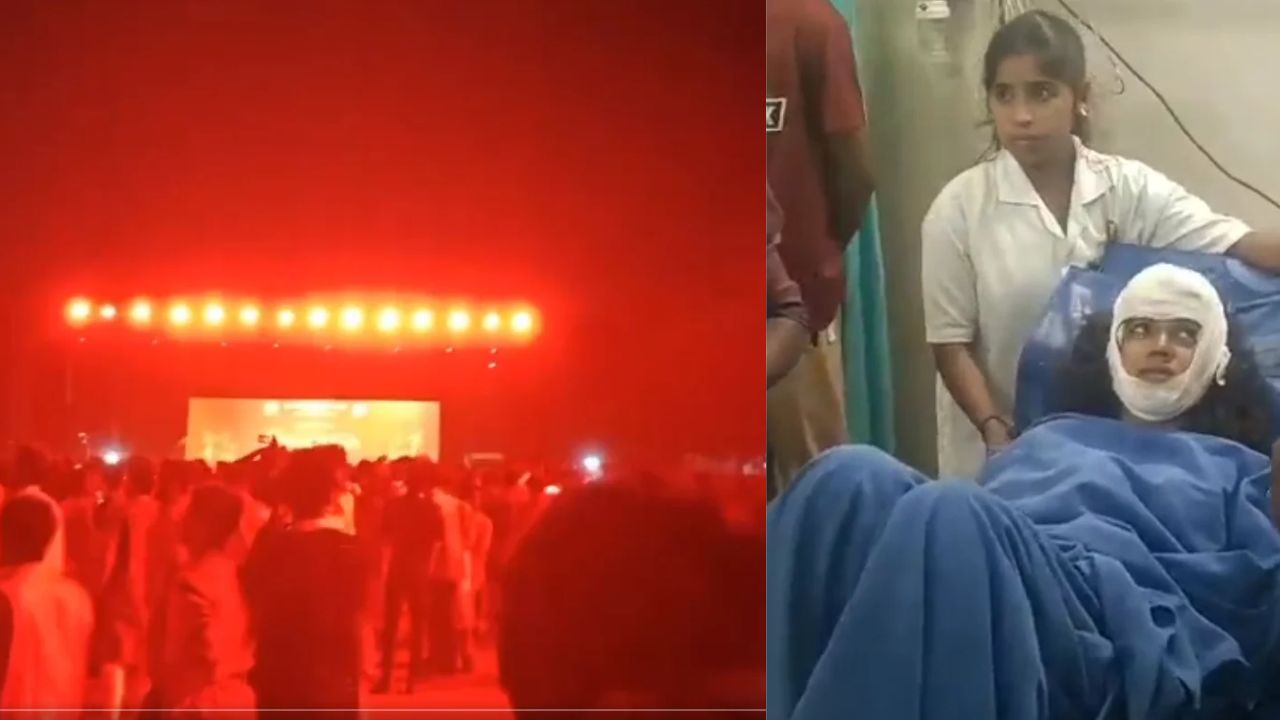
In Hyderabad, the festive atmosphere at MVSR Engineering College in Nadergul was shattered when a temporary lighting structure collapsed during a Dandiya programme held as part of Sangamam-2026.
The incident occurred at around 7:30 pm on Saturday, October 17, during the college’s two-day technical and cultural festival. More than 600 students were reportedly present at the venue.
According to preliminary reports, strong winds may have contributed to the collapse of a metal framework supporting the event’s lighting arrangements. The structure fell on students who had gathered for the Navratri celebration, leaving more than 25 people injured.
One of the deceased was identified as Sona Narayan Das, an 18-year-old first-year Electrical and Electronics Engineering student. She sustained critical head injuries and was taken to a nearby private hospital, where she died during treatment. Her sister, Meena Narayan Das, was also reportedly injured.
Reports said two people died in the incident, although the available account identified only one of the deceased. Authorities are examining the circumstances of the collapse and the safety arrangements at the venue.
The programme formed part of Sangamam-2026, a national-level technical and cultural festival held on October 16 and 17, featuring technical activities, cultural performances and student events.
Police are examining the stability of the temporary structure, the installation of lighting equipment and the precautions taken before the event. Shamshabad Deputy Commissioner of Police B Rajesh reportedly raised questions about whether the police had been informed about the programme, given the size of the gathering.
Telangana Chief Minister A Revanth Reddy expressed grief over the death and directed officials to ensure proper medical treatment for the injured. He also called for stringent action against those found responsible.
The incident has renewed concerns about the safety of temporary stages, lighting rigs, metal frames and other event infrastructure. Strong winds, unstable installations and inadequate safety checks can turn celebratory venues into hazardous spaces. The precise cause of the collapse and any potential negligence will have to be established through the investigation.
The tragedies in Kolkata, Gwalior, Balrampur and Hyderabad unfolded in different settings, but each involved people gathered for a religious, cultural or community event. Their common thread is the need to examine whether foreseeable risks were adequately assessed and managed.
In Kolkata, the focus is on crowd density, narrow entry and exit routes, the reported announcement and emergency access. In Gwalior, investigators are examining how a truck reportedly crossed barricades and entered an area crowded with pilgrims. In Balrampur, the key questions concern the loss of vehicle control and the circumstances in which a car struck people sitting beside the road. In Hyderabad, attention has turned to the stability of temporary structures and safety checks at a large student event.
The incidents should not be treated as evidence of a single cause or a common pattern of negligence. Each requires an independent investigation based on physical evidence, witness accounts, technical assessments and official records. But together, they underline the importance of robust safety planning at events where large numbers of people gather.
Crowd-management plans must account for peak footfall, bottlenecks, emergency exits and the possibility of panic. Vehicle restrictions around temples and festival grounds must be enforced effectively, with clear access routes for ambulances and rescue vehicles. Temporary stages, lighting frames and metal structures need professional installation, stability checks and safeguards against weather-related risks.
Emergency preparedness also matters. Trained personnel, functioning public-address systems, clearly marked exits, first-aid stations and accessible ambulance routes can make a crucial difference when an incident occurs. Hospitals must be ready to activate mass-casualty procedures, prioritise critical patients and coordinate referrals when local capacity is stretched.
Organisers and authorities must also communicate clearly during emergencies. An ambiguous warning or an unverified announcement can intensify panic in a crowded venue. Public information must be accurate, timely and designed to guide people towards safe exits rather than trigger sudden movement.
Across India, festivals such as Durga Puja and Navratri represent more than ritual observance. They are expressions of shakti, devotion, cultural identity and collective faith. Devotees gather to perform aarti, seek darshan, offer prayers and celebrate the triumph of good over evil. Communities invest time, labour and resources to create spaces where people can worship and rejoice together.
Yet devotion cannot substitute for safety, and religious enthusiasm must never become an excuse for inadequate planning. A pandal, temple approach road or college celebration may attract thousands, but every visitor remains entitled to a safe environment.
When families leave home to seek divine blessings, they should not have to fear a stampede, a runaway vehicle or a collapsing structure. The duty to protect human life rests with everyone responsible for planning, approving, securing and managing these events.
The loss of life in Kolkata, Gwalior, Balrampur and Hyderabad demands more than condolences and temporary closures. It calls for transparent investigations, accountability wherever lapses are established and practical changes that reduce the risk of another tragedy.
The true spirit of a festival lies in faith, compassion and the preservation of life. As grieving families seek answers and injured people fight to recover, the larger test for authorities and organisers is whether these tragedies will lead to meaningful reform—or whether the same safety questions will return when the next festival season begins.