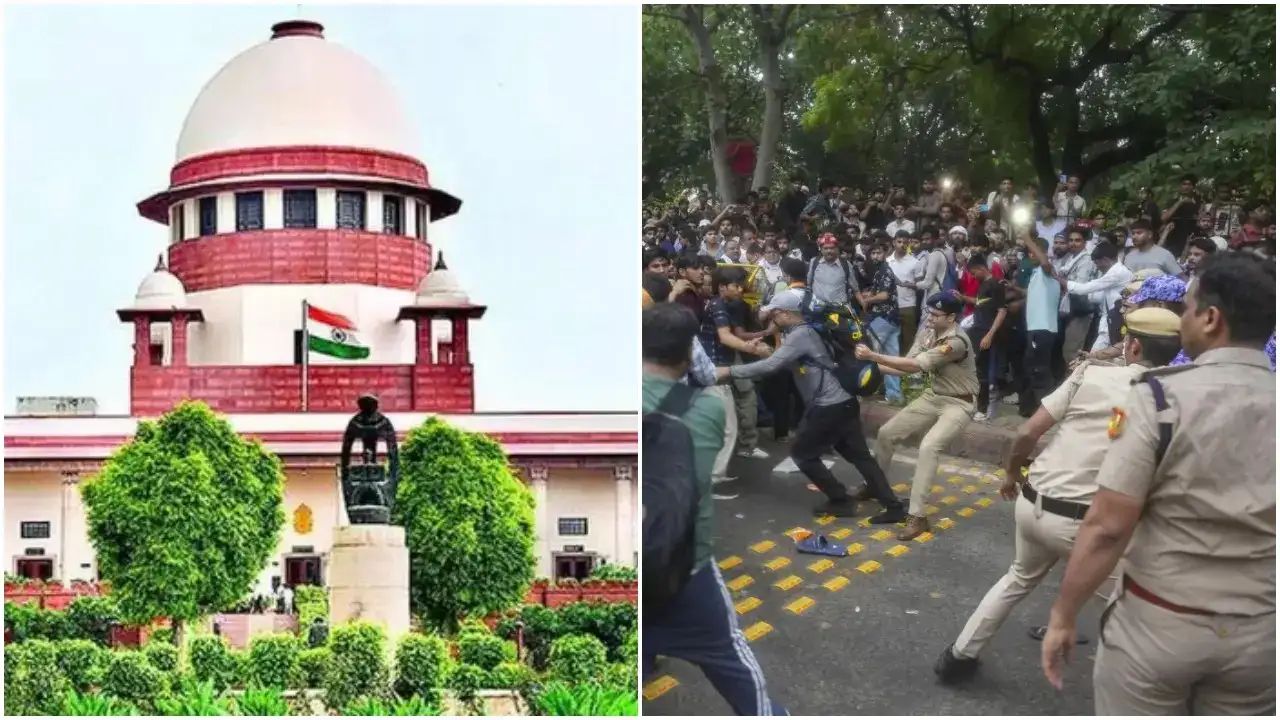
SC Makes Key Observation on Police Response During CJP's NEET Protest (Img: X)
New Delhi: The Supreme Court on Wednesday observed that security forces should exercise restraint while dealing with student protesters, saying any excessive use of force could aggravate the situation rather than restore order.
The remarks came during the hearing of a petition seeking action against the Cockroach Janta Party (CJP) over its alleged role in violence that broke out during student protests in Delhi and other parts of the country.
Also Read: ‘Mahatma Gandhi Is Enough’: CJP Founder Abhijeet Dipke Rejects Bangladesh, Nepal Protest Comparisons
A Bench headed by Chief Justice of India Surya Kant stressed that democratic protests require a balanced approach from law enforcement agencies.
The court observed that authorities should act cautiously to prevent further escalation and emphasised the importance of listening to the concerns raised by young protesters.
The Bench also said that law enforcement agencies are best placed to assess the situation on the ground and that the matter would be heard along with other pending petitions relating to the protests.
The CJP organised its 'Chalo Sansad' march on July 20 during nationwide protests over the alleged NEET-UG 2026 paper leak.
Clashes broke out between demonstrators and security personnel near Jantar Mantar and adjoining areas. According to Delhi Police, more than 65 protesters and over 200 police personnel were injured during the violence.
The alleged use of plastic pellets by security personnel later became a major point of controversy. Reports stated that several protesters sustained pellet injuries, while a CRPF internal inquiry reportedly found that a Rapid Action Force (RAF) personnel fired multiple pellet rounds during the operation.
The CJP concluded its 36-day sit-in at Jantar Mantar after announcing that the Centre had accepted several of its key demands.
These included the resignation of the then Union Education Minister, withdrawal of FIRs against protesters, protection from retaliatory action and consideration of broader reforms in the examination system.

