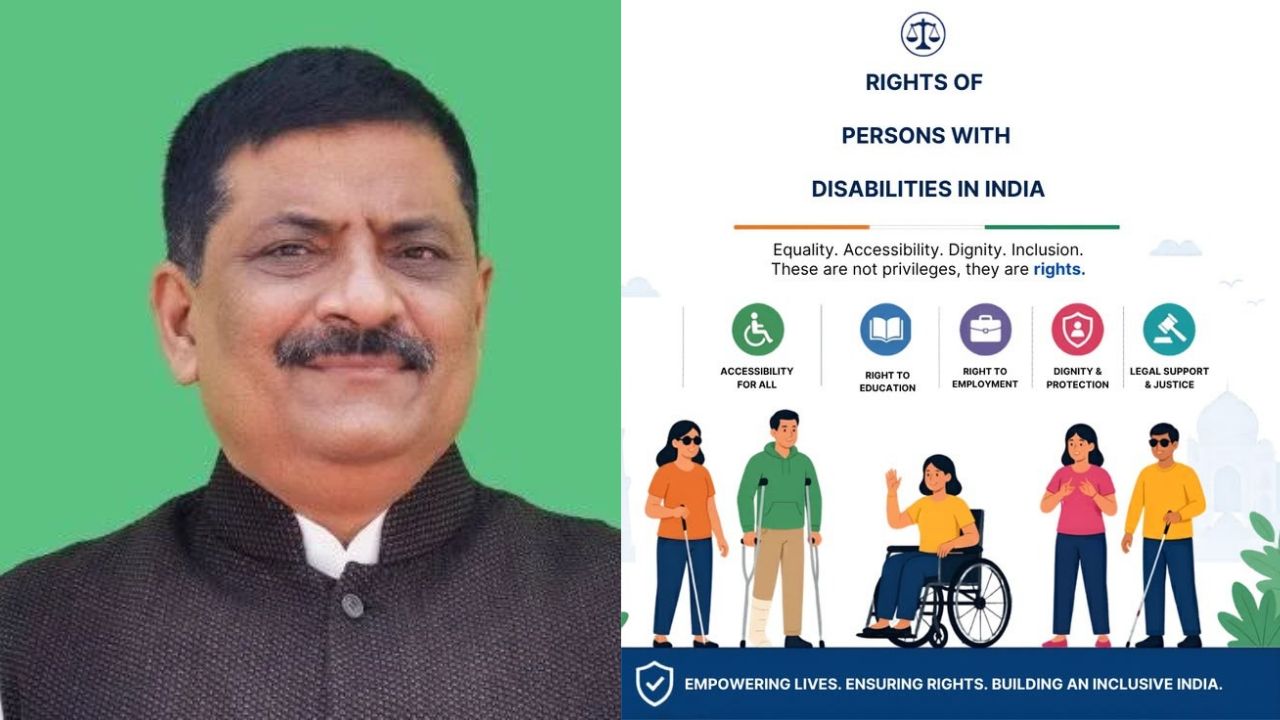
Sanjay Kumar Jha highlights disability rights and inclusive emergency response during an interactive dialogue at the United Nations in New York. (Img: Pinterest)
New York: India has renewed its call for a more inclusive global framework for protecting and empowering persons with disabilities, placing accessibility, equal opportunities and participation in decision-making at the centre of international discussions.
Sanjay Kumar Jha, Chairman of the Parliamentary Standing Committee on Transport, Tourism and Culture, highlighted these priorities during an interactive dialogue at the United Nations. His intervention focused on the challenges faced by persons with disabilities during humanitarian crises and disasters, when barriers to communication, transportation, healthcare and emergency assistance can increase their vulnerability.
India emphasised that persons with disabilities must not be treated merely as recipients of welfare or relief services. Instead, they should have equal rights, an active role in decisions affecting their lives and access to the resources required to participate fully in society.
The intervention also highlighted the importance of ensuring that emergency response systems, evacuation plans, shelters and humanitarian assistance programmes account for the diverse needs of persons with disabilities.
Humanitarian emergencies can disproportionately affect persons with disabilities when essential services and emergency communication systems are not accessible. Warning messages may not reach everyone, evacuation routes may be difficult to navigate, and temporary shelters may lack appropriate facilities or assistive support.
These barriers can increase the risks faced by people with mobility, visual, hearing, intellectual or other disabilities during floods, earthquakes, conflicts and other emergencies.
An inclusive disaster management framework therefore requires accessible early-warning systems, barrier-free evacuation routes, suitable emergency accommodation, uninterrupted access to medicines and assistive devices, and the involvement of persons with disabilities in preparedness and recovery planning.
India's intervention at the UN placed these concerns within the wider debate on human rights, humanitarian response and sustainable development. The emphasis was on ensuring that disability inclusion is incorporated into planning and implementation rather than addressed only after a crisis has occurred.
A central theme of India's message was the transition from a traditional welfare-oriented approach towards a rights-based model that prioritises dignity, independence and empowerment.
Under this approach, persons with disabilities are recognised as equal rights-holders who should be able to exercise their choices, access public services and participate in social, economic and political life.
India has pursued disability inclusion through legislative and policy measures, including the Rights of Persons with Disabilities Act, 2016. The legislation expanded the recognised categories of disabilities and strengthened provisions relating to equality, non-discrimination, accessibility, education, employment and social participation.
The broader policy objective is to reduce structural barriers and improve access to public infrastructure, digital services, education, healthcare and livelihood opportunities.
The message delivered at the United Nations reinforced the view that meaningful inclusion goes beyond providing assistance. It requires institutions to recognise the agency of persons with disabilities and ensure their participation in decisions that affect them.
India also reaffirmed its commitment to the United Nations Convention on the Rights of Persons with Disabilities, an international framework that promotes and protects the rights and dignity of persons with disabilities.
The convention establishes principles including equality, non-discrimination, accessibility, inclusion, respect for individual autonomy and equal participation in society. It also calls for appropriate safeguards for persons with disabilities during situations of risk, armed conflict, humanitarian emergencies and natural disasters.
By highlighting the convention, India underscored the importance of translating international commitments into practical measures that improve everyday accessibility and emergency preparedness.
Effective implementation requires coordination between governments, humanitarian organisations, local authorities, civil society groups and organisations representing persons with disabilities. Their involvement can help identify gaps in relief operations and ensure that support reaches those who need it.
The discussion also draws attention to the need for disability-inclusive humanitarian planning at the national and international levels.
Accessible public information, inclusive emergency communication, trained response personnel and barrier-free infrastructure can make a significant difference during disasters. Relief agencies must also account for the requirements of people who rely on wheelchairs, hearing aids, visual assistance, mobility devices, personal support or regular medication.
Equally important is the participation of persons with disabilities in designing and reviewing emergency policies. Their first-hand experience can help authorities identify risks that might otherwise be overlooked. Embedding these measures into disaster preparedness and humanitarian response can improve safety, protect dignity and reduce the risk of exclusion during emergencies.

