 English
 English

President Droupadi Murmu, Prime Minister Narendra Modi and Congress leader Rahul Gandhi pay tribute to Mahatma Gandhi at Rajghat on his 157th birth anniversary. (Img: X)
New Delhi: The country on Friday marked Mahatma Gandhi’s 157th birth anniversary with tributes at Rajghat, prayer meetings, cleanliness drives and nationwide programmes centred on peace, non-violence, truth and public service. President Droupadi Murmu and Prime Minister Narendra Modi paid homage to Gandhi at his memorial in New Delhi, as his enduring philosophy gained renewed attention amid wars, conflicts and geopolitical tensions across the world.
The commemorations placed Gandhi’s enduring political and social philosophy at the centre of the national discourse, with leaders highlighting his principles of Ahimsa, Satya, Sarvodaya, Swadeshi, social harmony and ethical public conduct. October 2 is observed as Gandhi Jayanti in India and is also recognised globally by the United Nations as the International Day of Non-Violence.
President Droupadi Murmu visited Rajghat and participated in the Sarva-Dharma Prarthana at Gandhi’s samadhi. Prime Minister Narendra Modi also paid floral tribute at the memorial and attended the prayer programme as the country commemorated Gandhi’s birth anniversary.
The Rajghat observance brought together senior constitutional authorities and political leaders for a solemn remembrance of Gandhi, whose approach to political mobilisation transformed the freedom movement by placing non-violent resistance, mass participation and moral persuasion at its core.
The presence of senior public representatives at Rajghat also underlined the continuing institutional significance of Gandhi’s legacy in India’s civic and political life.
President Murmu, in her Gandhi Jayanti message, emphasised that Gandhi’s life and ideals continue to command respect across the world. She underlined the contemporary relevance of his philosophy at a time when several regions are witnessing war, conflict and humanitarian distress.
According to the President’s message, Gandhi’s emphasis on peace and non-violence carries particular significance in the present global environment, where instability in one region can have wider political, economic and humanitarian consequences.
President Murmu also connected Gandhi’s philosophy of Sarvodaya with India’s long-term development vision. The principle of Sarvodaya, centred on the welfare and upliftment of all, was presented as relevant to an inclusive development framework in which economic progress is accompanied by empathy, social participation and equal opportunity.
Her message also linked ethical citizenship and public participation with the broader objective of building an empowered and self-reliant India by 2047.
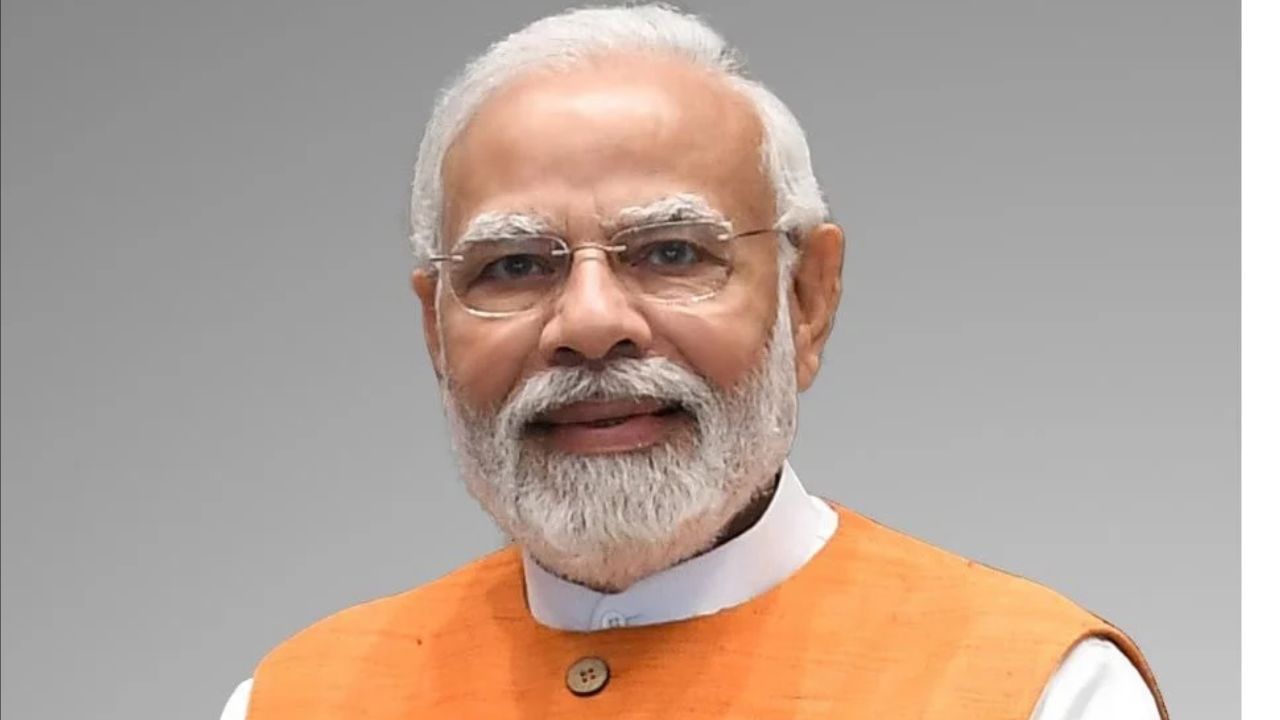
Prime Minister Narendra Modi also paid tribute to Gandhi at Rajghat and highlighted the continuing relevance of his principles of truth, non-violence, compassion and service.
In his Gandhi Jayanti messages, Modi placed Gandhi’s philosophy in a wider humanitarian context, underlining how his ideas have influenced political movements and public discourse beyond India.
The Prime Minister also referred to Gandhi’s association with values such as humility, compassion and equanimity, while stressing that his legacy continues to influence discussions around ethical leadership, social responsibility and peaceful coexistence.
Gandhi’s influence, Modi noted, extended far beyond formal political authority. His ability to mobilise millions through non-violent movements made him a defining figure in India’s freedom struggle and gave the philosophy of peaceful resistance a global vocabulary.
Gandhi’s political legacy was built around the idea that social and political transformation could be pursued without abandoning ethical principles.
His philosophy of Ahimsa rejected violence as the primary instrument of political change, while Satyagraha placed truth, moral courage and non-violent resistance at the heart of mass mobilisation.
These ideas played a major role in campaigns associated with India’s freedom movement, including the Non-Cooperation Movement, the Salt March and the Quit India Movement.
More than seven decades after his death, Gandhi’s principles continue to feature in conversations surrounding peacebuilding, civil resistance, conflict resolution, social justice and democratic participation.
His legacy has therefore evolved beyond the historical narrative of India’s independence struggle and remains part of wider discussions on how societies respond to inequality, political conflict and social fragmentation.
The Gandhi Jayanti observance also renewed attention to Gandhi’s economic philosophy, particularly Swadeshi and the promotion of Khadi. Prime Minister Modi urged citizens to purchase at least one Khadi product on October 2, connecting Gandhi’s emphasis on indigenous production with contemporary efforts to encourage locally made goods and strengthen domestic economic participation.
Gandhi’s Swadeshi philosophy was closely linked to economic self-reliance, local production and the empowerment of communities. Khadi became one of its most recognisable symbols, representing not merely clothing but an economic and political message associated with self-sufficiency and participation in the freedom movement.
In the contemporary policy discourse, these ideas are frequently connected with self-reliance, local manufacturing, rural livelihoods, traditional industries and the broader push for domestic production.
Gandhi Jayanti was also marked by cleanliness campaigns and Shramdaan activities across the country. In New Delhi, Union Health Minister J P Nadda participated in a cleanliness activity near Kartavya Bhawan-1.
In Gurugram, Haryana Chief Minister Nayab Singh Saini participated in the Swachh Bharat Abhiyan and called for greater public participation in keeping urban spaces clean. In Vijayawada, Andhra Pradesh, a Swachhathon 2026 programme was organised under the Swachhata Hi Seva initiative.
These activities reflect the continuing association between Gandhi’s public philosophy and the idea that cleanliness, civic responsibility and community participation should become part of everyday public life.
The government has also launched a 30-day nationwide cleanliness campaign beginning on Gandhi Jayanti and continuing through October 31, with participation expected from citizens, government and private institutions, educational establishments, NGOs and other organisations.
Gandhi’s birth anniversary was observed through a wide range of cultural and civic programmes across India. In Puri, Odisha, students at an institute associated with sand artist Sudarsan Pattnaik created a sand animation to commemorate Gandhi Jayanti. The artwork was completed in around 30 minutes, adding a creative dimension to the nationwide observance.
Across cities and institutions, programmes focused on cleanliness, community participation, public service and the values associated with Gandhi’s life. The pattern of celebrations reflects how Gandhi Jayanti has developed beyond a ceremonial observance, with government institutions, schools, civil society organisations and citizens using the occasion to organise public-awareness and community initiatives.
Gandhi’s understanding of Swaraj extended beyond the transfer of political power. For him, self-rule was closely connected with individual responsibility, social discipline, economic self-reliance and ethical citizenship.
His political vocabulary introduced concepts such as Satyagraha, Ahimsa, Sarvodaya and Swadeshi into India’s freedom movement and subsequently into global discussions on non-violent political action.
Gandhi’s mass politics also demonstrated how political mobilisation could be rooted in ordinary citizens rather than limited to institutional centres of power.
His campaigns brought farmers, workers, women, students, traders and communities from different social backgrounds into the national movement, transforming the freedom struggle into a broad-based mass mobilisation.
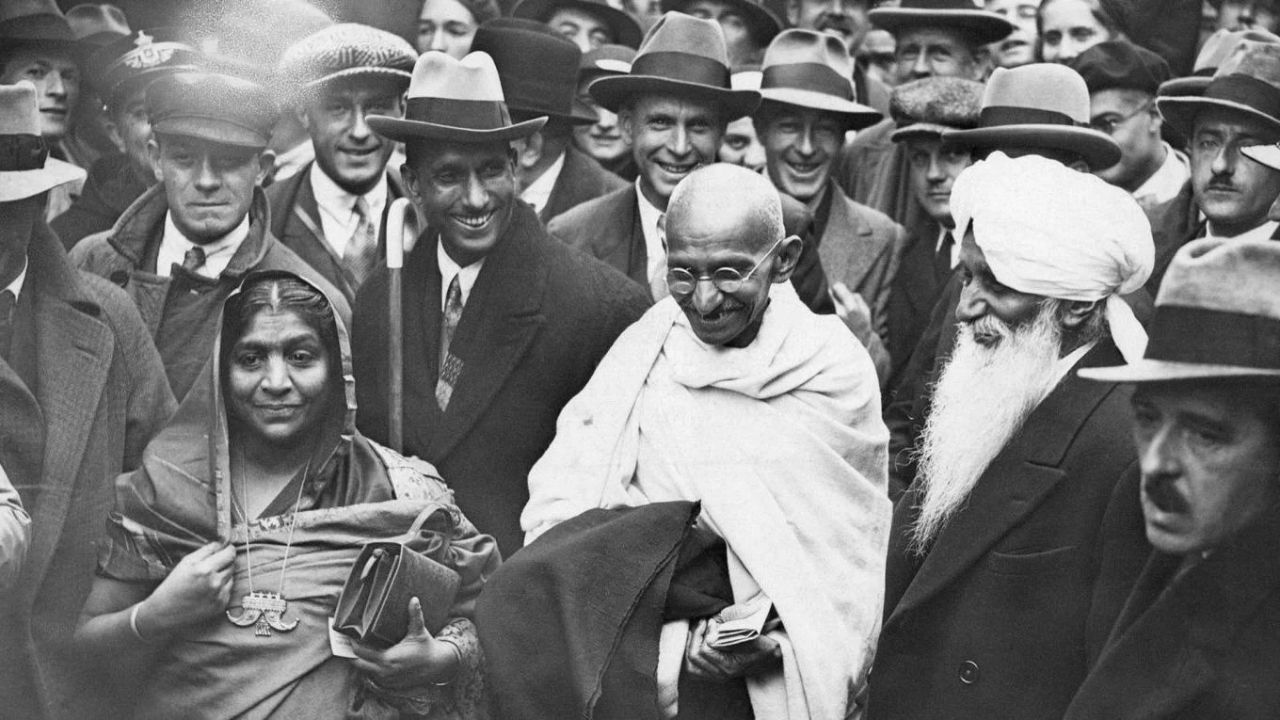
Mahatma Gandhi was born on October 2, 1869, in Porbandar, Gujarat. His birth anniversary is observed every year as Gandhi Jayanti in India.
The date also carries international significance. The United Nations observes October 2 as the International Day of Non-Violence in recognition of Gandhi’s contribution to the philosophy and practice of non-violent resistance.
The global observance has helped establish Gandhi’s legacy beyond India’s national history, particularly in discussions around peaceful political change, conflict resolution and human rights.
The 157th Gandhi Jayanti has once again placed Gandhi’s ideas at the intersection of history, public policy and contemporary civic life.
From Rajghat’s Sarva-Dharma Prarthana to nationwide cleanliness campaigns, from renewed attention to Khadi and Swadeshi to discussions around peace and non-violence, the day has been marked by both remembrance and attempts to connect Gandhi’s philosophy with present-day India.
For a country pursuing ambitious development and self-reliance goals, the continuing reference to Sarvodaya, ethical citizenship, social inclusion and community participation reflects the effort to interpret Gandhi’s legacy within a contemporary policy framework.
As India marks Gandhi’s 157th birth anniversary, the central question surrounding his legacy remains less about remembrance alone and more about how principles of truth, non-violence, compassion, service and social responsibility can be translated into everyday civic life.