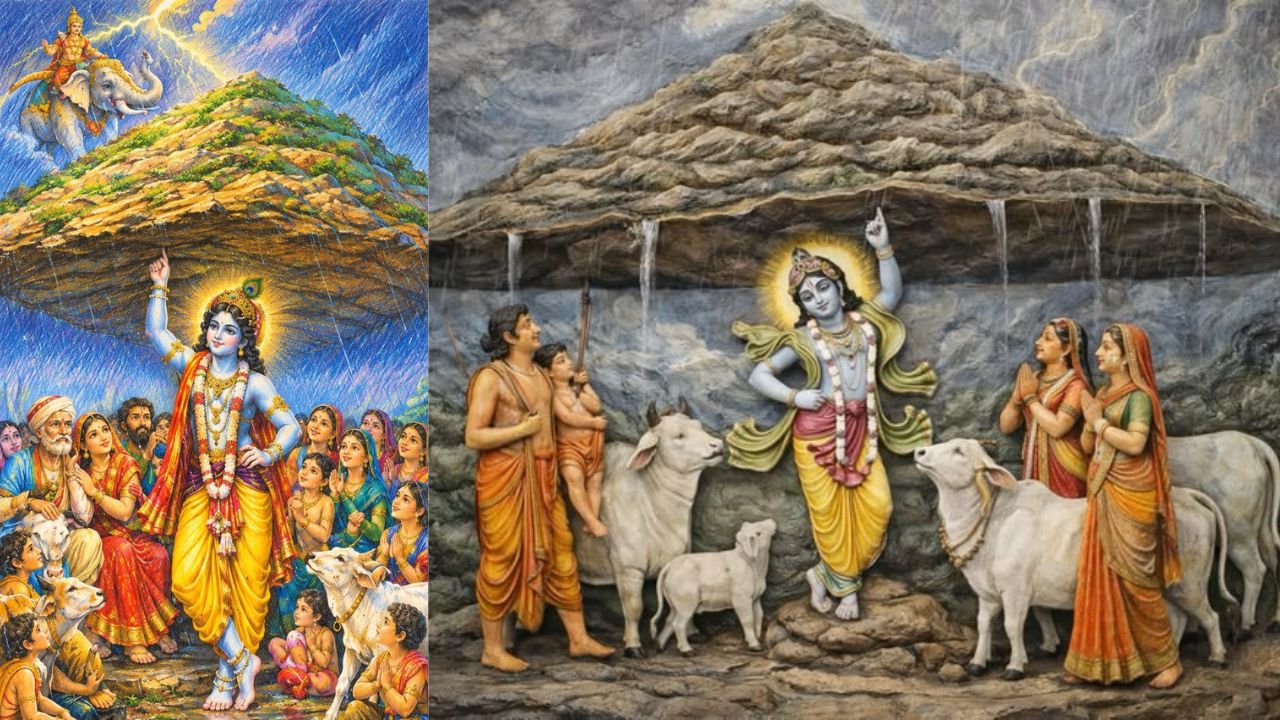
Govardhan Puja 2026: When Krishna Lifted A Mountain, Tamed The Storm And Turned Faith Into A Shield. (Img: X)
New Delhi: Govardhan Puja, an important Hindu festival dedicated to Lord Krishna, will be celebrated on November 10, 2026, a day after Diwali. Also observed as Annakut, the festival commemorates Lord Krishna's lifting of Govardhan Hill to protect the residents of Vrindavan from torrential rains unleashed by Lord Indra.
Celebrated on the Pratipada Tithi of Shukla Paksha in the Hindu month of Kartik, Govardhan Puja holds special significance for devotees of Lord Krishna. The occasion is marked by the worship of Govardhan Parvat, preparation of elaborate food offerings and prayers expressing gratitude for nature, cattle and agricultural abundance.
Govardhan Puja will be observed on November 10, 2026. Although some festival calendars mention November 9, the sunrise-based Panchang observance places the main celebration on November 10, as Pratipada Tithi prevails at sunrise on that day.
According to Drik Panchang, the important timings for New Delhi are:
- Govardhan Puja: Tuesday, November 10, 2026
- Pratipada Tithi Begins: November 9 at 12:31 PM
- Pratipada Tithi Ends: November 10 at 2:00 PM
- Morning Puja Muhurat: 6:40 AM to 8:50 AM
- Duration of Morning Muhurat: 2 hours and 10 minutes
The timings may vary across cities depending on local sunrise and sunset. Devotees are advised to consult their local Panchang before performing the rituals.
The difference in dates appearing across festival calendars is due to the timing of Pratipada Tithi. The lunar date begins at 12:31 PM on November 9 and continues until 2 PM on November 10. Under the traditional sunrise-based method of determining the festival date, Govardhan Puja is observed on the day when Pratipada is prevailing at sunrise.
Since the tithi does not prevail at sunrise on November 9 but continues through sunrise on November 10, the latter has been designated as the principal date for the festival in New Delhi.
According to Hindu mythology, the origins of Govardhan Puja are associated with an episode involving Lord Krishna and Lord Indra, the deity of rain and thunderstorms. The people of Vrindavan traditionally worshipped Indra to seek rainfall and ensure the prosperity of their crops and cattle.
Krishna, however, questioned the practice and explained that the community's well-being depended on the Govardhan Hill, its natural resources, forests and the cattle that sustained their livelihoods. Persuading the residents to worship Govardhan Hill instead, Krishna encouraged them to express gratitude towards nature and the environment.
Lord Indra became enraged by the change in worship and unleashed torrential rainfall upon Vrindavan. As the rains threatened to inundate the settlement, Krishna lifted the Govardhan Hill on his little finger, providing shelter to the villagers and their cattle beneath it.
The people remained protected under the hill for seven days, after which Indra recognised Krishna's divine power and withdrew the storm. The episode established Krishna's association with the title Govardhandhari, meaning the one who holds Govardhan Hill. The festival is celebrated in remembrance of this event and is also seen as a reminder of humanity's dependence on nature.
Devotees observe Govardhan Puja by creating a symbolic representation of Govardhan Hill, traditionally using cow dung, and decorating it with flowers, leaves and other offerings. The principal rituals include:
1. Preparing Govardhan Hill: A symbolic hill is made using cow dung and decorated with flowers, grass and other natural materials.
2. Offering prayers: Devotees worship Lord Krishna and Govardhan Parvat with flowers, incense, lamps, fruits and sweets.
3. Performing parikrama: Circumambulation of the symbolic Govardhan Hill is an important ritual. In Vrindavan and Govardhan, devotees also undertake the traditional Govardhan Parikrama.
4. Worshipping cattle: Cows and bulls are bathed, decorated with colourful ornaments and worshipped as symbols of prosperity and agricultural sustenance.
5. Preparing Annakut: A large assortment of vegetarian dishes is prepared and offered to Lord Krishna before being distributed among devotees as prasad.
Annakut, literally meaning a mountain of food, is an integral part of Govardhan Puja celebrations. Devotees prepare an extensive spread of food items, including sweets, savoury dishes, fruits, vegetables, grains and traditional delicacies. These offerings are arranged in the form of a mountain and presented before Lord Krishna.
The ritual commemorates the offerings made by the people of Vrindavan following Krishna's instruction to worship Govardhan Hill. The food is subsequently distributed as prasad among devotees. Temples, particularly those associated with the Pushtimarg tradition, organise elaborate Annakut celebrations, with hundreds of food preparations offered to the deity.
Beyond its mythological association, Govardhan Puja carries a message of gratitude towards nature and the resources that sustain human life. The festival highlights the importance of mountains, forests, water, animals and agriculture in maintaining ecological balance.
Krishna's intervention in protecting the people of Vrindavan is traditionally interpreted as a reminder that human prosperity is closely connected with the preservation of nature. The worship of cattle also reflects their historical and cultural importance in agrarian communities, where they have traditionally contributed to farming, transportation and household livelihoods. For devotees, the occasion is an opportunity to seek the blessings of Lord Krishna for prosperity, happiness and protection from adversity.
Govardhan Puja forms an important part of the five-day Diwali festivities and is traditionally observed after the main Diwali celebrations. It is followed by Bhai Dooj, which celebrates the bond between brothers and sisters.
The festival is known by different names across India. While it is widely celebrated as Govardhan Puja in northern India, it is also observed as Annakut and Bali Pratipada in different regional traditions.
In Gujarat, the day is associated with the Gujarati New Year, marking the beginning of a new financial and religious calendar for many communities. With prayers, food offerings and traditional celebrations, Govardhan Puja continues to commemorate Lord Krishna's protection of Vrindavan while reinforcing the values of gratitude, community welfare and respect for nature.

