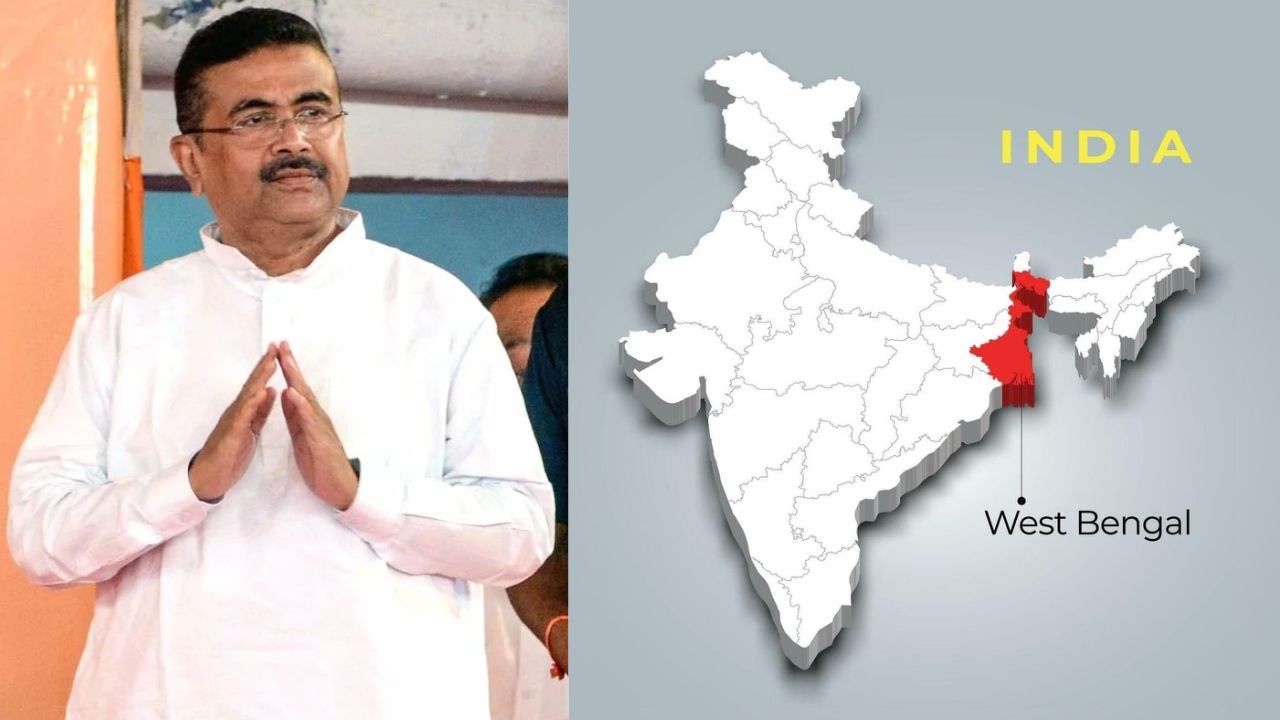
CM Suvendu Adhikari outlines an ambitious roadmap for West Bengal's development. (Img: Pinterest)
Kolkata: West Bengal is witnessing the beginning of a significant new chapter in its development journey. With the formation of the new government under Chief Minister Suvendu Adhikari in May 2026, the state has embarked on an ambitious course of economic renewal, infrastructure modernisation and administrative transformation. Anchored in the vision of a Viksit Bangla contributing meaningfully to Viksit Bharat, the government's approach places renewed emphasis on investment, employment, connectivity, effective governance and inclusive growth.
What distinguishes the emerging development agenda is its emphasis on translating policy intent into tangible outcomes. By strengthening coordination with the Centre, accelerating long-pending infrastructure projects and opening new avenues for private investment, the government is seeking to unlock Bengal's considerable economic potential.
Infrastructure development has emerged as one of the defining pillars of the new administration's agenda. In a significant step, 19 major infrastructure projects worth over ₹82,000 crore across roads, railways, metro connectivity, petroleum and natural gas, coal and other sectors were reviewed in July in a high-level meeting involving Union Minister Shivraj Singh Chouhan, Chief Minister Suvendu Adhikari and senior officials.
The exercise focused on resolving long-standing bottlenecks involving land acquisition, clearances, rehabilitation and inter-departmental coordination, with an emphasis on time-bound execution.
The state's regional connectivity is also set for a substantial boost. Under the Centre's UDAN framework, West Bengal has moved forward with plans for four airports at Purulia, Balurghat, Hasimara and Kalaikunda. These initiatives are expected to improve access to underserved regions, facilitate tourism and strengthen commercial linkages.
Recognising that sustainable prosperity must be driven by productive enterprise and employment, the government has placed industrialisation at the centre of its economic vision.
The first state Budget of the new administration, amounting to ₹4.38 lakh crore, outlined an investment-oriented roadmap, including a ₹5,000-crore provision for industrial incentives. Proposed initiatives include semiconductor manufacturing, defence production, green energy, electric mobility and the development of industrial clusters.
The proposed deep-sea port at Dadanpatrabarh, a Global Capability Centre policy and incentives for emerging technology sectors reflect an effort to diversify Bengal's industrial base. By creating a more conducive environment for businesses, the government aims to attract fresh capital, encourage entrepreneurship and expand employment opportunities for the state's young workforce.
The development vision extends well beyond metropolitan centres. Rural infrastructure, agricultural productivity and livelihood security remain important priorities.
The Centre has approved over ₹8,508 crore for rural development in West Bengal, taking the combined resources, including the state's contribution, beyond ₹12,064 crore. Additionally, interim approval has been granted for one lakh rural houses under the Pradhan Mantri Awas Yojana-Gramin.
Agricultural initiatives include the proposed Clean Plant Facility in Malda, strengthened rice and maize value chains and the development of West Bengal as the Seed Hub of Eastern India. Expanded access to crop insurance and institutional agricultural credit is also expected to strengthen the resilience of farming communities.
The government is also looking towards the future of urban Bengal. An ambitious proposal to develop four new cities in North Bengal, alongside a comprehensive development vision for the Kolkata metropolitan region extending to 2047, signals a broader approach to urban planning.
The emphasis is on modern infrastructure, improved mobility, organised urban spaces, affordable housing and sustainable development. Partnerships with public-sector organisations are expected to bring additional expertise and execution capacity to urban renewal initiatives.
At the heart of this emerging transformation is an effort to make governance more responsive, transparent and accountable. The government has articulated priorities spanning welfare delivery, national security, administrative efficiency and stronger Centre-State cooperation.
Its development agenda seeks to ensure that economic progress is accompanied by opportunities for women, young people, farmers, entrepreneurs and vulnerable communities.
West Bengal's journey towards renewed prosperity will, of course, require sustained implementation, institutional coordination and continued public participation. Nevertheless, the early policy direction reflects an ambitious attempt to combine economic dynamism with social development.
With its rich intellectual heritage, skilled human capital, strategic geography and entrepreneurial spirit, Bengal possesses the ingredients to become a major engine of India's next phase of growth. The new government's challenge and opportunity is to bring these strengths together. A Viksit Bangla is not merely an aspiration; it is a collective endeavour. And the foundations for that journey are now being laid.

