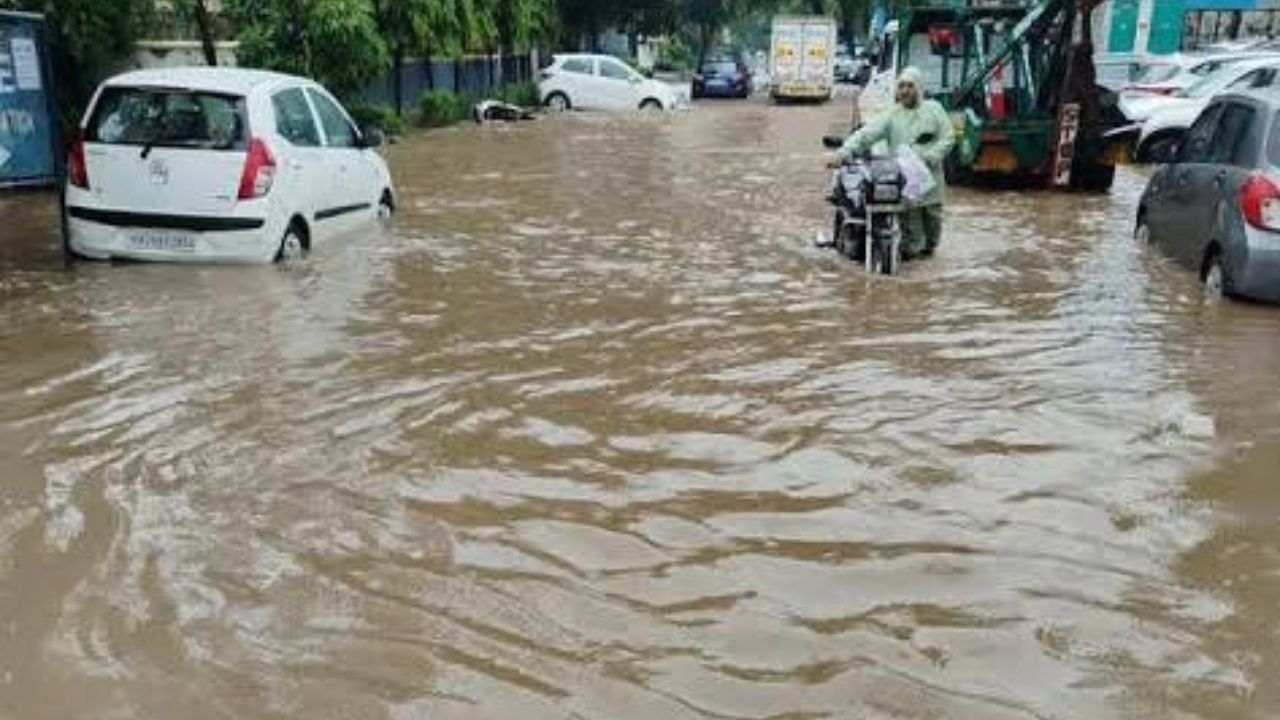
Gurugram: Heavy rainfall once again disrupted normal life in Gurugram, exposing the challenges faced by the city's urban infrastructure as several areas witnessed waterlogging, traffic congestion and power disruptions. With the India Meteorological Department (IMD) issuing an Orange Alert for the district, the Gurugram administration advised corporate offices and private institutions to consider work from home arrangements for employees on August 6 and 7.
The advisory was issued after Gurugram recorded 97 mm rainfall during the 24-hour period ending at 8 am. Authorities said reducing vehicular movement across the city would help civic agencies carry out drainage management, water removal operations and road clearance work more effectively.
The district administration and Gurugram Police appealed to private companies, business establishments and institutions to facilitate remote working wherever possible. Officials said limiting traffic pressure on city roads would ensure smoother movement for emergency services, including ambulances, fire tenders and police vehicles.
The rainfall intensity varied across different parts of Gurugram district. Sohna received the highest rainfall with 110 mm, while Gurugram recorded 97 mm. Kadipur and Harsaru witnessed 74 mm rainfall each, followed by Wazirabad with 55 mm and Manesar with 54 mm. Badshahpur recorded 13 mm, Farrukhnagar 7 mm and Pataudi 6 mm rainfall during the same period.
The latest rain spell brought back concerns among residents after earlier disruptions this week, when several major roads turned into waterlogged stretches and traffic movement came to a near standstill. Commuters faced long delays on important routes, including the Delhi-Gurugram Expressway, Sohna Road, Golf Course Road, MG Road, Cyber City and other busy corridors.
Several residents reported difficulties reaching offices due to flooded roads and slow-moving traffic. Social media platforms were flooded with videos showing vehicles stuck in waterlogged areas, commuters struggling to cross flooded stretches and residents expressing frustration over repeated monsoon-related disruptions.
The rainfall also affected electricity supply in several residential areas. Many residents reported temporary power cuts during the early morning hours, increasing concerns about civic preparedness during extreme weather conditions.
Schools also took precautionary measures amid the weather situation. Some private institutions shifted classes online to ensure student safety as water accumulation was reported in surrounding areas.
The situation became a major talking point after visuals showed Haryana Chief Minister Nayab Singh Saini's convoy caught amid traffic congestion caused by waterlogging. The incident triggered discussions on social media about Gurugram's recurring monsoon challenges despite repeated infrastructure improvement claims by authorities.
The Gurugram Metropolitan Development Authority (GMDA) and Municipal Corporation Gurugram (MCG) have maintained that several measures have been taken to reduce flooding risks. Officials said improvements in drainage management, desilting work, rainwater harvesting projects and restoration of water bodies have helped reduce the number of chronic waterlogging locations.
However, urban experts believe Gurugram's flooding problem is linked to long-term planning issues rather than rainfall alone. The city's rapid expansion, extensive construction activity and reduction in natural drainage channels have affected the movement of rainwater.
Historically, Gurugram benefited from natural slopes connecting the Aravalli region with surrounding drainage networks. Traditional water management systems, including ponds, bunds and check dams, helped regulate rainwater flow. Over the years, several water retention areas have reduced due to urban development, increasing pressure on the existing drainage network.
Experts have repeatedly highlighted that large-scale concrete development has reduced groundwater absorption capacity. As more open land has been replaced by buildings, roads and commercial infrastructure, rainwater increasingly flows onto streets instead of being absorbed naturally.
The city's stormwater drainage system has also faced capacity challenges during intense rainfall events. Several major drains require regular maintenance, desilting and expansion to handle sudden heavy downpours.
Gurugram, known as a major corporate and technology hub housing offices of several multinational companies, contributes significantly to Haryana's economy. However, repeated monsoon disruptions have raised questions about urban resilience, infrastructure planning and climate adaptation measures.
Weather officials have warned that more rainfall activity may continue across parts of the National Capital Region, including Delhi, Noida, Ghaziabad, Faridabad and Gurugram. Authorities have advised residents to avoid unnecessary travel, stay away from flooded areas and follow official traffic and weather advisories.
As civic agencies continue drainage clearance and emergency response operations, the recurring question remains whether Gurugram's infrastructure can keep pace with its rapid urban growth or whether every monsoon will continue to bring the corporate city to a standstill.

