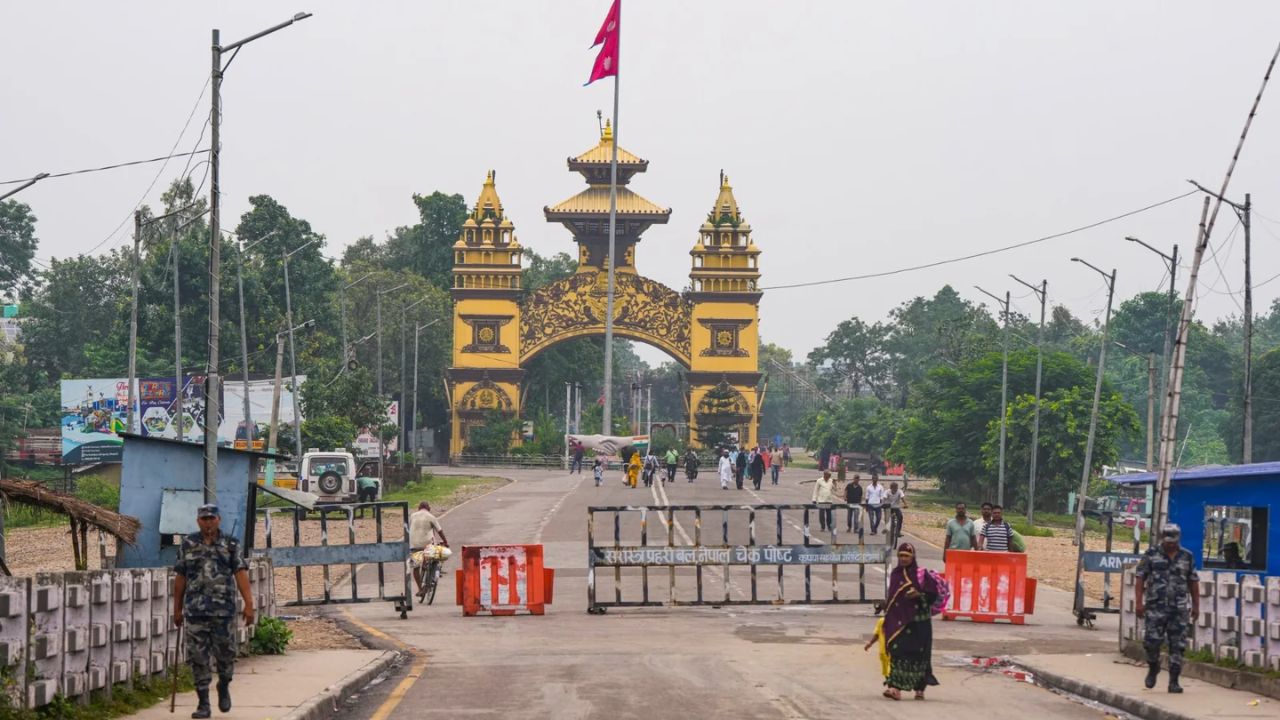
India rejects third-party role in Nepal boundary dispute (Image Internet)
New Delhi: India has ruled out any involvement of third parties in boundary discussions with Nepal, responding to recent remarks from Kathmandu. The Ministry of External Affairs said the matter remains strictly bilateral and is being handled through established mechanisms between the two neighbours.
MEA spokesperson Randhir Jaiswal noted that nearly 98 per cent of the India-Nepal boundary has already been demarcated, with only a few stretches pending resolution due to natural changes in river courses like the Gandak.
He added that both countries are jointly mapping areas involving encroachment and no-man’s land under existing bilateral frameworks.
The controversy began after Nepal Prime Minister Balendra Shah stated in Parliament that both India and Nepal have seen instances of territorial encroachment, prompting political discussion.
He also suggested involving historians, surveyors and international experts to help resolve long-standing boundary differences. Nepal’s foreign ministry later clarified that his remarks referred to issues of encroachment in no-man’s land rather than formal territorial claims.
The statement triggered debate in Nepal’s Parliament, where opposition lawmakers sought clarification and evidence to support the claims made by the prime minister.
Leaders from major parties questioned the remarks, urging the government to either substantiate them or formally withdraw the statement.
India and Nepal have long maintained several technical committees to survey, demarcate and resolve outstanding boundary issues through joint field inspections and satellite mapping exercises.
Officials from both sides continue to meet periodically to address river-induced changes in terrain and prevent local disputes from escalating.
Analysts say the latest exchange underscores the sensitivity of boundary politics in South Asia, where historical treaties and natural shifts often complicate modern mapping efforts. Despite occasional political tensions, both governments have repeatedly emphasized the importance of dialogue, diplomacy and peaceful resolution of disputes.
The issue remains under active review as officials from New Delhi and Kathmandu continue consultations aimed at maintaining stability along the open border. Both sides reiterated commitment to existing bilateral frameworks for peaceful resolution of all issues.
Experts note that the shifting course of the Gandak River has historically contributed to boundary ambiguities, requiring continuous survey updates and cooperation between border agencies. Both governments stress that maintaining trust and avoiding escalation remain key priorities in managing the sensitive frontier region peacefully together.

