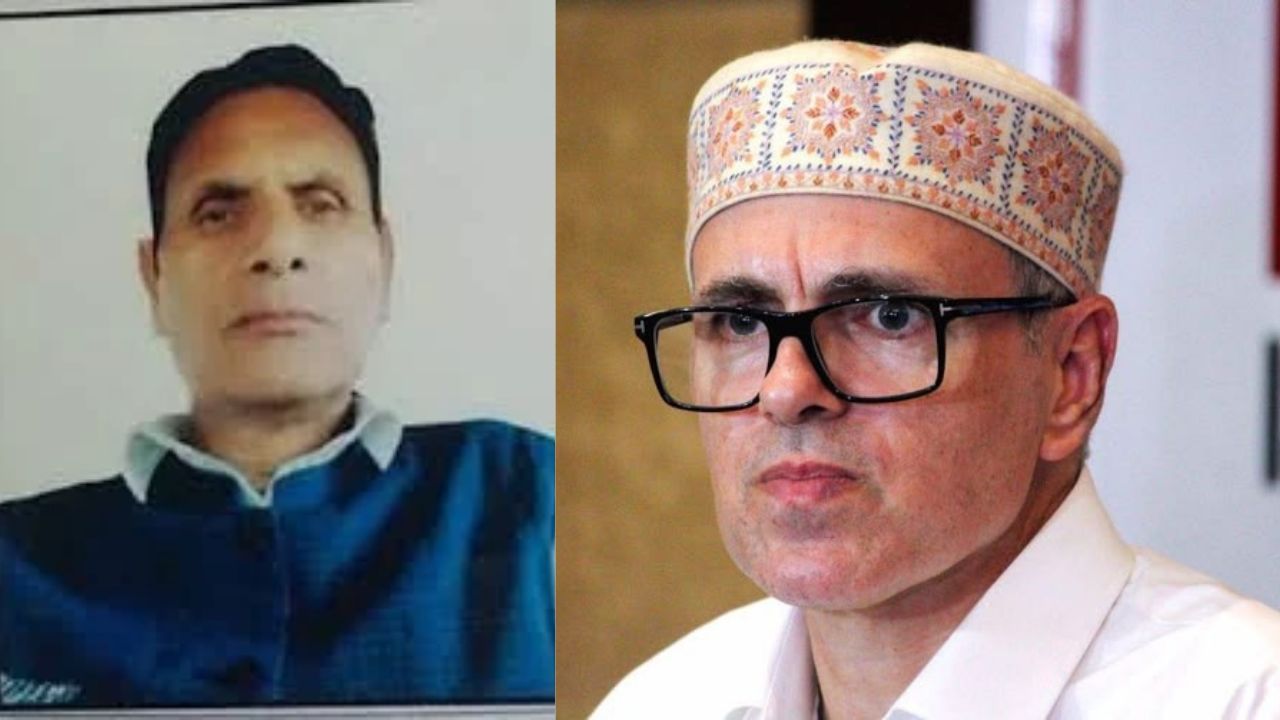
Abdul Majeed Bhat expresses disappointment outside Lok Bhavan after Omar Abdullah’s cabinet expansion. (Img: X)
Srinagar: Jammu and Kashmir Chief Minister Omar Abdullah’s cabinet expansion has triggered visible discontent within the ruling National Conference, with senior MLA Abdul Majeed Bhat breaking down before reporters after missing out on a ministerial berth. The reshuffle, which saw four new ministers take oath at Lok Bhavan in Srinagar, has exposed tensions over political representation, seniority and the distribution of power within the party.
The developments have put the National Conference leadership under pressure to manage internal expectations while maintaining unity in the coalition government. Several party legislators reportedly skipped the swearing-in ceremony, while others voiced disappointment over the cabinet’s composition and the absence of representation for certain regions.
The cabinet expansion took an emotional turn on Tuesday when three-time National Conference MLA Abdul Majeed Bhat expressed his disappointment outside Lok Bhavan in Srinagar. The Anantnag West legislator said he had been among the contenders for a ministerial position until late in the evening but was ultimately left out of the reshuffle.
Bhat described himself as an honest and dedicated party worker and questioned why he had not been selected despite his seniority. He also compared his position with that of Altaf Ahmad Kaloo, who was inducted into the cabinet, saying he believed he was more deserving of the opportunity.
His emotional reaction offered a glimpse into the personal and political stakes attached to cabinet appointments. For legislators, a ministerial position can bring greater administrative responsibility, political visibility and an opportunity to influence decisions affecting their constituencies. Being overlooked can therefore create frustration, particularly among senior leaders who believe their experience and contribution merit recognition.
Bhat attended the oath-taking ceremony despite his disappointment, but his remarks highlighted the challenge facing the party leadership as it attempts to balance seniority, regional representation and political considerations.
Bhat was not the only legislator whose reaction drew attention. Around half a dozen National Conference MLAs reportedly stayed away from the ceremony, including Ajaz Jan, Muzaffar Khan, Mehr Ali, Nazir Gurezi and Arjun Singh Raju. Some of the absent legislators reportedly cited urgent work, leaving the reasons for their absence unclear.
The absences have fuelled questions about whether the cabinet expansion has deepened dissatisfaction within the ruling party. However, missing a ceremony does not by itself establish opposition to the leadership, and the reasons given by individual legislators need to be considered separately.
The episode nevertheless underscores the delicate task of accommodating party veterans and regional interests when ministerial positions are limited. With more legislators seeking representation than available berths, the selection process can create competing expectations within the party.
National Conference MLA Sajjad Shaheen also expressed disappointment over the lack of representation for the Chenab Valley in Jammu division. At the same time, he acknowledged the constraints faced by the party leadership in the Union Territory.
Regional representation remains a sensitive issue in Jammu and Kashmir, where political expectations can vary across the Kashmir Valley, Jammu division and individual districts. Legislators who feel their constituencies have been overlooked may face pressure from local supporters to seek a greater role in the administration.
The latest reshuffle has therefore brought two competing priorities into focus: selecting experienced leaders who can run government departments and ensuring that different regions and political constituencies feel represented in the cabinet.
Lieutenant Governor Manoj Sinha administered the oath of office to four new ministers at Lok Bhavan in Srinagar. The National Conference leaders inducted into the cabinet were Ali Mohammad Sagar, Mir Saifullah, Shameema Firdous and Altaf Ahmad Kaloo. The reshuffle also saw Independent MLA Satish Sharma dropped from the council of ministers.
The induction of senior National Conference figures, including leaders with previous ministerial experience, signals the party’s decision to bring established political hands into the administration. However, the selection has also left some aspirants disappointed, with the reported absences and public criticism adding to scrutiny of the party’s internal decision-making.
The cabinet expansion is the first since the National Conference returned to power following the 2024 Assembly elections. The party must now manage internal expectations while demonstrating that the reshuffle can strengthen government functioning.
Jammu and Kashmir has a 90-member Legislative Assembly. Under the Jammu and Kashmir Reorganisation Act, 2019, the Council of Ministers cannot exceed 10 per cent of the Assembly’s total strength, placing the maximum at nine ministers, including the Chief Minister. This leaves limited room for accommodating competing claims from legislators across the Union Territory.
That restriction helps explain why cabinet formation can become a difficult balancing act. Seniority, political experience, regional representation and the leadership’s assessment of administrative needs can all influence appointments, while the number of available positions remains fixed.
For the National Conference, the challenge is not only to fill the cabinet but also to ensure that legislators who were left out continue to support the government’s work. Public displays of disappointment can put pressure on party leadership, even when they do not necessarily indicate a wider organisational split.

