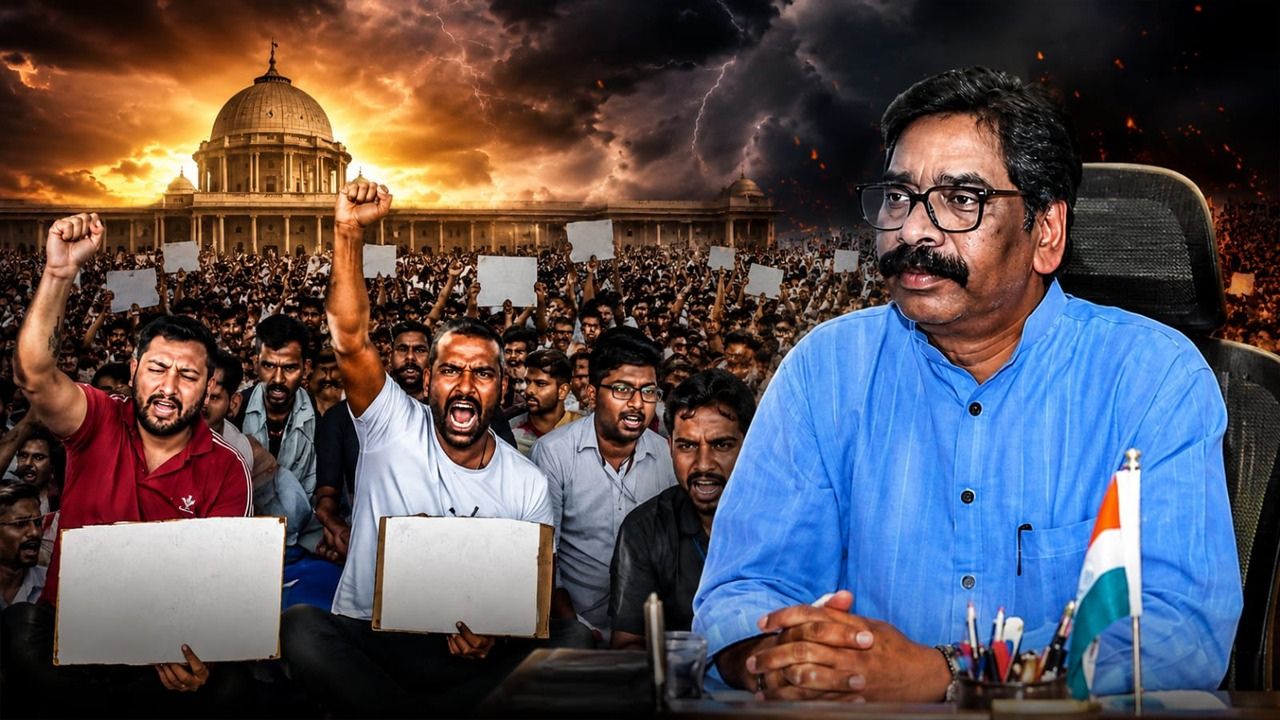
JPSC-JSSC Crisis Deepens Why Thousands of Aspirants Are on the Streets for Their Future (Img: Dynamite News)
New Delhi: The protest by students preparing for government jobs in Jharkhand has entered its 16th day, with a large number of aspirants continuing their agitation in Ranchi over alleged irregularities in JPSC and JSSC recruitment examinations.
The movement, which began on July 25, has gained momentum as students demand transparency in the examination process, fair investigations into alleged irregularities and reforms in the recruitment system.
Senior journalist Manoj Tibrewal Aakash has analysed the entire issue in his popular show “The MTA Speaks”, explaining the students’ demands, the government’s response and the road ahead.
Students under the JPSC-JSSC Reform Forum have raised concerns over several recruitment examinations and alleged problems in the examination process.
The protesters have demanded an investigation into multiple JPSC examinations linked to the TDPL agency and have sought cancellation of certain exams where allegations of irregularities have surfaced.
Apart from JPSC exams, students have also raised questions regarding JSSC CGL, PGT and ACF examinations. Their demand is that all allegations should be investigated fairly and the reports of such investigations should be made public.
The students are also demanding a reduction or removal of outsourcing in the examination process, arguing that recruitment examinations should be conducted directly by the respective commissions.
One of the major demands of the protesters is transparency in the post-examination process.
Students want details regarding cut-offs, scorecards and the normalisation process to be publicly available. They argue that when thousands of candidates appear for competitive examinations, they have the right to know how merit lists are prepared.
Aspirants have also raised concerns over age limits, saying that delays in recruitment processes should not negatively impact candidates who spend years preparing for government jobs.
They have demanded changes in age criteria for JPSC and JSSC recruitment due to repeated delays in conducting examinations.

The Jharkhand government has kept the channel of communication open with protesting students. Several rounds of discussions have already taken place between government representatives and student groups, but no final agreement has been reached so far.
On August 9, the government decided to hold separate meetings with different student organisations to understand their individual concerns.
Representatives from the Devendra Mahato group, JPSC-JSSC Reform Forum, core student groups and other organisations are expected to meet the government panel at the State Guest House in Morabadi, Ranchi.
The government believes that different groups have different demands, and separate discussions could help find a solution.
However, some student representatives have questioned this approach, saying the government should hold a joint meeting with all groups to avoid confusion and ensure transparency.
Student leader Devendra Mahato has emerged as one of the prominent faces of the agitation.
He has been continuing his protest and reports have also emerged about his deteriorating health condition, increasing pressure on the government to find an early resolution.
The biggest challenge before the government is to address student concerns without disrupting the recruitment process.
Cancelling an examination affects thousands of candidates who have invested years preparing for government jobs. Conducting fresh examinations can also create further delays and uncertainty.
However, if investigations establish serious irregularities, strict action becomes necessary.
Students argue that inquiries should not remain limited to paperwork. They want a fixed timeline for investigations and public disclosure of findings.
The ongoing protest has now moved beyond individual examinations and become a larger debate over trust in Jharkhand’s government recruitment system.
For aspirants, a delay in a single examination can impact career plans and years of preparation.
The government faces the challenge of creating a system where future examinations are conducted smoothly and students regain confidence in the process.
The protesting students have announced a Vidhan Sabha march on August 10. Student leaders have appealed to participants to maintain peace during the demonstration.
If Monday’s discussions fail to produce a concrete solution, the movement could enter a new phase.
The next steps will depend on whether the government provides clear decisions on major demands, sets timelines for investigations and announces reforms in the recruitment process.
While students have raised serious concerns, allegations and proven facts must be viewed separately. The final picture will become clear only after official investigations and action by authorities.
However, students’ concerns cannot be ignored as the issue directly affects their careers and future prospects.
The coming days will largely depend on three factors:
At present, the government is engaging in discussions while students remain firm on their demands.
The protest has entered its 16th day, and the planned Assembly march on August 10 could prove to be a crucial moment.
Ultimately, the issue is not limited to JPSC or JSSC alone. It has become a question of trust for thousands of young aspirants who invest years of hard work, time and resources preparing for government jobs.
Their demand remains simple — fair examinations, transparent procedures and timely recruitment.
The outcome of the upcoming talks between the government and student representatives will determine whether the Ranchi protest moves towards a resolution or enters a larger phase of agitation.

