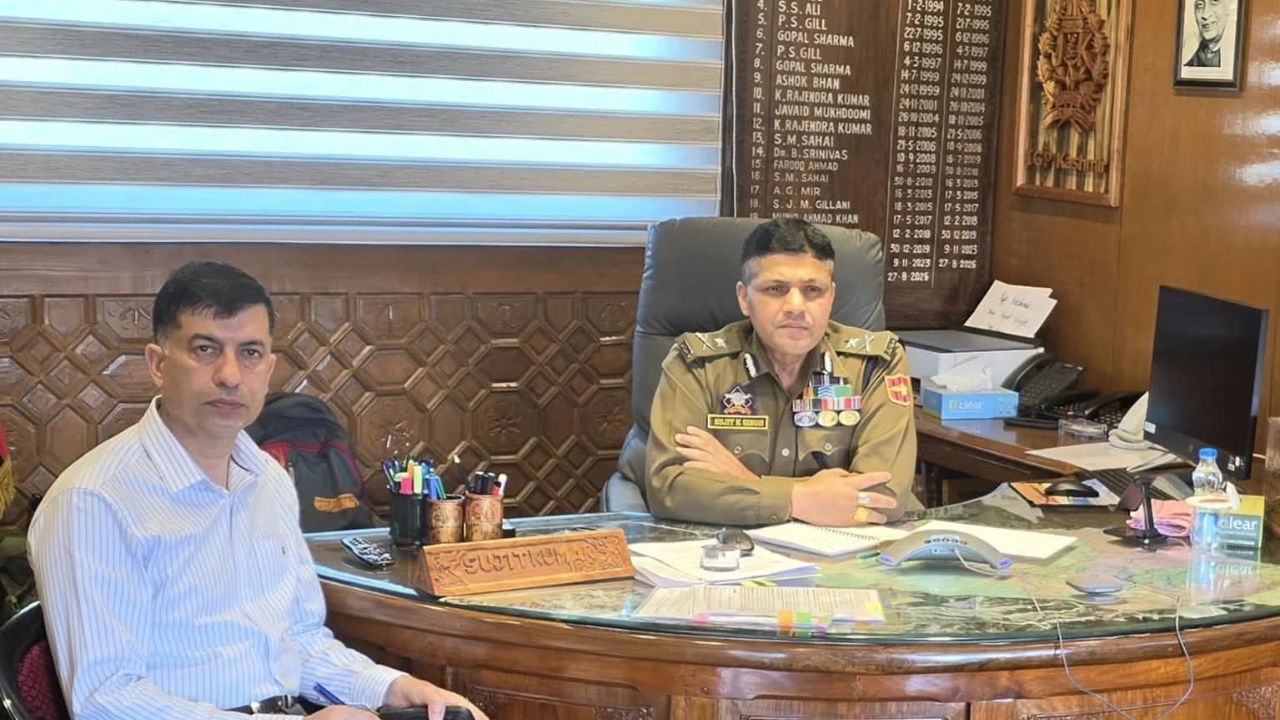
IGP Kashmir Zone Sujit Kumar Singh chairs a conference on SMART Policing and Digital Beat Policing in Srinagar. (Img: Dynamite News)
Srinagar: The Kashmir Police is moving towards a more technology-driven, accountable and citizen-centric policing framework, with Inspector General of Police (IGP), Kashmir Zone, Sujit Kumar Singh directing police stations across the Valley to institutionalise SMART Policing and Digital Beat Policing as integral components of their day-to-day operations.
The directive was issued during a conference on SMART Policing and Digital Beat Policing chaired by Singh on Saturday. The meeting brought together senior police officials from across the Kashmir Zone to discuss the implementation of modern policing practices, improved public service delivery and the effective use of technology in law enforcement.
The conference was attended by Range Deputy Inspectors General of Police, district Senior Superintendents of Police, Additional Senior Superintendents of Police, Zonal Senior Superintendents of Police, Deputy Superintendents of Police and Station House Officers (SHOs).
In line with the vision and directions of the Director General of Police, Jammu and Kashmir, the IGP instructed police stations to integrate SMART Policing and Digital Beat Policing into their routine functioning. The initiative is aimed at strengthening institutional accountability, improving operational efficiency and making police services more accessible, responsive and transparent.
The emphasis is on translating policing reforms into measurable improvements at the grassroots level rather than allowing them to remain limited to administrative guidelines or policy documents. The approach seeks to bring law enforcement closer to communities while ensuring that technology contributes directly to better policing outcomes.
The conference highlighted the five core principles underpinning the SMART Policing model: Strict and Sensitive, Modern and Mobile, Alert and Accountable, Reliable and Responsive, and Techno-savvy and Trained.
These principles combine effective law enforcement with sensitivity towards citizens, technological modernisation, professional preparedness and institutional accountability. Their implementation is expected to strengthen police responsiveness while improving the quality of interaction between officers and the public.
The initiative also places emphasis on equipping personnel with the digital literacy and professional skills required to use modern technological tools in routine policing and public service delivery.
Singh directed all Station House Officers to institutionalise Digital Beat Policing and ensure that beat officers undertake regular field visits, maintain meaningful contact with residents and address local concerns through sustained community engagement.
Beat policing serves as an important link between police stations and the local population. By strengthening this system through digital records and structured field-level responsibilities, the department aims to improve local information gathering, public outreach and the delivery of policing services at the grassroots level.
The proposed framework includes regular interaction with residents, digital maintenance of beat-level records, clearly defined duties for beat officers, prompt service delivery and enhanced participation by local communities. The use of digital tools is also intended to improve record management, facilitate supervision and support greater transparency in routine police operations.
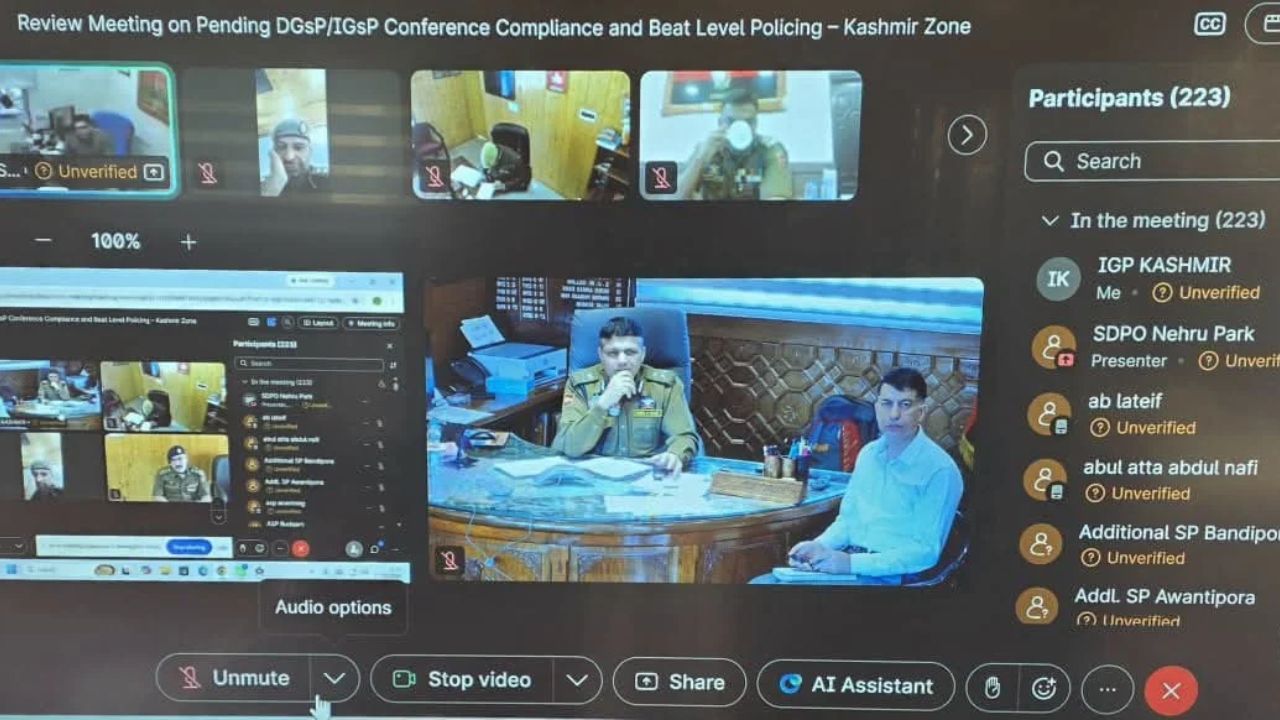
Highlighting the role of police stations as the primary point of contact between law enforcement agencies and citizens, the IGP directed that these institutions become more accessible, responsive and technologically equipped.
He also instructed supervisory officers to personally monitor the implementation of the initiatives and ensure that the changes produce tangible results on the ground. District police heads have been tasked with overseeing effective implementation throughout the Kashmir Zone, with particular attention to technology-enabled services, community participation and accountability.
The monitoring mechanism is intended to ensure that the transition towards digital policing translates into practical improvements in police functioning, rather than remaining a formal administrative exercise.
The broader objective of the initiative is to establish a modern policing ecosystem in which technology reinforces accountability, improves operational coordination and enables citizens to access police services with dignity.
By combining digital record-keeping, regular beat-level engagement, professional training and closer supervisory oversight, Kashmir Police aims to develop a more responsive and citizen-focused system. The emphasis on public trust and efficient service delivery also underlines the importance of balancing technological adoption with accessible, responsible and sensitive policing.
The implementation of SMART Policing and Digital Beat Policing across police stations will be a key step in the department's efforts to modernise law enforcement and strengthen police-community relations throughout the Kashmir Zone.


