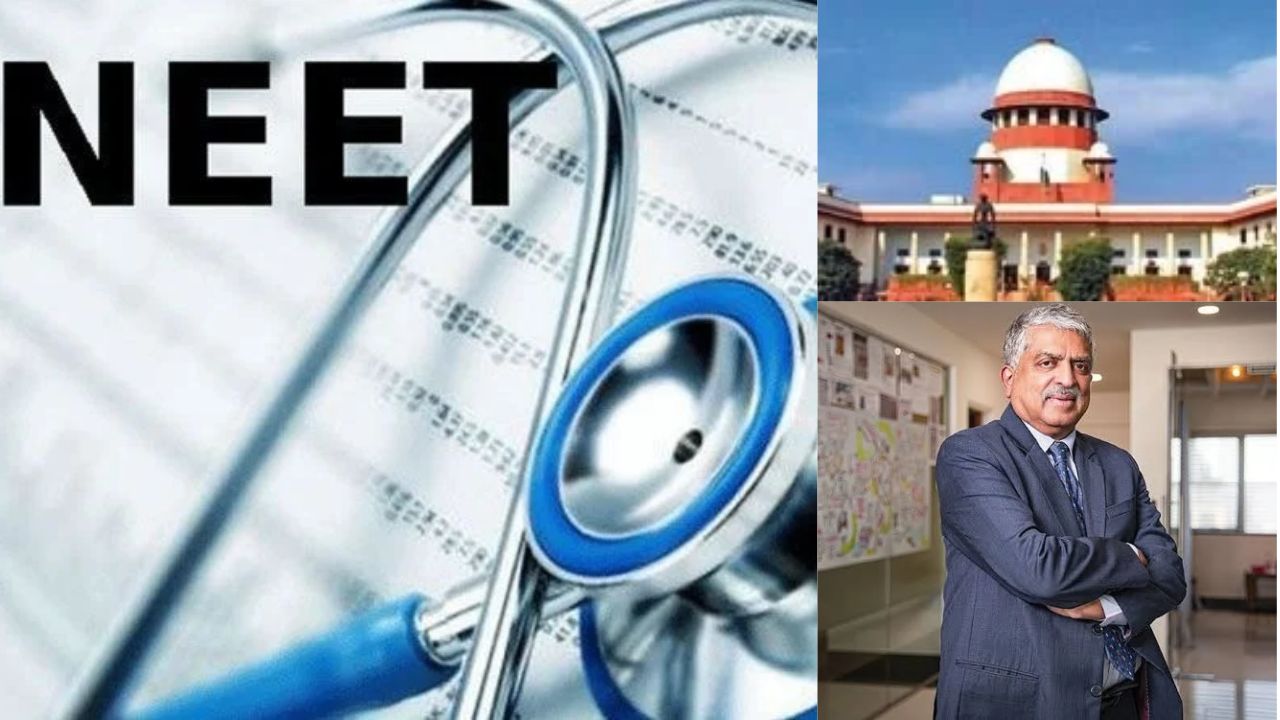
Nandan Nilekani Leads Push To Transform India’s NEET Examination System. (Img: Pinterest)
New Delhi: India’s biggest medical entrance examination, NEET, could see major structural changes as the Nandan Nilekani-led high-powered panel prepares to submit its first reform report by the end of September.
The Centre informed the Supreme Court that the committee has completed detailed consultations with experts and has reviewed suggestions aimed at improving the transparency, security and long-term functioning of the National Eligibility-cum-Entrance Test system.
The development comes at a time when the Supreme Court is closely monitoring reforms in the National Testing Agency (NTA), the organisation responsible for conducting several major entrance examinations across India.
For millions of NEET aspirants, the focus is now on whether the proposed reforms will bring a more secure, transparent and technology-driven examination process.
The Supreme Court Bench of Justice PS Narasimha and Justice Alok Aradhe highlighted that NEET reforms should not remain limited to reports and recommendations. The court emphasised the need for a permanent institutional structure with dedicated staff, specialised divisions and stronger administrative systems to handle national-level examinations.
The Bench indicated that a long-term examination framework requires stability instead of depending heavily on temporary arrangements or deputation-based employees. The court’s concern is focused on creating a system that can manage large-scale examinations involving millions of students while maintaining reliability and public confidence.
The Nandan Nilekani-led panel has also held discussions with members of the earlier committee headed by former ISRO chairman K Radhakrishnan. The Radhakrishnan Committee had suggested several measures to improve examination governance, technology use, security protocols and operational efficiency.
The Supreme Court has asked the government to ensure that these recommendations are converted into actual reforms rather than remaining only as documents. The latest review process is aimed at building a stronger examination ecosystem that can prevent irregularities and improve accountability.
In another significant development, the Supreme Court indicated that judges may visit the newly upgraded National Testing Agency facility in New Delhi. The court wants to examine whether the upgraded infrastructure, manpower availability and security systems are functioning effectively.
The Centre informed the court that NTA has moved towards a permanent office structure near Minto Road and has introduced several improvements in its operational setup. The inspection, if conducted, will give the court a direct understanding of the agency’s preparedness and working mechanisms.
The proposed NEET reforms are expected to focus heavily on technology-based solutions and stronger security measures. Suggestions placed before the authorities include improved question paper protection systems, digital monitoring, better examination centre management and possible expansion of computer-based testing methods.
Experts and petitioners have also suggested advanced data analysis systems to identify unusual patterns and improve transparency in examination results. The aim is to create a secure examination model capable of handling one of the world’s largest competitive tests.
The Supreme Court proceedings are linked to petitions filed after allegations of irregularities and paper leak concerns related to NEET examinations. Petitioners have raised questions about examination security, transparency and the need for stronger safeguards.
The Federation of All India Medical Association (FAIMA) and other petitioners have sought major changes in the functioning of NTA, including restructuring of the examination authority.
Some suggestions include shifting towards a stronger computer-based examination model, improving oversight mechanisms and creating greater accountability in the testing system.
The Supreme Court has directed the Joint Secretary of the Department of Personnel and Training (DoPT), who is coordinating with the high-powered committee, to submit an affidavit detailing the progress made so far.
The report will include details about consultations, recommendations being examined and steps taken towards implementing reforms. The court will review the progress after receiving the affidavit and decide further action in the matter.
The first major milestone will be the submission of the Nilekani panel’s report by the end of September. After examining the recommendations, the Supreme Court will assess whether additional directions are required to strengthen the examination system.
The outcome of this reform process could impact future NEET examinations, affecting millions of medical aspirants preparing for admission into medical colleges across India. The biggest question now remains whether these reforms will create a permanent solution for making NEET more secure, transparent and trusted.

