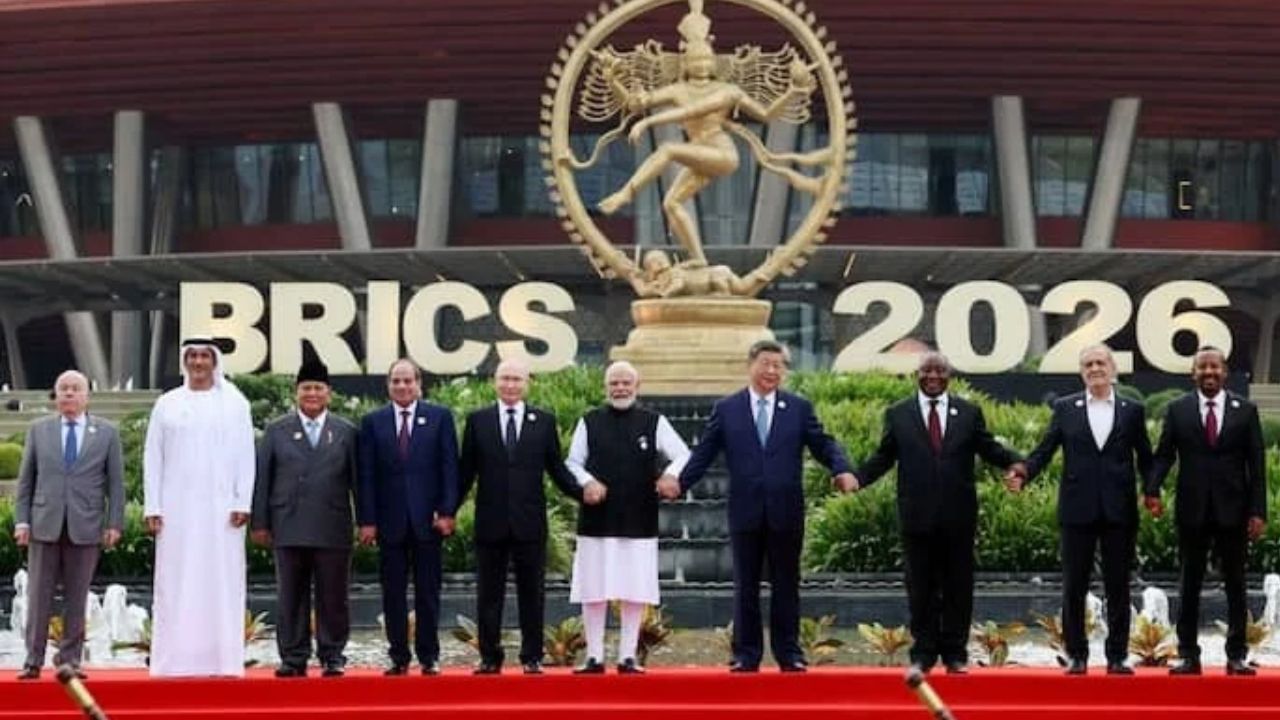
Omar Abdullah has welcomed the specific mention of the Pahalgam terror attack in the BRICS declaration. (Dynamite News)
Jammu: Jammu and Kashmir Chief Minister Omar Abdullah has described the explicit mention of the Pahalgam terror attack in the BRICS Foreign Ministers’ New Delhi Declaration as a significant foreign policy achievement for India.
Abdullah said the development was particularly noteworthy because countries that maintain strategic relationships with Pakistan were also part of the BRICS meeting. He argued that getting the Pahalgam attack specifically mentioned in a multilateral declaration was itself a diplomatic success for New Delhi.
The Chief Minister also indicated that India should now move forward after securing the diplomatic recognition and focus on the challenges ahead.
Abdullah’s assessment comes after BRICS Foreign Ministers strongly condemned the April 22, 2025 terrorist attack in Pahalgam, Jammu and Kashmir, in which 26 people were killed.
The attack has remained a major issue in India’s counterterrorism policy and diplomatic outreach. New Delhi has repeatedly sought international condemnation of terrorism and greater cooperation against terrorist financing, recruitment and cross-border movement.
Against this backdrop, the specific reference to Pahalgam in a multilateral declaration carries political and diplomatic significance. For India, the issue is not simply about the wording of a declaration. It is also about building international consensus on terrorism despite differences between BRICS members on geopolitics and their individual relationships with Pakistan.
The BRICS Foreign Ministers’ New Delhi Declaration strongly condemned the Pahalgam attack and reiterated the grouping’s commitment to combating terrorism in all its forms and manifestations. The declaration also addressed several critical elements of the global counterterrorism framework, including terrorist financing, recruitment and the cross-border movement of terrorists.
BRICS ministers stressed the need for zero tolerance towards terrorism and called for a united international response without double standards. The language places the Pahalgam attack within a wider multilateral discussion on terrorism, security cooperation and the disruption of networks that support terrorist organisations.
Diplomatic declarations involving multiple countries are often the result of extensive negotiations because participating nations have different strategic interests. The specific identification of Pahalgam therefore gives the reference added political weight from India’s perspective.
New Delhi has consistently pushed for terrorism to be treated as a global security challenge rather than an issue to be viewed selectively according to geopolitical alliances. The BRICS declaration also highlights the need to tackle the broader terror ecosystem, including financing channels, recruitment networks, logistical support and cross-border movement.
The Pakistan angle has become central to the political interpretation of the BRICS reference. Abdullah highlighted the presence of countries with strategic relationships with Pakistan while explaining why he considers the Pahalgam reference important for India.
His argument is that the declaration demonstrates an ability to build consensus on terrorism even within a grouping where member states have different geopolitical priorities. For New Delhi, this is important because India’s diplomatic strategy has increasingly focused on preventing terrorism from becoming a politically selective issue.
The April 22, 2025 Pahalgam attack, which claimed 26 lives, triggered widespread condemnation and became a major issue in India’s national security and foreign policy narrative. Since then, India has continued to press for international recognition of the threat posed by terrorism and the networks that facilitate it.
The repeated international reference to the attack keeps Pahalgam within the global counterterrorism conversation and prevents it from being reduced to a purely bilateral issue. For India, international diplomatic language can also help build pressure for greater cooperation on intelligence sharing, terror financing and the movement of terrorist operatives.
The latest declaration reflects a broader BRICS position against terrorism and terrorist financing. The grouping’s emphasis on recruitment, financing and cross-border movement is significant because modern counterterrorism strategies increasingly focus on disrupting the infrastructure that allows extremist networks to operate.
That includes financial channels, recruitment pipelines, logistics, communications and international movement. A coordinated approach among major countries can potentially strengthen information sharing and financial monitoring while making it more difficult for terrorist networks to exploit differences between national security systems.
While welcoming the BRICS reference, Abdullah indicated that the diplomatic achievement should not become the end point. His position was that once the Pahalgam attack had received explicit recognition in the international declaration, attention should shift towards the next priorities.
That brings the focus back to security, prevention, intelligence coordination and ensuring that future terrorist attacks are stopped before they can occur. The comments also come as Jammu and Kashmir remains a key focus of India’s national security and counterterrorism policy.
The declaration gives India another multilateral platform to highlight terrorism as a common international security threat. It also reinforces India’s argument that terrorism should be condemned consistently, regardless of the geopolitical relationships of the countries involved.
The Pahalgam reference therefore has significance beyond the attack itself. It forms part of India’s broader diplomatic effort to build international consensus against terrorism and strengthen cooperation on terror financing, recruitment and cross-border networks.
Omar Abdullah’s remarks also highlight the growing importance of multilateral diplomacy in India’s foreign policy. BRICS has become an increasingly important platform involving major emerging economies, while its members do not always share the same strategic outlook on global conflicts and regional security.
Getting consensus on terrorism within such a diverse grouping can therefore become an important diplomatic indicator for New Delhi. The bigger challenge, however, is converting diplomatic language into practical cooperation through intelligence sharing, financial tracking, border security and coordinated action against terrorist networks.
The BRICS declaration is likely to remain an important reference point in India’s diplomatic messaging on the Pahalgam attack and counterterrorism. For New Delhi, the immediate focus will remain on maintaining international pressure against terrorism while strengthening cooperation with countries across different geopolitical blocs.
The specific mention of Pahalgam has given India another diplomatic talking point, while Abdullah’s comments have brought renewed political attention to the significance of the BRICS declaration.

