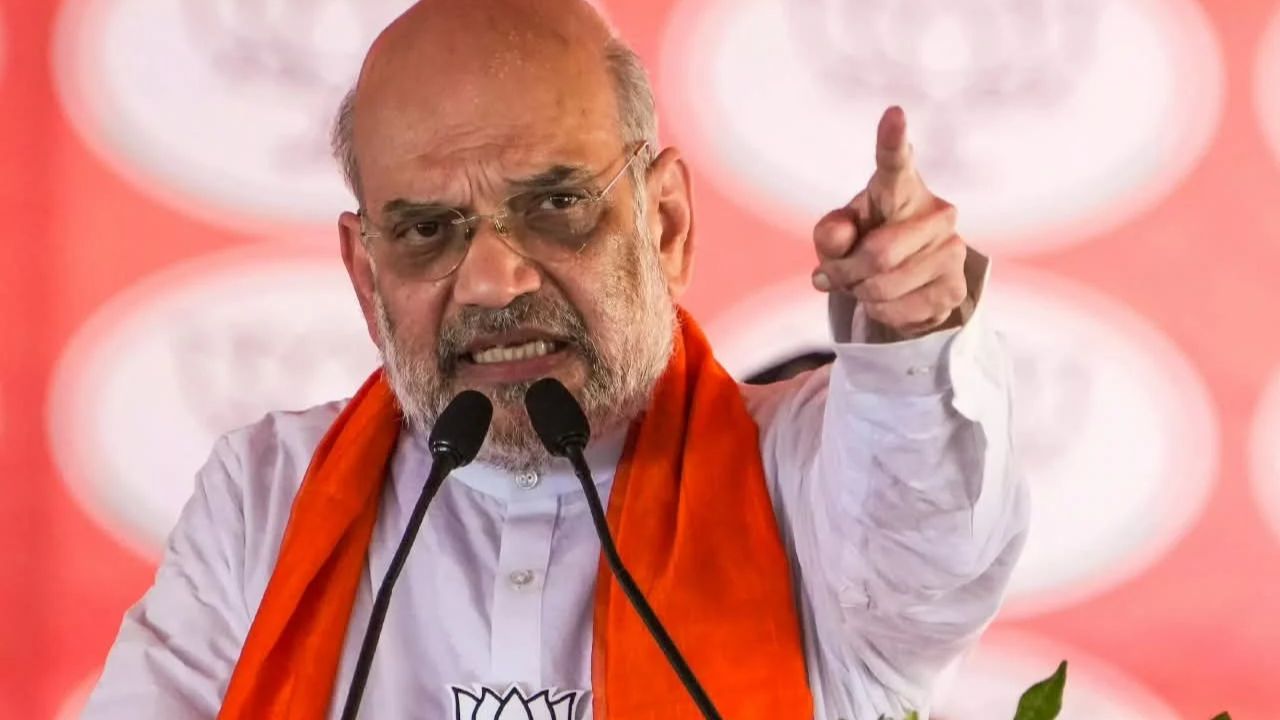
Amit Shah’s ‘appropriate time’ remark on J&K statehood sparks fresh political debate over timeline and roadmap (Image: Dynamite News)
Srinagar: The debate over restoring statehood to Jammu and Kashmir has gained fresh momentum after Union Home Minister Amit Shah reiterated the Centre’s commitment to the issue while stating that the decision would be taken at an “appropriate time”.
While the assurance indicates that statehood remains on the government’s agenda, the absence of a clear timeline has once again raised questions among political parties and observers in Jammu and Kashmir.
According to Jammu and Kashmir Leader of Opposition Sunil Sharma, Amit Shah discussed the statehood issue during a meeting in New Delhi on September 26, 2026. The meeting came a day after CM Omar Abdullah moved a resolution in the Jammu and Kashmir Legislative Assembly seeking the “immediate and urgent” restoration of full statehood. Sharma said Shah reiterated that the Centre would honour the commitment made by Prime Minister Narendra Modi and himself regarding the restoration of statehood.
The phrase “appropriate time” has become the central point of discussion because it does not specify a timeline or process for restoration. While the Centre has maintained that statehood will be restored, political leaders in Jammu and Kashmir have been seeking greater clarity over when and how the transition will take place.
For many residents and political groups, the issue is linked to questions about administrative authority, representation and the functioning of an elected government.
The latest political discussion has also highlighted differences over the interpretation of the statehood demand. The resolution introduced by Omar Abdullah referred to earlier Assembly resolutions, including the 2000 resolution seeking greater autonomy for Jammu and Kashmir. The reference drew opposition from BJP, which argued that the present statehood discussion should not be connected with the earlier special-status framework. According to Sharma’s account of the meeting, Amit Shah expressed reservations about bringing issues related to autonomy and Articles 370 and 35A into the current debate.
The debate over restoring statehood and the issue of Article 370 represent two different constitutional and political matters. The Centre has maintained its position on the changes made to Jammu and Kashmir’s constitutional status in 2019, while the elected government in the Union Territory has continued to demand restoration of full statehood.
The recent Assembly developments show how these two issues often become connected in political discussions.
For Jammu and Kashmir’s elected representatives, the immediate concern remains the scope of authority available to the elected government. Although Jammu and Kashmir has an elected Legislative Assembly, several important administrative areas remain under the Union Territory framework. This has led to ongoing discussions about the powers of an elected government and the future constitutional structure of the region.
The Centre’s assurance on statehood has been welcomed as an important commitment, but political parties continue to seek a clearer roadmap. A defined process, timeline and institutional framework could provide greater clarity and reduce uncertainty surrounding the issue.
At the same time, the statehood debate continues alongside wider concerns related to governance, development, employment, public services and security.
The latest exchange between Amit Shah and Sunil Sharma highlights the continuing gap between political expectations and official timelines. While there is a stated commitment towards restoring statehood, questions remain about the conditions, process and timeframe involved.
For Jammu and Kashmir, the debate is now increasingly focused not only on whether statehood will return, but also on when and through what roadmap the transition will happen.

