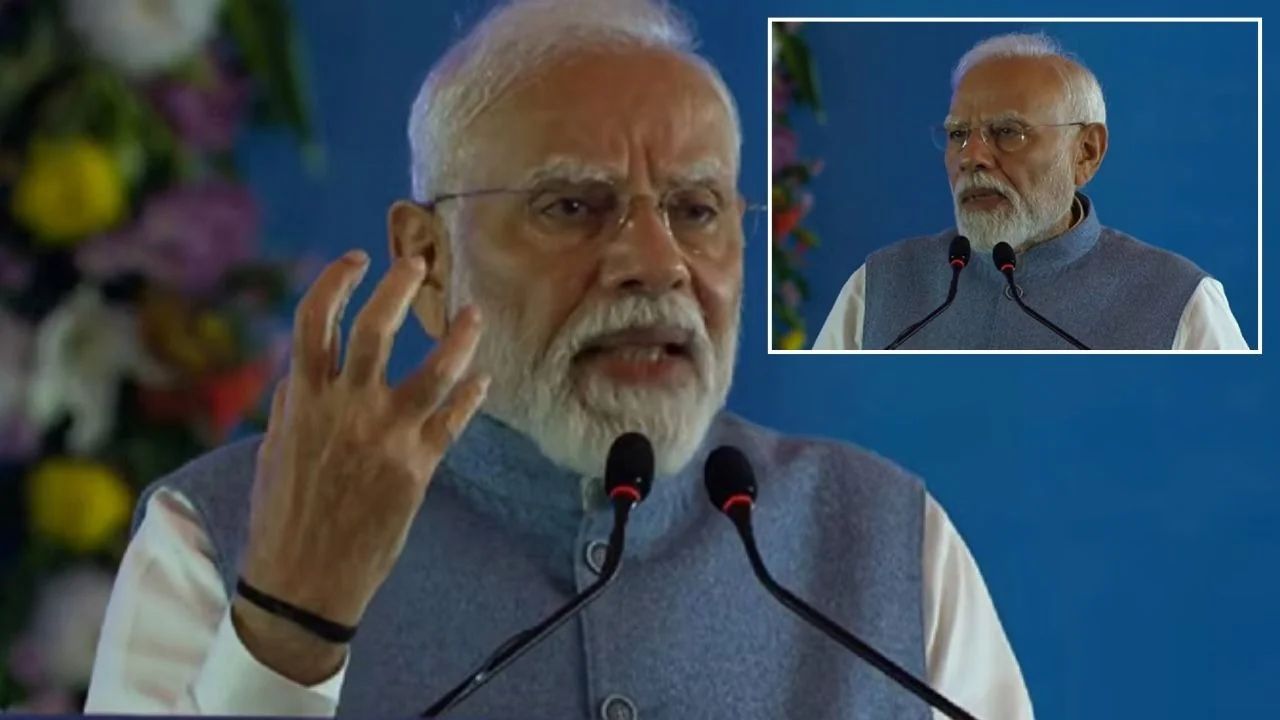
PM Modi recalls May appeal asking Indians to limit gold purchases. Img: X)
Lucknow: Prime Minister Narendra Modi has credited Indians for responding to his appeal to limit non-essential gold purchases, saying their decision to follow his advice helped them save money as gold prices declined. Addressing a gathering in Lucknow, he revisited the appeal made in May and highlighted what he described as the public's contribution to reducing gold consumption.
Modi made the remarks while addressing the fifth National Skill Convocation at Indira Gandhi Pratishthan in Gomti Nagar on November 21. His comments have once again brought India's gold-buying habits, foreign exchange expenditure and the impact of global economic developments on bullion prices into focus.
Recalling his May announcement, the Prime Minister said he had asked citizens to avoid purchasing gold for one year unless absolutely necessary. He compared the public response to the nationwide cooperation witnessed during former Prime Minister Lal Bahadur Shastri's appeal in 1965, when citizens were encouraged to skip one meal amid a severe food shortage.
Modi said the willingness of ordinary Indians to respond to such appeals remained an important characteristic of the country. He also recalled that several people had subsequently approached him, saying that following his recommendation had helped them protect their savings.
The appeal came at a time when India's external economic position was facing pressure from rising international crude oil prices amid escalating tensions in West Asia. As one of the world's largest importers of crude oil and gold, India faces considerable foreign exchange expenditure on these commodities.
Reducing discretionary gold purchases was therefore presented as a measure to moderate import demand and conserve foreign currency.
Gold prices have witnessed a notable correction since May, with the latest figures indicating a substantial reduction in the Delhi retail market.
The reported price of 24-carat gold declined from Rs 15,250 per gram on May 9 to Rs 12,523 per gram on November 21. This amounts to a reduction of Rs 2,727 per gram, or approximately 17.9 per cent.
The movement is significant for Indian households, where gold remains closely associated with weddings, festivals, traditional investments and long-term wealth preservation.
The decline has also attracted attention among jewellery retailers, bullion traders and investors who closely track domestic and international gold prices.
However, the correction cannot be attributed exclusively to the Prime Minister's appeal. International bullion movements, currency fluctuations, monetary policy expectations, import duties and changes in domestic demand are also important determinants of gold prices.
The May appeal formed part of a broader set of seven suggestions aimed at reducing foreign exchange expenditure and encouraging more cautious consumption.
Alongside asking citizens to postpone unnecessary gold purchases, Modi encouraged people to conserve fuel, consider working from home where feasible and reduce overseas travel.
The recommendations came against the backdrop of heightened geopolitical uncertainty and concerns over India's rising import bill.
The Prime Minister reiterated his appeal in September, urging citizens to avoid buying gold unless there was a genuine requirement. The broader objective was to encourage responsible consumption and reduce dependence on imported commodities.
Meanwhile, the government increased the import duty on gold and silver from 6 per cent to 15 per cent in May. The higher duty affected the domestic precious metals trade, increasing the landed cost of imported bullion and creating additional pressure on jewellery businesses.
India's gold import figures indicate a substantial contraction during the April-October period.
The country imported gold worth $24.78 billion during these seven months, compared with $41.24 billion in the corresponding period of the previous financial year. This represents a decline of nearly 40 per cent in import value.
The development is significant for India's external trade position because gold constitutes an important component of the country's merchandise import expenditure.
A reduction in gold imports can help moderate foreign exchange outflows and ease some pressure on the trade deficit. However, the value of imports is influenced by both the quantity of bullion purchased and prevailing international prices.
The latest figures therefore point towards a combination of weaker demand, changing import economics and broader developments in the international bullion market.
Data from the World Gold Council also indicates a considerable slowdown in domestic gold consumption. India's gold demand declined to 162 tonnes during the July-September quarter, marking a 29 per cent reduction compared with the corresponding period last year.
Jewellery consumption was particularly affected, with demand falling 20 per cent to approximately 100 tonnes. The figures underline the challenges facing India's jewellery industry, which depends heavily on household purchases during wedding seasons, festivals and other traditional occasions.
High prices can influence consumers to postpone purchases, opt for lighter jewellery or reduce the quantity of gold bought. Such changes can affect retailers, manufacturers, goldsmiths and other participants across the jewellery supply chain.
For Indian households, gold continues to serve both cultural and financial purposes, making changes in consumption patterns particularly relevant to the wider economy.
The decline in gold prices has renewed interest among consumers who had deferred jewellery purchases because of elevated rates. Lower bullion prices can improve affordability for prospective buyers, although the final retail cost also depends on making charges, applicable taxes and the purity of the jewellery.
For existing investors and gold holders, the price correction means a lower market valuation of their holdings compared with the levels recorded in May. Jewellery manufacturers and bullion traders also face inventory-related challenges when prices decline after stocks have been purchased at higher rates.
The impact is therefore not uniform across the market, with consumers, investors, retailers and importers experiencing different consequences.
The future trajectory of domestic gold prices will depend on several interconnected factors, including international bullion rates, US dollar movements, interest-rate expectations, central bank purchases and geopolitical developments.
The rupee-dollar exchange rate and India's import duty structure will also remain important in determining domestic prices. Modi's latest remarks have renewed the debate around household consumption, gold imports and foreign exchange conservation. While he has credited citizens for responding to his May appeal, the wider decline in prices and demand also reflects developments in global markets and domestic policy.
The coming months will provide a clearer picture of whether India's lower gold imports and jewellery consumption represent a temporary adjustment or a more sustained change in purchasing behaviour.

