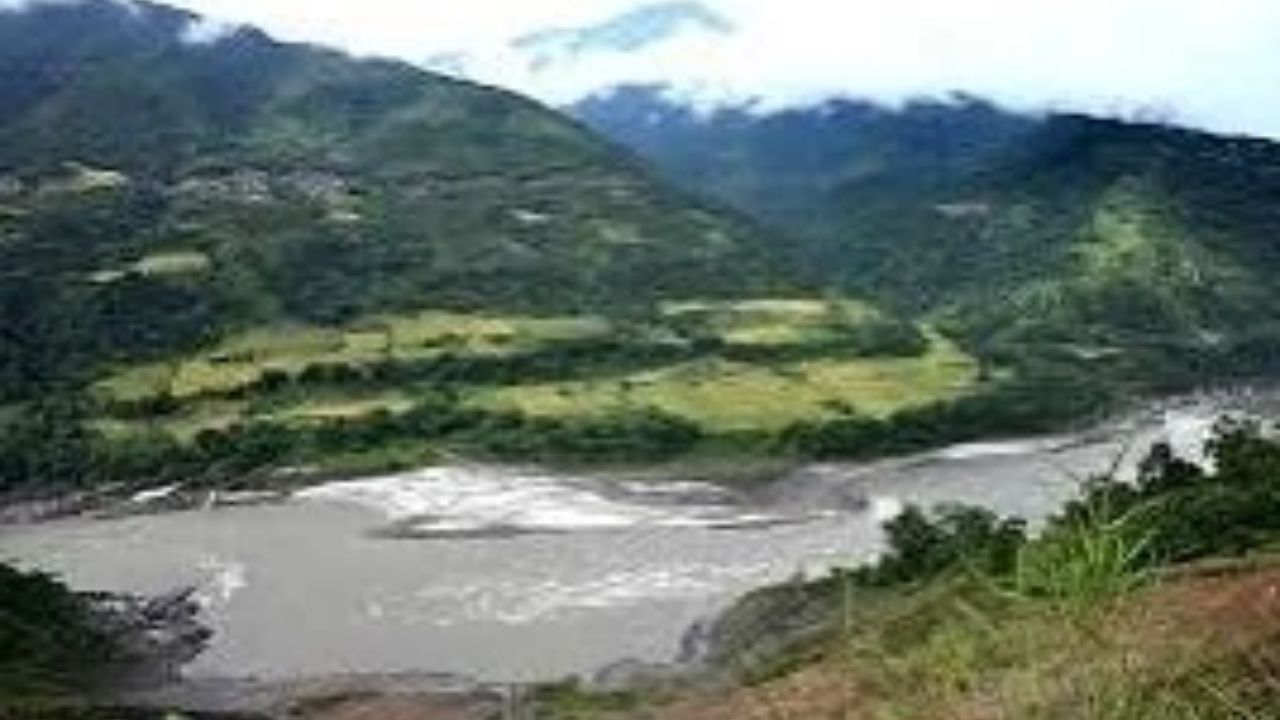
The proposed 11,200-MW Siang dam project has triggered a growing debate over development, indigenous rights and environmental protection in Arunachal Pradesh. (Img: X)
Siang: The proposed hydropower project on the Siang river in Arunachal Pradesh has triggered a deep divide among local communities, bringing competing concerns over development, environmental protection and the future of indigenous populations into sharp focus.
The proposed 11,200-MW Siang Upper Multipurpose Project (SUMP) has emerged as a major point of contention in the Siang Valley, with sections of the indigenous Adi community opposing the proposed dam over fears of displacement, loss of ancestral land and erosion of their cultural identity.
At the centre of the resistance is Geku village in Upper Siang district, where residents fear that the project could inundate their homes, agricultural land and traditional settlements. Among those opposing the proposal is Okam Tayom, an elderly resident who recalls participating in the defence of the region during the 1962 Sino-Indian War. He fears that the land his family has safeguarded for generations could disappear if the project materialises.
The project has faced resistance from the Adi community, one of Arunachal Pradesh's largest tribal groups, since its initial proposal. Although it was accorded the status of a national project in 2008, it has struggled to progress amid opposition from residents.
The immediate dispute concerns the pre-feasibility survey being undertaken by the National Hydroelectric Power Corporation (NHPC). Three potential locations have been identified — Parong and Dite Dime in Siang district, and Ugeng/Komkar in Upper Siang district.
While the government maintains that the ongoing exercise is only preliminary and does not amount to approval for construction, villagers fear that surveys and drilling activities could pave the way for the eventual implementation of the project.
Protesters have obstructed roads, prevented NHPC officials and machinery from entering certain areas and demanded the withdrawal of security personnel deployed in the region. The agitation escalated in October, with arrests of activists and confrontations involving security forces. Following a bandh across three districts on October 23, violence erupted in Pasighat, where an NHPC office and a police station were set on fire, vehicles were torched and residences of political leaders were vandalised.
The administration subsequently imposed prohibitory restrictions and strengthened security deployment. Diji Tamuk, president of Adi Bane Kebang United, the community's apex organisation, has maintained that the proposed project could result in the submergence of at least 27 Adi villages.
(Img: X)
The BJP-led Arunachal Pradesh government has defended the proposed project on strategic and national security considerations, particularly in view of China's massive hydropower infrastructure plans on the Yarlung Tsangpo river in Tibet, which flows into India as the Siang.
The state government believes that a large dam in the region could help India address potential downstream risks arising from China's upstream activities, including the possibility of sudden water releases.
Chief Minister Pema Khandu has maintained that no final decision has been taken on constructing the dam and that public consultations and the consent of affected communities would be essential before proceeding further.
However, BJP MP Tapir Gao's assertion that the project would be constructed has added to apprehensions among residents. Upper Siang Deputy Commissioner Ashok Tajo has described the project as strategically significant, arguing that it is necessary to respond to China's dam construction activities upstream. He also acknowledged shortcomings in communicating the project's details to local residents and said protests were understandable given the emotional and social dimensions involved.
For the residents of the Siang Valley, the opposition is not confined to concerns over compensation or rehabilitation. The river and surrounding landscape are closely intertwined with their traditional livelihoods, religious beliefs and collective history.
Residents fear that the proposed reservoir could fundamentally alter their way of life, displacing families from ancestral settlements and disrupting the relationship between indigenous communities and the river that has sustained them for generations.
The controversy has consequently exposed a larger challenge for the government: reconciling its strategic and infrastructure priorities with the rights, concerns and aspirations of communities whose lives are directly connected to the proposed project.


