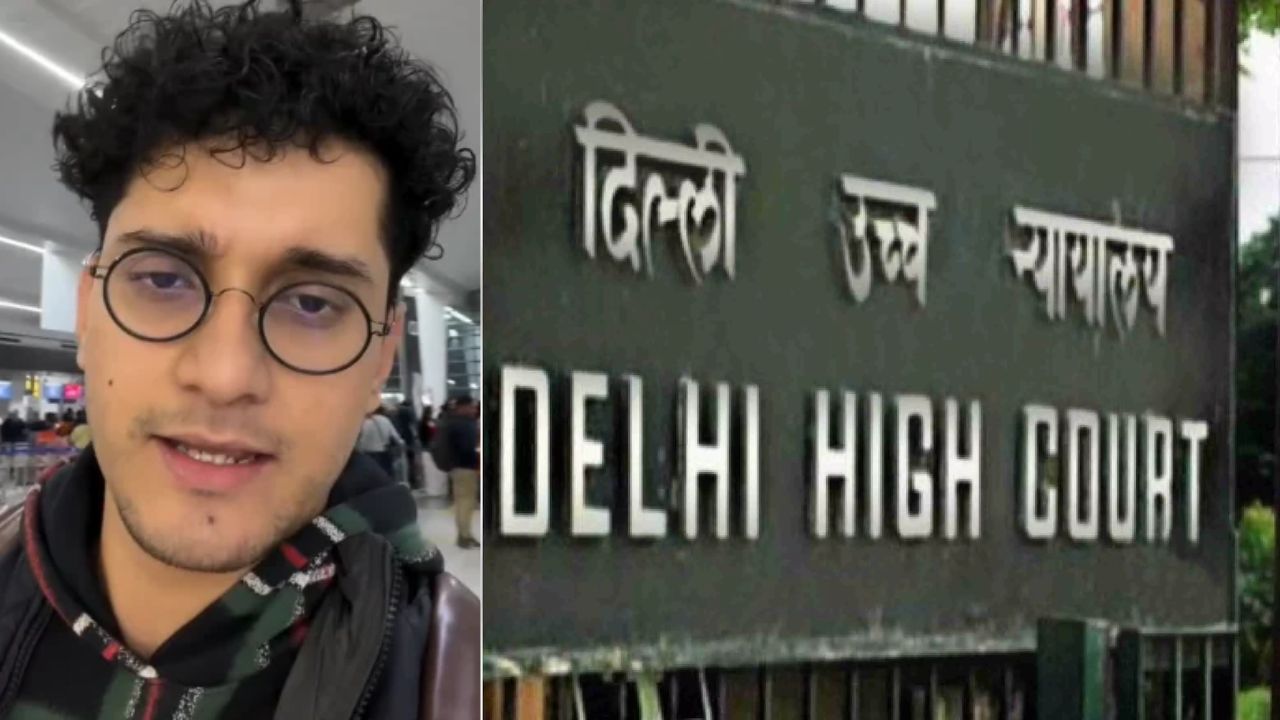
Saurav Das faces a legal battle after the Centre confirms a Look Out Circular before the Delhi High Court. (Img: X)
New Delhi: The controversy surrounding activist and Cockroach Janta Party (CJP) co-convener Saurav Das's detention at Delhi airport has taken a significant legal turn, with the Central government informing the Delhi High Court that a Look Out Circular (LOC) had been issued against him at the request of Mumbai Police over alleged discrepancies in his passport records.
The disclosure was made on Thursday, during the hearing of Das's petition challenging the authorities' decision to prevent him from travelling to the United Kingdom. The government also raised questions about inconsistencies in his personal and documentary records, arguing that the discrepancies could have implications for the determination of his Indian citizenship.
The development has brought passport verification procedures, immigration restrictions, citizenship documentation and the legal framework governing Look Out Circulars into sharp focus. Justice Amit Mahajan of the Delhi High Court issued notices to the Centre, the Ministry of Home Affairs and the police authorities, seeking their responses to the petition. The matter has been listed for further consideration on December 9.
Representing the Centre, Additional Solicitor General Chetan Sharma, assisted by Central Government Standing Counsel Ashish Dixit, informed the court that the Look Out Circular against Das had been issued on November 23 at the request of Mumbai Police.
The government maintained that the immigration restriction was connected to concerns arising from discrepancies in Das's passport application and supporting documents. The Centre also indicated that the authorities had initiated proceedings to seek clarification from Das regarding inconsistencies in his personal details, including his educational background, residential address and parentage.
According to the government's submission, these discrepancies warranted examination and could potentially have a bearing on questions concerning his citizenship status. The existence of the LOC became a central point of contention during the proceedings, with Das's legal team questioning the procedural basis of the restriction and the absence of prior communication regarding the circular.
The Centre referred to an inquiry dated August 20 conducted by the Superintendent of Police in Puducherry, which reportedly flagged inconsistencies in the documents associated with Das's passport records.
Among the issues highlighted by the authorities were differences in the residential addresses mentioned in various documents, with Delhi appearing in certain records and Puducherry in others.
The government also raised concerns over the omission of his father's name in the passport application and discrepancies concerning his educational and personal records. These issues have prompted scrutiny by the relevant authorities, particularly in relation to the accuracy and consistency of the information furnished during the passport application process.
The government suggested that the discrepancies were not merely administrative irregularities and could potentially raise questions requiring examination under the applicable citizenship and passport regulations. However, the allegations and their legal implications remain subject to the ongoing proceedings and the response that Das is expected to submit to the authorities.
During the hearing, the Centre informed the Delhi High Court that a show-cause notice had been issued to Das at 7.32 pm on November 23. A travel advisory was reportedly issued four minutes later, at 7.36 pm, advising him against travelling abroad until the discrepancies were addressed.
The authorities granted him time until November 30 to explain the inconsistencies identified in his passport records. The government maintained that the passport had not been formally invalidated and argued that the authorities had only advised Das against undertaking foreign travel while the verification process remained pending.
The Centre also questioned the maintainability of his petition, contending that the administrative action did not amount to a formal cancellation of his passport. According to the government's position, Das should have first responded to the show-cause notice and provided the necessary clarifications instead of approaching the High Court.
Das's legal team strongly questioned the manner in which the immigration restriction had been implemented. Senior Advocate Akhil Sibal, appearing for Das, submitted that his client had not been informed about the existence of the LOC, the circumstances leading to its issuance or the specific grounds on which his international travel was restricted.
The defence argued that Das was stopped at the immigration counter at Delhi's Indira Gandhi International Airport shortly before his scheduled departure, without being shown any specific order preventing him from boarding the flight. His counsel also questioned how an individual could effectively be prevented from leaving the country without being informed about the underlying legal or administrative restriction.
The legal team sought disclosure of the grounds for issuing the LOC, details of the alleged offence or inquiry connected with it, and access to the relevant documentation so that appropriate legal remedies could be pursued.
The Centre, however, maintained that a copy of the LOC could not be furnished to Das. Its counsel argued that the activist was now aware of the circular's existence and could pursue separate legal proceedings to challenge it. The disagreement has brought the issue of procedural transparency, access to administrative records and the scope of judicial review of immigration-related restrictions into the spotlight.
Das approached the Delhi High Court after being stopped at the immigration counter at Delhi airport on the night of November 23, shortly before he was scheduled to travel to London. He was due to attend an event at the University of Oxford in the United Kingdom, where he had been invited to speak about the so-called Cockroach movement associated with the Cockroach Janta Party.
The activist alleged that the authorities prevented him from travelling overseas to stop him from addressing students at foreign universities. Das also raised the issue through a social media post on Monday night, questioning the circumstances surrounding the immigration intervention.
His proposed participation in the Oxford University event had consequently become the immediate backdrop to the legal dispute over the passport verification process and the LOC. Das is among the prominent faces associated with the satirical political group Cockroach Janta Party, which has been linked politically with opposition circles, including the Congress.
Separately, the Ministry of External Affairs confirmed that the Regional Passport Office in Chennai had issued a show-cause notice to Das concerning discrepancies in the place of birth recorded in his passport application.
MEA spokesperson Randhir Jaiswal indicated during a media briefing on Wednesday that Das had been given seven days to explain the inconsistencies. The passport authorities had also advised him against using his passport until he submitted his response to the notice.
The Chennai passport office's intervention has added another dimension to the controversy, with multiple aspects of Das's personal documentation reportedly undergoing scrutiny by the concerned authorities.
The passport verification process is intended to establish the authenticity and consistency of information furnished by applicants. Where discrepancies emerge, authorities may seek additional documents and explanations before deciding on further administrative action under the applicable rules. The present case has therefore raised questions about the relationship between passport verification proceedings, immigration alerts and the determination of citizenship-related matters.
A Look Out Circular is an immigration alert used by law enforcement and authorised government agencies to identify individuals at designated immigration checkpoints, including airports, seaports and land borders.
Such alerts are generally used in cases involving criminal investigations, legal proceedings, suspected violations or other circumstances in which authorities seek to prevent an individual from leaving the country or require immigration officials to notify the concerned agency about the person's movement. An LOC can have significant implications for international travel because immigration authorities may take action in accordance with the instructions and conditions specified in the circular.
The issuance and operation of such alerts are governed by applicable government guidelines and administrative procedures. Their use, however, can become the subject of judicial scrutiny when questions arise over the legal basis, proportionality, procedural fairness or communication of the restrictions imposed.
In Das's case, the central dispute concerns the issuance of the LOC at the request of Mumbai Police, the alleged passport discrepancies and the circumstances in which he was prevented from travelling to the UK.
The Delhi High Court has issued notices to the Centre, the Ministry of Home Affairs and the police authorities, seeking their responses to Das's challenge. The matter will be heard next on December 9, when the court is expected to consider the submissions and the responses filed by the concerned authorities.
The proceedings could bring greater clarity on the circumstances surrounding the LOC, the passport verification exercise and the administrative action that prevented Das from undertaking his scheduled international journey. The case also raises broader questions concerning the balance between immigration enforcement powers and an individual's right to travel abroad, subject to restrictions permitted by law.
For now, the Centre maintains that the travel restriction arose from discrepancies in Das's passport records and that he has been provided an opportunity to explain them. Das's legal team, meanwhile, is challenging the manner in which the LOC was issued and implemented. With the next hearing scheduled for December 9 and the November 30 deadline for responding to the show-cause notice approaching, the case is likely to remain under close legal and political scrutiny.

