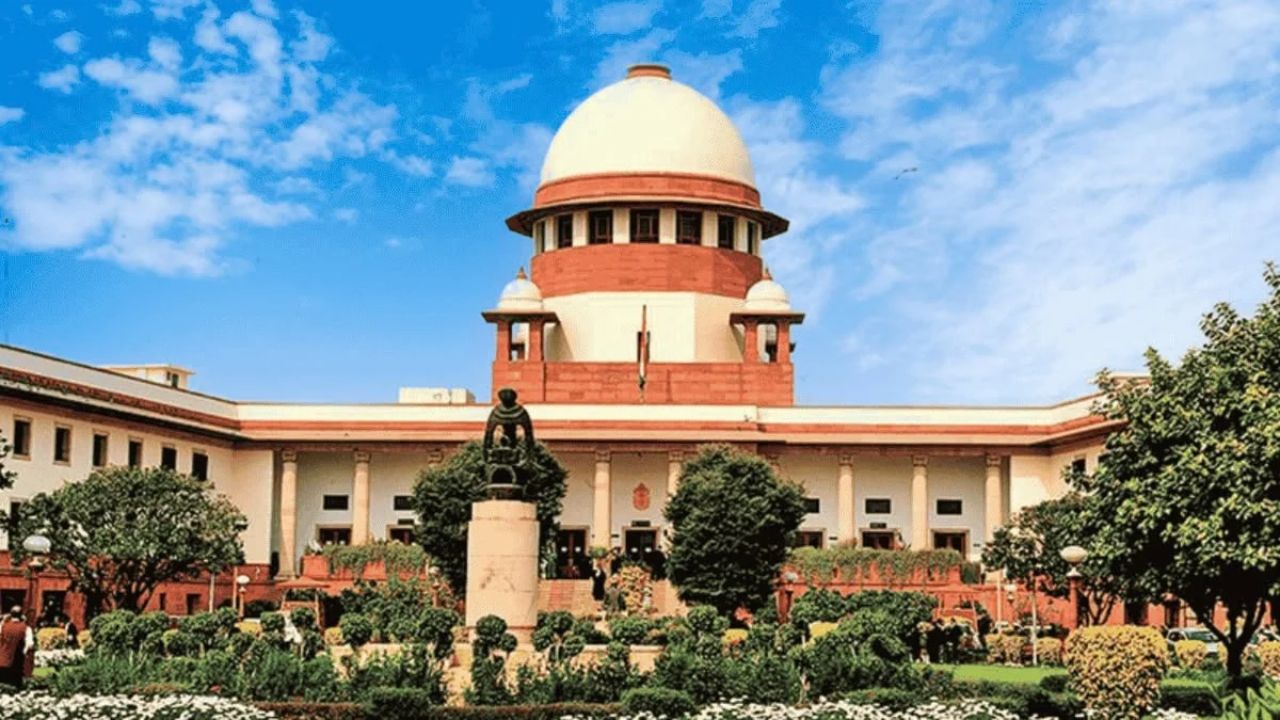
Supreme Court steps in over Delhi Metro and train restrictions ahead of the October 10 CJP protest. (Img: X)
New Delhi: The Supreme Court on Friday directed the Centre and authorities not to completely stop Delhi Metro and train services ahead of the October 10 protest called by the CJP and opposition groups in the national capital. The court said public transport must continue in a regulated manner, with security arrangements based on the principle of proportionality.
The Bench of Chief Justice of India (CJI) Surya Kant, Justice Joymalya Bagchi and Justice V Mohana raised serious concerns about restrictions that could affect thousands of daily commuters, including students, employees, senior citizens and people travelling to Delhi from Gurugram, Greater Noida and other parts of the National Capital Region (NCR).
The court was hearing petitions filed by CPI(M) general secretary M.A. Baby and others challenging restrictions imposed ahead of the planned demonstration against Chief Election Commissioner Gyanesh Kumar. The pleas raised concerns over the closure of Delhi Metro station entrances and exits, as well as the cancellation or suspension of trains scheduled to arrive in Delhi.
The Bench made it clear that security measures should not bring public transport to a complete halt. Solicitor General Tushar Mehta told the bench that he would urge the authorities to reconsider a complete prohibition and explore regulated operations that could maintain public safety without causing widespread inconvenience.
The court also directed that the final decision and travel advisory be widely publicised. It said information should be published on official websites and in newspapers so that passengers can plan their journeys and avoid unnecessary hardship.
During the hearing, Chief Justice Surya Kant told the Solicitor General that the court's primary concern was the impact of the restrictions on ordinary citizens, rather than the protesters themselves.
The Chief Justice pointed out that thousands of people travel daily from Gurugram, Greater Noida, East Delhi and South Delhi for work, education and other essential activities. Many depend entirely on public transport and cannot afford to rely on private vehicles when Metro stations or train services are unavailable.
The bench acknowledged that law enforcement agencies have the authority to impose restrictions to maintain law and order and prevent unruly gatherings. However, it stressed that such measures must remain proportionate to the situation and should not leave citizens without reliable transport.
The court also highlighted the need to consider the safety and mobility of women, senior citizens and other vulnerable commuters. It indicated that authorities could regulate movement and strengthen security without shutting down every available transport option.
Justice Joymalya Bagchi observed that the notice under consideration provided for the closure of several Metro station entrances and exits from 9 pm on Friday until further orders. He questioned whether a complete shutdown was necessary when less restrictive measures could address security concerns.
The judge indicated that reducing train frequency or regulating passenger movement could be considered a form of restriction, whereas a complete closure would amount to a much more extreme step.
The bench reiterated that train and Metro services should be regulated rather than stopped altogether. The Solicitor General, however, submitted that a complete stoppage could be proportionate in certain circumstances, depending on the security situation and the information available to the authorities.
Following the court's observations, Mehta agreed to take up the issue with the concerned authorities and impress upon them the need to allow transport services to operate in a controlled manner.
Senior advocate Kapil Sibal, appearing for the petitioners, told the Supreme Court that trains scheduled to reach New Delhi and Hazrat Nizamuddin railway stations between 4 am and 2 pm on October 10 had reportedly been suspended.
He argued that such cancellations could prevent passengers from reaching the capital, even when their journeys had no connection with the planned protest. The submission raised concerns about the wider impact of the security arrangements on interstate rail travel and ordinary passengers.
The petitioners also challenged restrictions on Metro station access, arguing that commuters could face significant disruption if major transport links were closed during the protest period.
The Supreme Court's intervention came amid concerns about the cumulative impact of Metro restrictions, train cancellations and other preventive measures across the national capital.
During the hearing, Solicitor General Tushar Mehta disputed the petitioners' suggestion that the entire city had effectively been shut down. He said the authorities had taken security precautions in response to earlier incidents of violence linked to an attempted CJP protest march towards Parliament on July 20.
Mehta also informed the bench that internet restrictions were limited to certain sensitive areas and would be reviewed based on security inputs. He referred to alleged incidents involving the harassment and molestation of women police personnel during protests earlier in the week and urged the judges to examine video footage.
These were submissions made by the government during the hearing. The court's central concern remained whether the restrictions imposed to address potential security threats were proportionate and whether essential public transport could continue to function safely.
The national capital has been placed under heightened security ahead of the planned October 10 demonstration. Authorities have imposed prohibitory restrictions under Section 163 of the Bharatiya Nagarik Suraksha Sanhita (BNSS) in parts of Delhi and stepped up security arrangements, particularly in and around New Delhi.
Restrictions on Metro station entry and exit, along with reports of cancelled or curtailed train services, have raised concerns about disruption to daily travel. Orders have also been issued for liquor shops to remain closed for two days, according to reports on the security measures.
The protest is linked to demands concerning Chief Election Commissioner Gyanesh Kumar and opposition to the Special Intensive Revision (SIR) of electoral rolls. Authorities have cited public order and security concerns while preparing for the gathering.
The Supreme Court's direction does not prevent the authorities from taking lawful steps to maintain peace or regulate crowds. Instead, it makes clear that a complete suspension of train and Metro movement should not be imposed as a blanket measure. The authorities are expected to consider regulated operations and communicate their decisions clearly to the public.
For commuters, the key issue remains the availability of reliable transport on October 10. The court has stressed that security planning must protect the public without unnecessarily disrupting access to workplaces, educational institutions, railway stations and other essential destinations.

