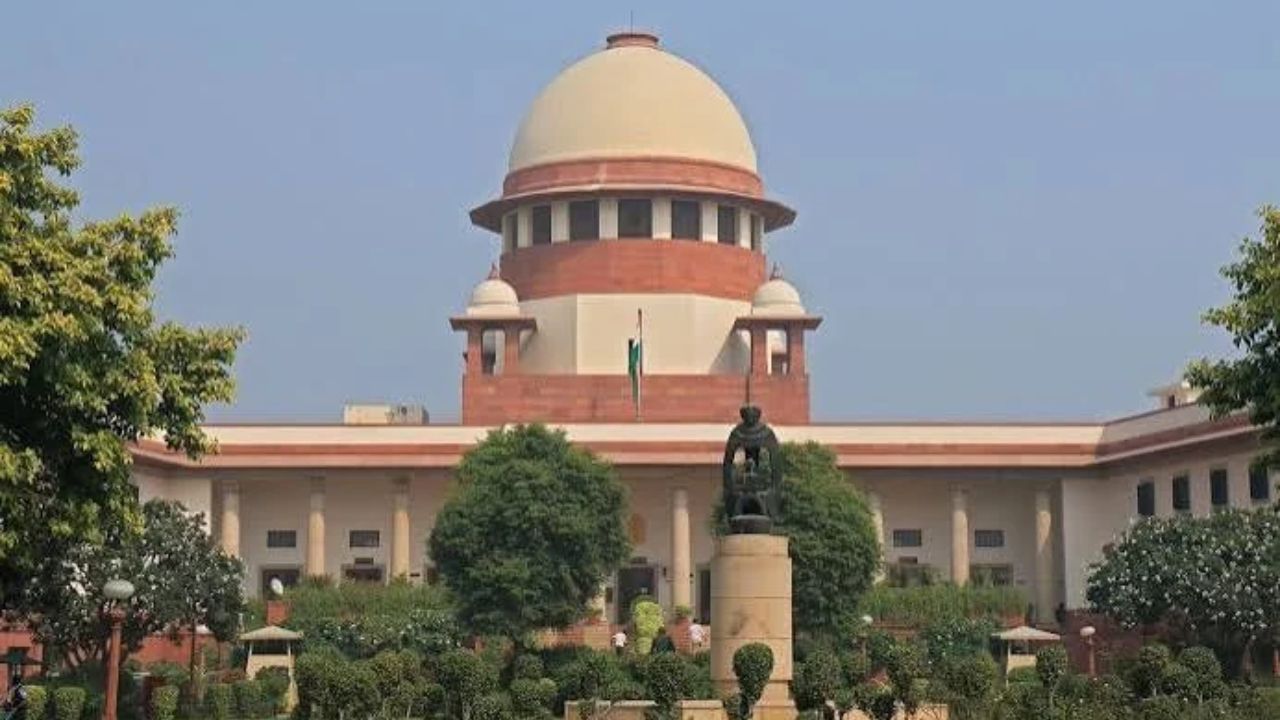
Supreme Court seeks answers from Delhi authorities over the closure of 45 Metro stations during CJP protests. (Img: X)
New Delhi: The Supreme Court on Sunday sought answers from Delhi authorities over the closure of 45 Metro stations during protests organised by the Cockroach Janta Party (CJP) at Jantar Mantar on October 10.
The Bench of Justice Joymalya Bagchi and Justice V Mohana issued notice in a contempt petition and directed the authorities to explain why contempt proceedings should not be initiated over the alleged violation of its earlier directions.
The hearing also examined allegations of widespread detentions, restrictions on movement and police action against protesters, lawyers and opposition leaders. The court directed that Metro and railway services should function normally unless lawful restrictions become necessary to address a public-order situation. It also called for a review of barricades, protection against illegal detention and uninterrupted internet facilities in accordance with the law.
The contempt petition was filed by Advocate Shailendra Mani Tripathi against Union Home Secretary Govind Mohan, Delhi Police Commissioner Anurag Kumar and Delhi Metro Rail Corporation (DMRC) Chairperson D Thara.
The petition alleged that the closure of Metro stations on October 10 violated the Supreme Court’s October 9 directions concerning public transport ahead of the planned protests. Delhi authorities had initially proposed restrictions affecting 57 Metro stations. Following the court’s intervention, the number of affected stations was reduced to 45.
During a Special Sunday Sitting, the Court asked the authorities to file affidavits explaining their actions and submit a compliance report detailing whether the earlier directions were followed. It clarified that notice did not mean that the officials have been found guilty of contempt. The court will consider their explanations and the available material before deciding the issue.
The closure of 45 stations across the Delhi Metro network became a central issue during Sunday’s hearing. The affected stations were located mainly in and around Central Delhi, where security arrangements had been tightened ahead of the CJP demonstration at Jantar Mantar.
The court questioned whether the authorities had adequately considered the impact of the closures on commuters, particularly where shutting stations in the middle of a Metro line could disrupt access to the wider network.
The Bench asked the authorities to submit a map identifying the stations that were closed and those that remained operational. It said the precise locations of the affected stations were important to understanding how the restrictions influenced public access and movement.
The issue is not limited to how many stations were closed. Even if trains continue running, restrictions at key stations or interchange points can make it difficult for passengers to reach their destinations.
Solicitor General Tushar Mehta, representing the Central government, told the Supreme Court that all 4,157 scheduled Metro train trips operated on October 10. He submitted that 45 of the network’s 303 stations had been closed or restricted, accounting for approximately 15 per cent of the stations. He also informed the court that all Metro stations were open by Sunday and that internet services had been restored.
However, the Bench indicated that the total number of train trips would not, by itself, resolve the question of whether the restrictions affected public access. The court wants to understand how the closures were distributed across the network and whether they disrupted movement along particular routes. The authorities have been asked to provide the details as part of their response and compliance report.
Apart from the contempt proceedings, the Supreme Court issued directions concerning public transport, traffic, internet facilities, police barricades and peaceful assembly. The court directed that Metro and railway services should operate normally unless restrictions are required to address a public-order situation in accordance with the law. It also said that people should be allowed to move freely across Delhi, subject to traffic regulations.
Authorities were directed to review barricades immediately, taking into account security requirements, traffic conditions and the need to avoid unnecessary restrictions on movement.
The Bench further directed that internet facilities should remain undisturbed as provided by law. It clarified that the direction did not take away the powers available to authorities under the Information Technology Act.
The court also said there should be no illegal detention and that any detention must follow the procedure established by law. These directions underline the need to balance public safety with the rights of citizens to travel, communicate, assemble peacefully and access essential services.
The Supreme Court directed the concerned authority to remove a notice board outside its premises referring to the imposition of Section 163 of the Bharatiya Nagarik Suraksha Sanhita (BNSS), if it had not already been taken down.
Section 163 empowers a magistrate to issue urgent orders in circumstances where immediate prevention or a speedy remedy is necessary to address a potential danger or public disturbance. Depending on the order and its scope, such restrictions can affect gatherings and other activities.
The Bench said the board should be removed to ensure that citizens and lawyers did not face apprehension about approaching the Supreme Court and accessing justice.
The direction formed part of the court’s broader effort to address concerns that restrictions imposed during the protest-related security arrangements could interfere with the ability of citizens and legal professionals to exercise their rights.
The Bench also emphasised that protests must be conducted peacefully and should not encourage others to engage in violence or unlawful activities. The judges asked those present during the proceedings to undertake that their protests would remain peaceful and that they would not instigate others. Senior Advocate Gopal Sankaranarayanan also urged that authorities should act appropriately towards peaceful demonstrators.
Justice Joymalya Bagchi highlighted the Supreme Court’s constitutional responsibility under Article 32, which enables citizens to approach the court for the enforcement of fundamental rights.
The proceedings brought into focus two important principles: citizens can exercise their right to peaceful assembly in accordance with the law, while authorities can impose lawful and necessary restrictions to maintain public order. The court’s directions seek to ensure that security measures do not become a basis for unlawful detention or unnecessary disruption of public life.
Sunday’s hearing covered several petitions arising from the October 10 protests against Chief Election Commissioner Gyanesh Kumar and the Special Intensive Revision (SIR) of electoral rolls.
Delhi Police had denied permission for the CJP demonstration at Jantar Mantar, citing law-and-order concerns. CJP founder Abhijeet Dipke and other organisers were detained ahead of the protest. The subsequent police action and reports of detentions involving opposition leaders, lawyers and other individuals prompted multiple petitions before the Supreme Court.
One of the petitions was filed by Trinamool Congress MP and Senior Advocate Menaka Guruswamy, who challenged the preventive detention of opposition leaders, including four former chief ministers, and other individuals. Another contempt petition, filed by Aman Prasad against Delhi Police Commissioner Anurag Kumar, alleged excessive police action against protesters.
The plea raised allegations that unarmed individuals were assaulted and detained, some police personnel operated without identification badges, and women protesters were mistreated by male officers. These claims were presented as allegations in the legal proceedings and have not been established as judicial findings.
Senior Advocate Shadan Farasat told the Supreme Court that he had also been detained during the previous day’s events. He argued that the restrictions had affected not only lawyers but also ordinary citizens seeking to exercise their right to peaceful protest.
Farasat alleged that he had been picked up by the police and placed in a moving bus. He urged the court to intervene to protect citizens’ ability to demonstrate peacefully in the national capital.
Senior Advocate Gopal Sankaranarayanan also raised the reported detention of lawyers, including Dinesh Dwivedi, Uttara Babbar and Farasat. He argued that the detention of people who were allegedly marching peacefully and were unarmed required scrutiny.
Sankaranarayanan urged the Bench to examine video footage submitted during the proceedings and assess whether the police action was necessary and proportionate to the situation. The court acknowledged the concerns raised by the lawyers and said it was not trivialising their grievances.
A woman lawyer told the Bench that she and three other individuals had been detained when a group of lawyers began a peaceful march outside the Supreme Court. According to her account, around 150 lawyers had gathered near the MC Setalvad Chambers and started walking before police personnel stopped them near a traffic signal. She said three lawyers and another individual were taken away in a police vehicle despite explaining that they were marching peacefully.
Her account added to the concerns raised during the hearing about whether restrictions were being enforced beyond the areas where they were intended to apply. Former Attorney General KK Venugopal also raised the case of a former junior who, he said, had been picked up by police and taken away in a van before being dropped at a location far from where she had been detained.
He alleged that she was not adequately informed about the action and that the personnel involved were not wearing identification badges. The allegations formed part of the submissions before the court and remain subject to the legal process.
Menaka Guruswamy told the Supreme Court that approximately 7,000 people had reportedly been detained during the protest-related police action and that around 45 detention centres had allegedly been set up across Delhi.
She also raised concerns about reported internet disruptions, the detention of opposition leaders and restrictions on the movement of Members of Parliament. She argued that the absence of comprehensive official figures made it difficult to determine the full extent of the detentions.
Guruswamy questioned whether constitutional rights could be effectively curtailed through widespread restrictions without a formal declaration of Emergency. She referred to Article 358 of the Constitution and the Emergency period of 1975, as well as the Supreme Court’s judgment in the ADM Jabalpur case. Her arguments centred on the protection of personal liberty and the constitutional right to peaceful assembly.
Article 358 specifically concerns the operation of Article 19 during certain types of national Emergency. It does not mean that all restrictions on protests are permissible only during an Emergency; restrictions outside an Emergency must also comply with applicable constitutional and legal requirements.
Guruswamy further argued that the authorities should not receive additional time to explain the Metro closures if the court’s earlier directions had been disobeyed. She sought contempt action over the alleged non-compliance.
Senior Advocate Shoeb Alam told the court that people travelling to Delhi had allegedly been stopped or detained, including passengers arriving by train and individuals coming from parts of the National Capital Region, such as Gurugram and Noida. He also raised allegations that police had visited homes or detained individuals in an effort to prevent them from reaching the protest site.
Alam argued that some individuals were being detained for less than 24 hours and then released, effectively preventing them from participating in demonstrations while complicating challenges to the alleged restrictions. He described the practice as an alleged misuse of police powers to restrict peaceful protest.
The court proceedings have therefore raised questions not only about the duration of detention but also about its purpose, the legal basis for the action and whether people were prevented from exercising their rights without sufficient justification.
Senior Advocate Kapil Sibal argued that the right to peaceful protest could not be taken away arbitrarily and that restrictions must be grounded in the Constitution and applicable law. He referred to Article 19(2), which permits reasonable restrictions on freedom of speech and expression on specified grounds, including public order.
The Bench, however, also emphasised that demonstrations must follow the applicable legal procedure. The central question is how authorities can regulate gatherings and prevent disorder without imposing restrictions that unnecessarily interfere with peaceful assembly and public movement.
Senior Advocate Arundhati Katju submitted that the State had a responsibility to assure citizens that their constitutional rights remained protected and available for lawful exercise.
Solicitor General Tushar Mehta told the Supreme Court that most of the people mentioned in the habeas corpus petitions had been picked up at around 2 pm and released at approximately 6 pm on the day of the protests.
He argued that requests seeking the production or release of those individuals might no longer survive where the people concerned had already been released.
However, the release of detained individuals does not automatically settle questions about whether the detention was lawful or whether the authorities complied with the court’s directions.
The Supreme Court will also consider the wider issues raised in the petitions, including the impact of transport restrictions, the allegations of excessive police action and the protection of peaceful assembly.
The authorities named in the contempt petition must submit their responses explaining why contempt proceedings should not be initiated. They have also been asked to provide a compliance report and details showing which Metro stations were closed and how the restrictions affected the network. The court will consider those explanations alongside the petitions concerning detention, police conduct, internet access and restrictions on movement.
The proceedings have placed the relationship between public order and constitutional freedoms at the centre of a major legal dispute. While authorities retain the power to take lawful measures when necessary, the Supreme Court’s directions emphasise that public transport, access to justice and peaceful assembly should not face unnecessary disruption.
The court has not yet made a final finding that the officials named in the contempt petition are guilty of contempt. Their responses and the court’s assessment of compliance will determine the next stage of the proceedings.

