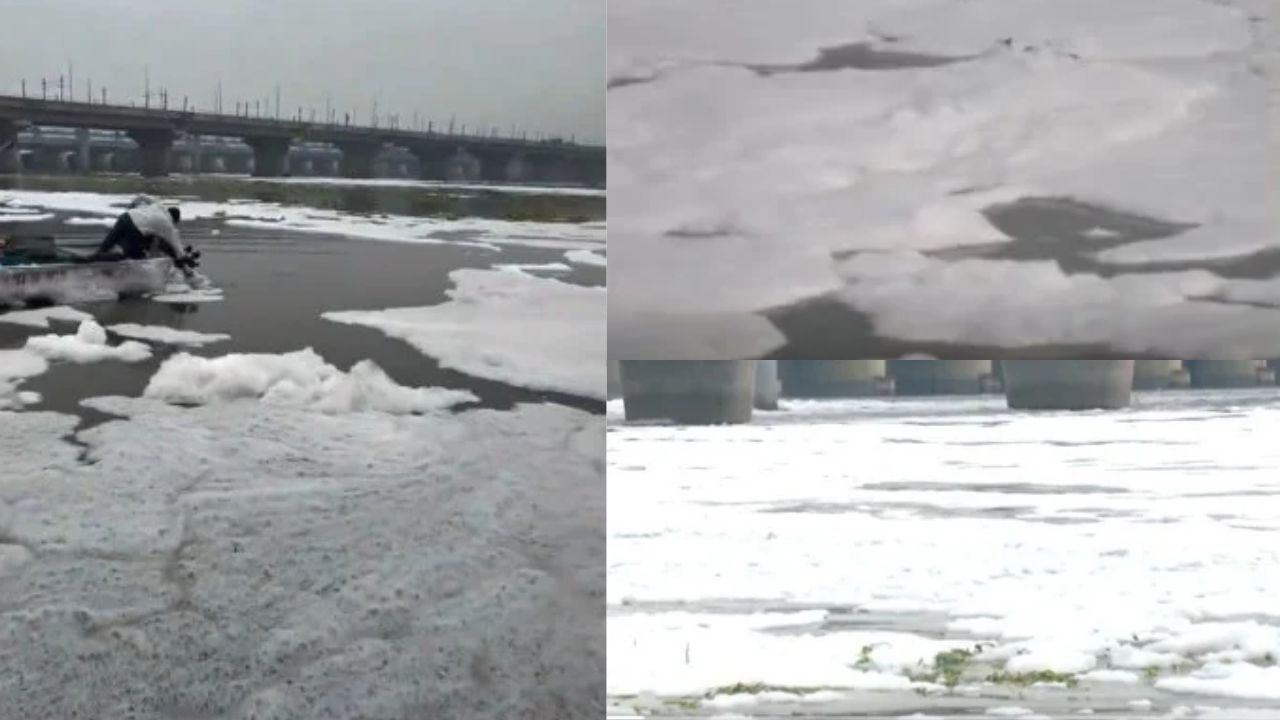
Thick layers of toxic foam are floating on the Yamuna river in Delhi, raising concern over pollution levels in the pious river, ahead of Chhath Puja. (Img: X)
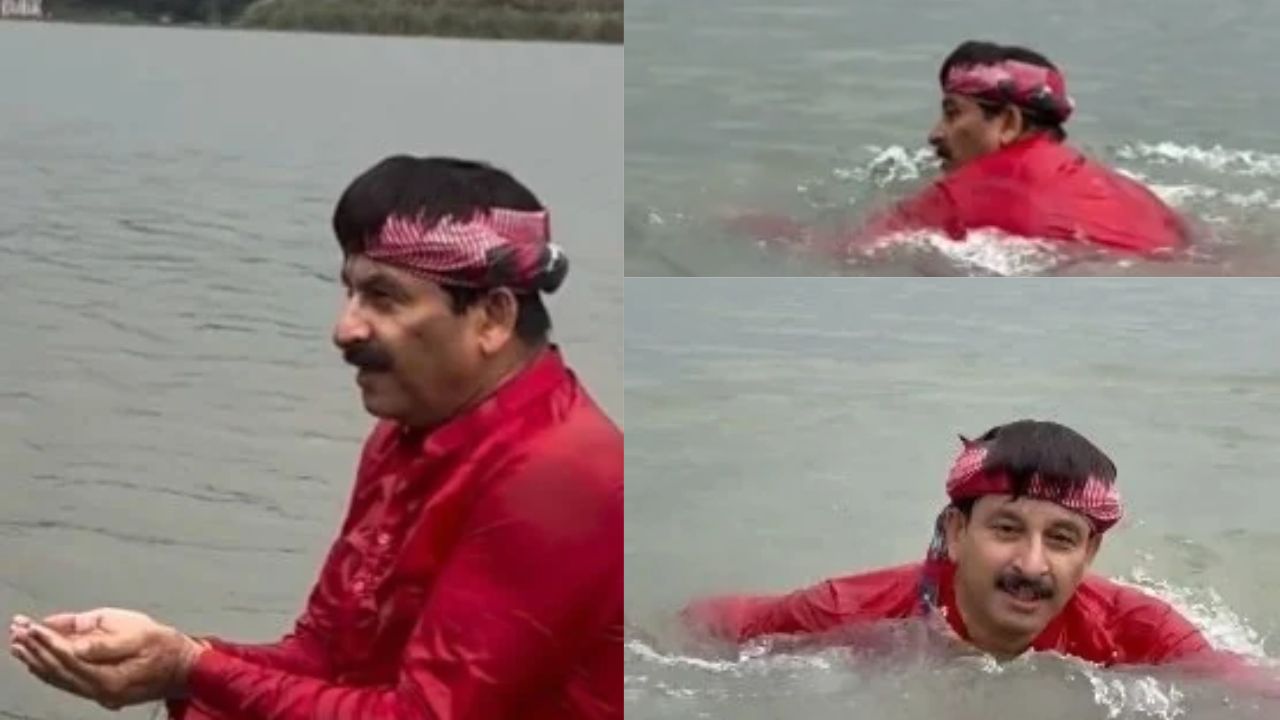
New Delhi: Thick layers of toxic foam were spotted floating on the Yamuna near Delhi's Kalindi Kunj on Friday, a day after BJP MP Manoj Tiwari took a dip in the river at Sonia Vihar and asserted that its pollution levels had substantially declined under the BJP-led Delhi government.
The appearance of the froth has once again brought the condition of the Yamuna into focus, particularly ahead of Chhath Puja, when thousands of devotees visit riverbanks to offer prayers and perform religious rituals.
Visuals from Kalindi Kunj showed a dense layer of white foam spreading across the river's surface and accumulating along its banks. The development came shortly after Tiwari's public demonstration at Sonia Vihar on Thursday, where he took a dip and performed aachman (ritualistic sipping of water) to highlight what he described as an improvement in the river's water quality.
Tiwari, who represents North-East Delhi in the Lok Sabha, credited the improvement to the efforts of the government led by Chief Minister Rekha Gupta. He claimed that nearly half of the Yamuna had been cleaned within one-and-a-half years of the BJP assuming power in Delhi.
The BJP MP also pointed to the presence of migratory birds along certain stretches of the river as an indication of improving environmental conditions. He maintained that devotees could once again celebrate Chhath Puja along the Yamuna.
In a message directed at opposition leaders Arvind Kejriwal and Rahul Gandhi, Tiwari invited them to visit the river and take a dip themselves. He also said that the remaining cleaning work would be completed over the next three years.
His remarks received support from Union Minister Kiren Rijiju, who suggested organising a swimming competition with Tiwari in the Yamuna, referring to the BJP MP's claims about the river's improved condition. The Delhi BJP also maintained that its government had achieved in two years what the previous Congress and AAP governments had failed to accomplish over 27 years.
The BJP's assertions, however, were challenged by the Aam Aadmi Party, which questioned the choice of location for Tiwari's demonstration. AAP Delhi president Saurabh Bharadwaj argued that the stretch between Palla and Wazirabad, where Sonia Vihar is situated, has historically been relatively cleaner than other parts of the river passing through the national capital.
Citing Delhi Pollution Control Committee (DPCC) reports, Bharadwaj claimed that water quality along this stretch had been better even during the AAP government's tenure. He further argued that the Yamuna becomes significantly polluted after the Najafgarh drain enters the river near the Signature Bridge, carrying substantial quantities of wastewater.
Bharadwaj challenged Tiwari and Delhi Water Minister Parvesh Verma to drink water at Kalindi Kunj ghat, near the Okhla barrage, instead of demonstrating the river's condition at Sonia Vihar. He alleged that BJP leaders had avoided a similar challenge in the previous year.
The Yamuna's pollution levels vary considerably along its course through Delhi. The approximately 22-kilometre stretch between Wazirabad and Okhla has remained among the most polluted sections of the river and has been the subject of repeated government interventions.
The political exchange comes amid renewed efforts by the Delhi government to restore the Yamuna. The river traverses approximately 52 kilometres through the national capital, with untreated sewage and wastewater discharge continuing to pose major challenges to its ecological health.
Recently, Union Home Minister Amit Shah launched 43 projects worth Rs 8,941 crore aimed at cleaning the river. He announced that the BJP government would work towards cleaning the Delhi stretch of the Yamuna by May 2029.
Delhi Water Minister Parvesh Verma has also acknowledged that restoring the river would require sustained efforts. He had earlier indicated that the complete clean-up exercise could take approximately two-and-a-half to three years.
According to the minister, cleaning work on the stretch between Palla and Wazirabad had been completed, while efforts were continuing along the downstream section between Wazirabad and Kalindi Kunj.
The resurfacing of toxic foam at Kalindi Kunj, however, has renewed questions over the pace and effectiveness of the clean-up measures, particularly with Chhath Puja approaching and concerns persisting over the safety of devotees performing rituals in the river.


