 English
 English

Trump Praises India's 7% GDP Growth (Image Source: X)
New Delhi: US President Donald Trump has praised India's economic momentum. Trump, who once described India's economy as a "dead economy," is now citing India's 7 percent GDP growth to take aim at his own country's central bank, the Federal Reserve. Demanding that the Federal Reserve cut interest rates, he questioned why the US growth rate cannot reach 14 to 20 percent if India can achieve such rapid economic growth with low interest rates.
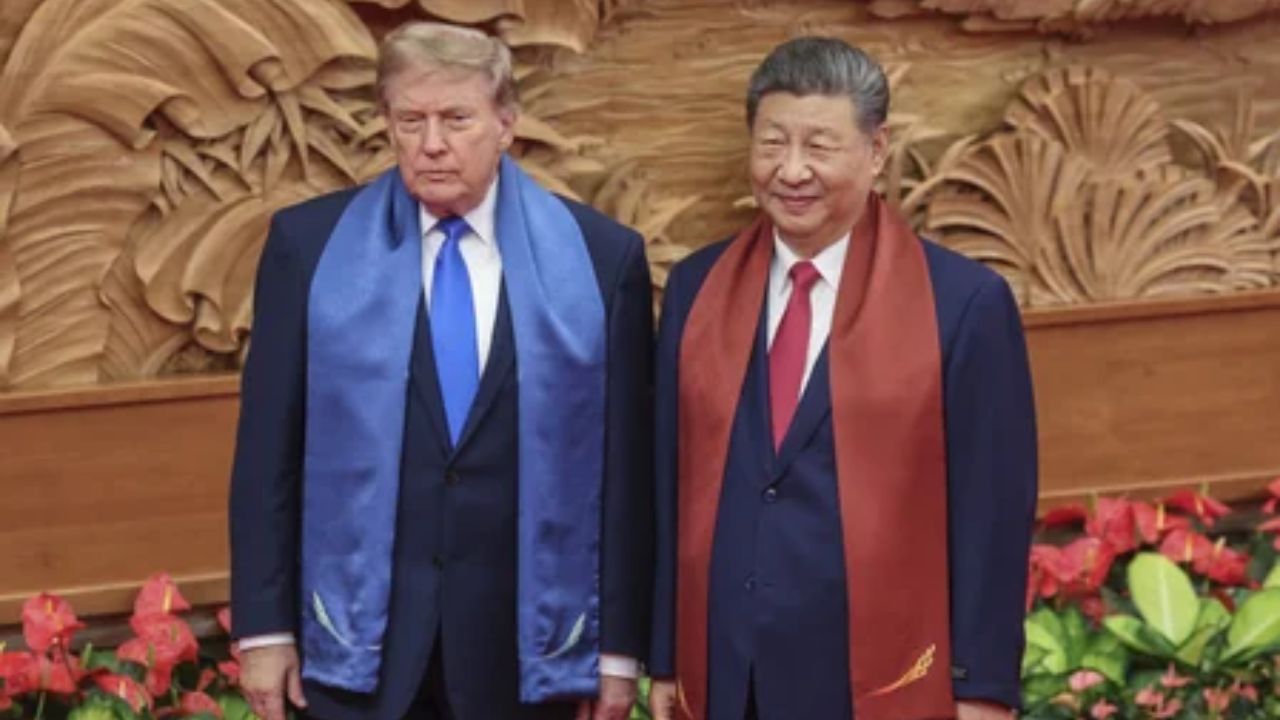
During a press conference in Washington on Friday, following his return from a four-day trip to Asia, Trump highlighted India's economic progress. He stated, "If you look at India, they have low interest rates and a GDP growth rate of seven percent. The US growth rate could be 14, 15, or perhaps even 20 percent." Trump noted that the current US economic growth rate is four percent. He argued that as the world's largest economy, the US should be able to secure loans at lower rates than other nations.
However, he did not specify a time frame for the growth figures he cited for India and the US. Furthermore, he did not clarify the extent to which interest rates would need to be cut for the US economy to accelerate to such a pace.
Trump, Xi and Putin Hold Historic Trilateral Talks: Nuclear War, Taiwan and Global Peace on Agenda
Criticizing the monetary policy of the US Federal Reserve, Trump alleged that whenever the government reports strong economic data, the Federal Reserve begins raising interest rates. His argument is that robust economic data enhances a nation's capacity to repay debt; therefore, the US should be able to access credit at lower interest rates. "When your numbers are good, your creditworthiness is better," he remarked.
Trump also characterized the Federal Reserve as a "highly political" institution. He clarified, however, that his criticism is directed at the institution as a whole, rather than at any specific individual.
The U.S. Federal Reserve is the central institution responsible for setting the country's monetary policy. Congress has tasked it with the mandate of maintaining maximum employment and price stability. When making decisions regarding interest rates, the Federal Reserve’s committee assesses inflation and conditions within the labor market. Changes to its policy rates directly impact the borrowing costs for banks, ordinary consumers, and businesses.