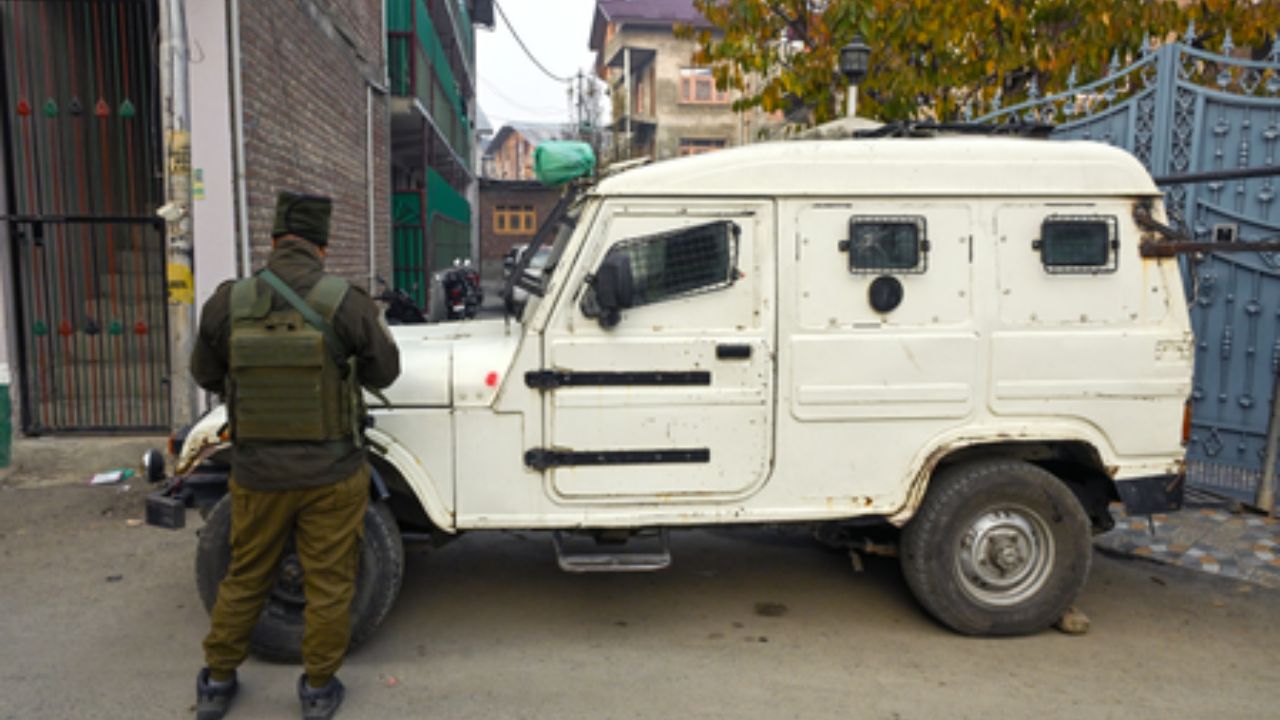
Dormant terror modules pose growing security challenge nationwide (Img: IANS)
New Delhi: Is it a new headache for Indian security agencies? Several self-radicalised terror modules in the country are suspected of remaining dormant for years before becoming active, raising fresh concerns among security agencies.
Security agencies suspect that multiple such modules could be operating across the country, staying inactive for years before attempting to carry out a major terror attack.
An official said these terror modules pose a serious threat because of their ability to remain hidden for extended periods.
“Most of these modules in India are either inspired by the Islamic State or Al-Qaeda in the Sub-Continent. It is their patience, which is what makes them extremely lethal,” the official said.
According to officials, such networks may begin with one or two youths who share similar ideological views and gradually develop into larger groups.
“Their primary objective is to establish a self-sustaining module focused on spreading radical propaganda. Over time, they begin recruiting others, but only select a small number of people. They also thoroughly profile potential recruits before allowing them to join the module,” the official said.
An Intelligence Bureau official said recruits are often highly educated young people employed in well-paying jobs. Officials believe there are several reasons why such individuals are selected.
“First and foremost, these persons do not come under the radar easily. Secondly, they have high-paying jobs, and the money earned comes in handy to run a self-sustained module. This helps cover the financial trail, as there is no dependence on an outside source to fund the module,” the IB official said.
Some such modules are believed to have been established as early as 2014, with no overt activity reported for more than a decade.
Officials said the module recently busted in Pune followed a similar pattern. It was established in 2015 and reportedly remained inactive in terms of overt activity for years, allowing its members to evade detection and maintain their cover.
Such dormant modules are considered particularly dangerous because the period of inactivity can also be used for further radicalisation and recruitment, an official said.
Another official said self-sustained modules that remain dormant for years are not necessarily focused on lone-wolf attacks.
“This is a knee-jerk reaction, and a lone wolf attack would not just be less effective, but would expose such modules easily. Instead, they play the waiting game for 5-10 years and at the end of it set themselves up for a spectacular attack,” the official said.
Officials said another factor complicating the detection of such groups is their ability to blend into local communities. This can allow them to remain dormant or operate covertly for years before being activated for violent operations.
Officials said the National Investigation Agency (NIA) has shifted towards proactive disruption of such networks. The agency is coordinating with state agencies and conducting raids aimed at dismantling suspected hidden modules before they can become operational.
The operation remains ongoing, with Indian security agencies continuing to monitor several other suspected dormant modules. Their focus is not limited to dismantling existing networks but also preventing new ones from emerging.
Officials described the Pune case as a significant example of how dormant modules can evolve over time. In its initial phase, the module reportedly focused on promoting Al-Qaeda's call for the destruction of India or Ghazwa-e-Hind. It later progressed to carrying out IED attacks in areas such as Kondhwa.
Intelligence assessments suggest that similar modules could continue to emerge in different parts of the country. An official said surveillance led by intelligence agencies would remain crucial in tackling such self-sustained dormant networks.

