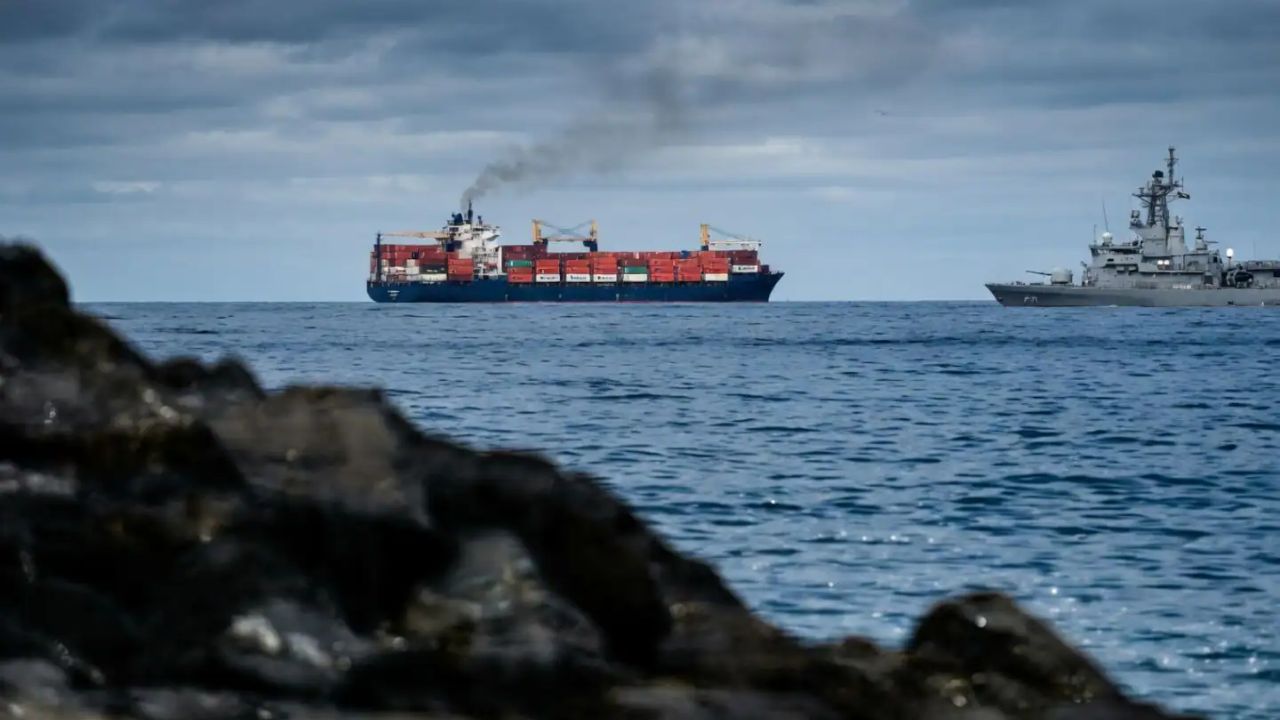
Movement through the strait has not been uniform.
New Delhi: Two merchant vessels carrying petroleum products for India have crossed the Strait of Hormuz, with the Indian Navy maintaining standby support, according to sources.
The transit comes at a time when shipping activity in the region remains tightly regulated due to ongoing security concerns. While some vessels have been cleared for passage, several others continue to wait in nearby waters.
In recent days, vessel movement through the crucial maritime corridor has been uneven. Select ships have managed to pass through, while others have either delayed journeys or altered routes depending on prevailing conditions.
The latest crossing by India-bound vessels follows a series of controlled transits, indicating gradual but cautious resumption of traffic in the area.
Earlier this month, LPG carriers Shivalik and Nanda Devi were among vessels linked to India that successfully crossed the route. Reports indicated that at least one of them received support during its transit.
Additionally, tankers Pine Gas and Jag Vasant, carrying LPG cargoes, also navigated the passage. However, shipping data suggested that multiple vessels were still stationed in surrounding waters awaiting clearance.
The situation in and around the Strait of Hormuz continues to pose operational challenges. Reports of GPS interference and alerts regarding potential sea mines have added to concerns for commercial shipping.
In response, the Indian Navy has deployed warships in the Gulf region. Officials have indicated that naval units remain ready to assist Indian-flagged and India-bound vessels to ensure safe passage.
Hormuz tensions rise as two Chinese vessels reverse course amid West Asia conflict
The Strait of Hormuz is one of the world’s most critical energy corridors, handling nearly 20 per cent of global oil and gas shipments.
For India, the route is especially significant, as a substantial portion of its crude oil and gas imports passes through this channel. Any disruption in transit can have broader implications for supply chains and energy security.
Sources indicate that additional India-bound ships carrying petroleum products are likely to attempt crossing the strait in the coming days, depending on security conditions and clearances.

