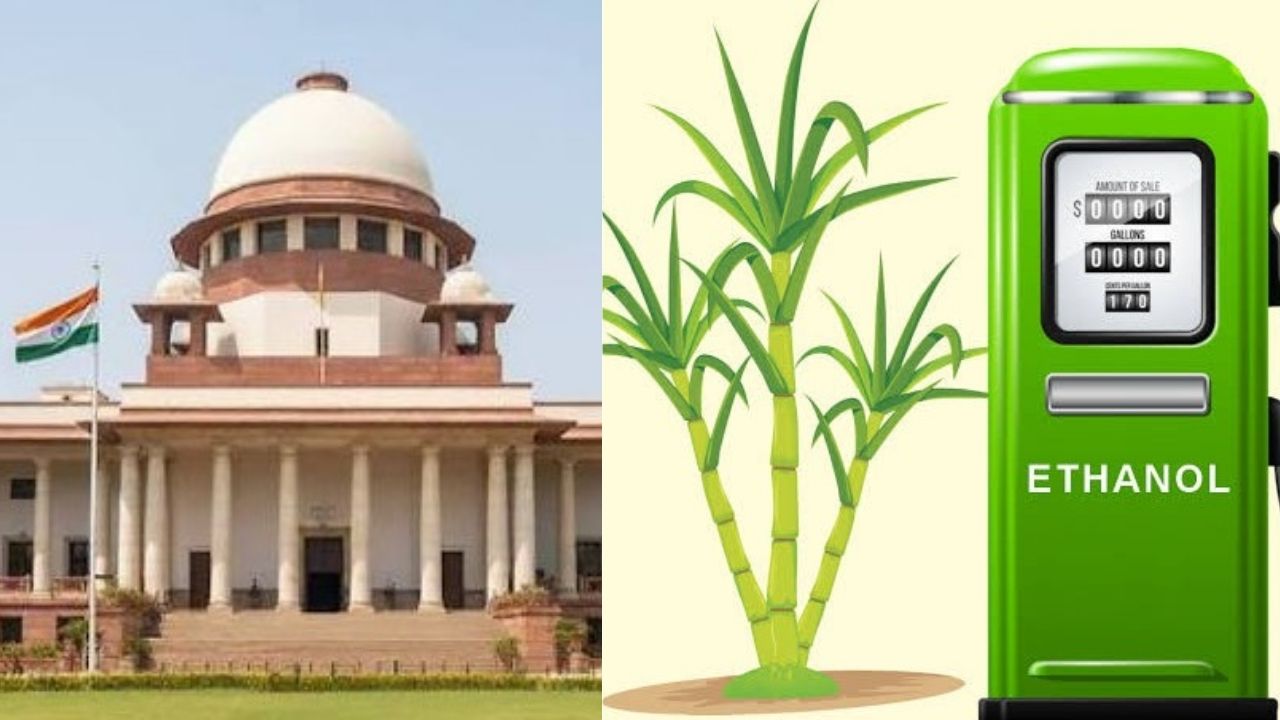
Supreme Court’s Latest Move: Petrol Pumps Won’t Show Ethanol Details Yet
New Delhi: Millions of vehicle owners across India will continue to buy ethanol-blended petrol without mandatory ethanol percentage details at fuel stations for now. The Supreme Court has refused to entertain a plea seeking clear disclosure of ethanol content on petrol pump nozzles and fuel bills, bringing the fuel transparency debate back into focus.
The petition was filed amid the nationwide rollout of E20 petrol, a blend containing up to 20 per cent ethanol, making the issue important for consumers concerned about fuel composition, vehicle compatibility and long-term impact on engines.
The Bench of Justice MM Sundresh and Justice Prasanna B Varale declined to hear the petition and allowed the petitioner to approach the appropriate authority or jurisdictional high court for further relief.
The plea was filed by advocate Narendra Kumar Goswami, who argued that fuel buyers have a right to know exactly what they are purchasing. The petitioner sought directions for a uniform labelling system at petrol stations where every dispensing nozzle would clearly mention the percentage of ethanol blended with petrol.
The plea also demanded that fuel invoices and receipts should include ethanol content details, allowing consumers to make informed decisions about the fuel being used in their vehicles. The argument behind the petition was based on consumer transparency, with the petitioner comparing fuel disclosure requirements with ingredient information available on packaged products.
During the hearing, the Supreme Court questioned the petitioner’s decision to directly approach the apex court instead of first moving the relevant high court or competent authority. The Bench ultimately refused to entertain the petition under Article 32 of the Constitution, which allows direct access to the Supreme Court in matters related to fundamental rights.
However, the Court allowed the petitioner to pursue the matter through the appropriate legal channel. The decision means there will be no immediate rule requiring petrol pumps across India to display ethanol percentage details on fuel dispensers or receipts.
The Centre opposed the plea and defended the government’s ethanol blending programme. Attorney General R Venkataramani, appearing for the Union government, informed the court that similar challenges against the ethanol blending policy had already been rejected earlier.
The government has maintained that E20 petrol is part of India’s broader energy security strategy aimed at reducing dependence on imported crude oil, supporting farmers and lowering vehicle emissions. The ethanol blending programme has been promoted as a major step towards cleaner fuel alternatives and reducing India’s reliance on fossil fuels.
E20 petrol contains up to 20 per cent ethanol blended with petrol. Ethanol is a renewable biofuel produced mainly from agricultural products such as sugarcane, rice and maize. India has increased ethanol blending as part of its clean energy transition strategy.
The programme aims to reduce crude oil import costs, improve domestic fuel security and create new markets for agricultural producers. The government has also highlighted ethanol production as an opportunity to strengthen the rural economy and support farmers involved in biofuel supply chains.
While the government has highlighted the economic and environmental benefits of ethanol blending, some vehicle owners and experts have raised concerns about fuel efficiency, engine performance and compatibility of older vehicles.
The petition sought the creation of a public vehicle compatibility database that would allow people to check whether their cars, motorcycles and other vehicles are suitable for different ethanol blends.
It also requested an expert committee involving officials from the petroleum ministry, road transport ministry, Bureau of Indian Standards, automobile research organisations and consumer representatives.
The proposed panel was expected to study issues including engine durability, mileage impact, maintenance costs, warranty concerns, insurance implications, emissions and environmental impact of ethanol production.
The latest petition comes after the Supreme Court had earlier dismissed a challenge against the government’s ethanol blending policy in 2025. At that time, the court accepted the government’s position that ethanol blending was linked with national priorities such as energy independence, reducing crude oil imports and lowering pollution levels.
The latest plea did not challenge the E20 policy itself but focused on whether consumers should receive detailed information about ethanol content in the fuel they purchase.
For now, petrol stations across India will continue selling ethanol-blended petrol without mandatory ethanol percentage disclosure on fuel pumps or receipts. The petitioner may approach the relevant authority or high court to continue the demand for greater transparency in fuel labelling.
As India moves towards wider adoption of biofuels, the debate over consumer awareness, vehicle readiness and fuel transparency is expected to continue. The question of what exactly goes into the fuel tank is likely to remain an important discussion point for millions of Indian motorists.

