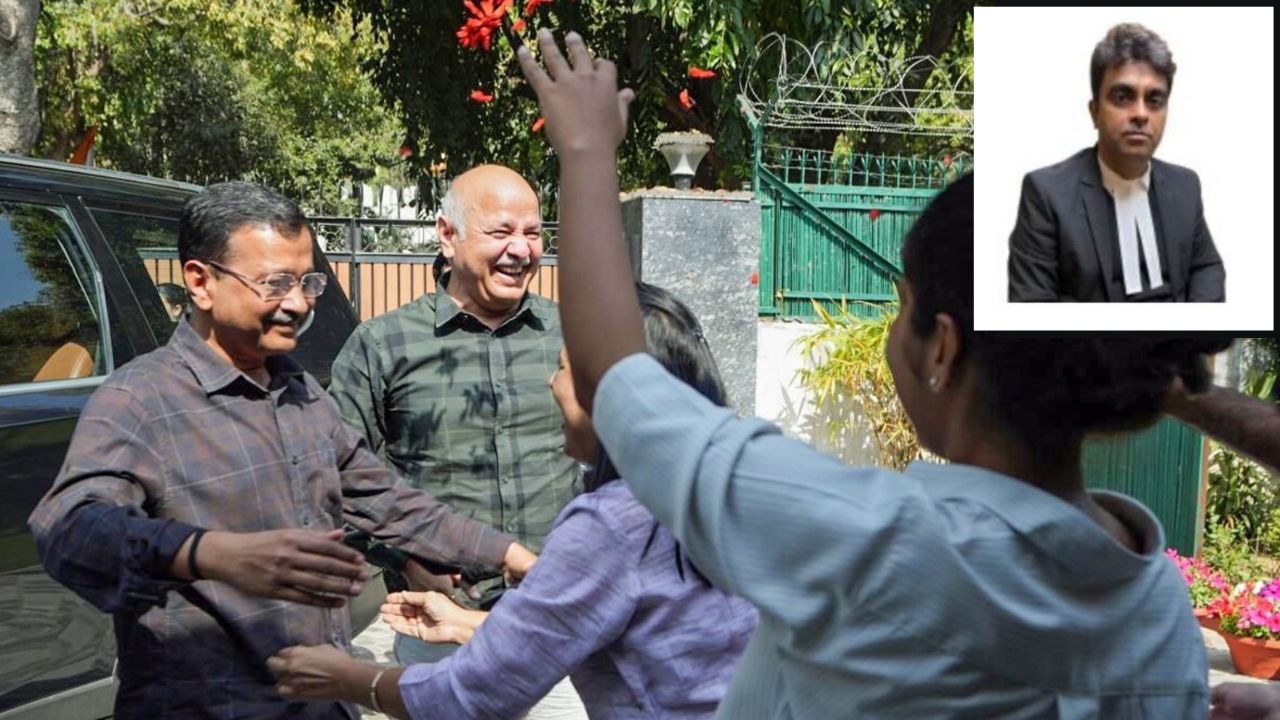
Judge Jitendra Pratap Singh: The Judge Behind The Delhi Excise Policy Case Verdict
New Delhi: Jitendra Pratap Singh, the Special Judge at the Rouse Avenue Court, recently came into national spotlight after delivering a key order in the high-profile Delhi excise policy case. His decision to discharge several accused, including senior political leaders, has drawn significant attention to his role within the Indian judiciary.
Judge Jitendra Pratap Singh is a senior member of the Delhi Judicial Service and currently serves as Special Judge (PC Act) CBI-01 at the Rouse Avenue Court complex in the national capital. In this role, he presides over cases related to corruption investigated by central agencies, particularly the Central Bureau of Investigation.
Courts designated under the Prevention of Corruption Act handle cases involving alleged misuse of public office and financial irregularities by government officials and public servants.
According to available information, Judge Singh completed his law degree from the University of Delhi, one of India’s leading institutions for legal studies.
Over the years, he has built a career within the judicial system handling complex criminal and corruption cases. In October 2024, he was appointed as an Additional Sessions Judge, a role that involves adjudicating serious criminal matters and overseeing trials under various central laws.
His posting as Special Judge (PC Act) places him at the centre of several high-profile investigations involving public officials and political figures.
Judge Singh gained widespread attention after delivering a major ruling in the Delhi excise policy case. The case involved allegations of irregularities in the now-scrapped excise policy introduced by the Delhi government for 2022–23.
In his order, the court discharged former Delhi Chief Minister Arvind Kejriwal and former Deputy Chief Minister Manish Sisodia, along with other accused.
The court declined to frame charges against the 23 individuals named in the case, observing that the evidence presented did not establish a prima facie case of criminal conspiracy or intent.
‘I Am Not Corrupt’: Kejriwal turns emotional after acquittal in Delhi excise policy case
During the proceedings, the court reportedly raised concerns over the investigative approach adopted by the Central Bureau of Investigation. The judge noted that parts of the case appeared to rely heavily on assumptions and statements rather than concrete evidence. Particular concern was expressed over the reliance on the testimony of an approver who had earlier been an accused in the case.
The court also highlighted gaps in the chargesheet and questioned whether the investigation had adequately established an overarching conspiracy. Reports indicate that the judge suggested a departmental inquiry against certain officials involved in the probe.
The ruling marked a significant development in the case and has triggered wide political and legal debate across the country.

