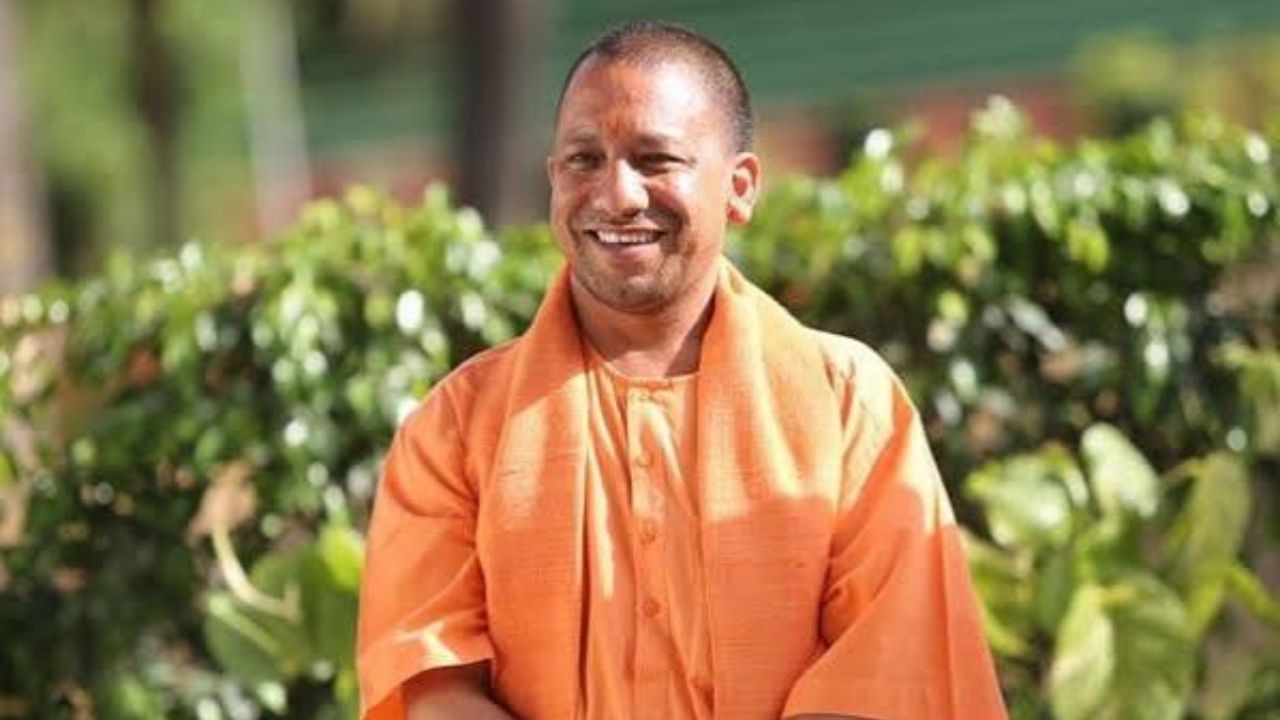
The Uttar Pradesh Chief Minister says citizen satisfaction, rather than training certificates, must determine the success of public administration. (Img: X)
Lucknow: Uttar Pradesh Chief Minister Yogi Adityanath has announced three major governance initiatives aimed at making public administration more accountable, technology-driven and responsive to citizens, warning that government employees must not force ordinary people to run from office to office to get routine work done.
Addressing the Northern Regional Workshop of the Sadhana Shrankhla under Mission Karmayogi at Lok Bhavan, the Chief Minister emphasised developing the Dr Ram Manohar Lohia Uttar Pradesh Administration and Management Academy (RUPAAM) into an Artificial Intelligence Centre of Excellence, strengthening the capabilities of personnel in rural and urban local bodies, and implementing a right person for the right role framework. He also proposed linking employees’ performance, achievements and documented success stories with their Annual Confidential Reports (ACRs) and promotions.
The central message was that administrative performance must ultimately be judged by citizen satisfaction, timely grievance redressal and the quality of public services, rather than by training certificates or procedural compliance alone.
Invoking the familiar television satire Office-Office, Adityanath said citizens should not have to make repeated visits to government offices to secure basic services. He cited pension-related difficulties faced by elderly people and the everyday challenges confronting young people, women, farmers and other citizens seeking government assistance.
He argued that when people repeatedly return without receiving time-bound solutions, the purpose of public service remains unfulfilled. Deliberately keeping applications pending and failing to resolve genuine grievances because of inadequate information or administrative inefficiency are both serious governance concerns, he said.
The Chief Minister stressed that public servants must remain as attentive to their duties as they are to their service benefits and career progression. Placing an incapable person in a position of responsibility, he observed, can be as damaging as allowing a negligent employee to continue in that role.
His remarks placed accountability, role clarity and measurable service delivery at the centre of the state’s administrative reform agenda. Rather than allowing the system to become preoccupied with repeated complaints, he said, departments must identify and resolve citizens’ genuine problems at the earliest possible stage.
The Northern Regional Workshop brought together administrative officials and representatives from eight states and four Union Territories. Jointly organised by the Uttar Pradesh Academy of Administration and Management and the Capacity Building Commission of the Government of India, the event focused on strengthening institutional capacity and improving public service delivery.
The first major initiative is the proposed development of RUPAAM as an AI Centre of Excellence. Adityanath urged the Capacity Building Commission to support the academy in expanding its capabilities in artificial intelligence, data analytics and digital governance. The objective is to equip government personnel to use emerging technologies for faster decision-making, simplified procedures and more efficient administration.
The second initiative involves capacity building among personnel working in gram panchayats, nagar panchayats, municipal councils and municipal corporations. The Chief Minister described local bodies as foundational units of governance, arguing that their institutional capabilities directly affect the delivery of government schemes and services to the last mile.
The third initiative centres on implementing the right person for the right role principle. The government wants responsibilities to be assigned in accordance with employees’ capabilities and work performance, with achievements and successful outcomes linked to ACRs and promotion-related assessments. The proposal is intended to strengthen performance management, encourage professional development and improve accountability across departments.
Adityanath said technological transformation is changing the way governments make decisions and deliver services. Public servants must therefore acquire the skills needed to work with artificial intelligence, data analytics and digital platforms.
Technology can reduce processing delays, improve information management and support evidence-based decision-making, but the Chief Minister emphasised that technology alone cannot make administration citizen-centric. A culture of public service, empathy and responsibility must accompany digital transformation.
The proposed AI Centre of Excellence at RUPAAM is expected to support capacity development by bringing modern tools and administrative training closer together. The broader aim is to prepare officials to respond to changing citizen expectations while improving institutional efficiency.
The initiative also reflects a shift towards competency-based training, in which learning outcomes are assessed through their practical impact on governance rather than through attendance or certification alone.
Highlighting the scale of Mission Karmayogi in Uttar Pradesh, Adityanath said more than 19.26 lakh government personnel in the state had registered on the iGOT Karmayogi portal and completed approximately four crore training courses. More than 334 training institutions were also connected to the Unnati Portal.
However, he cautioned against treating enrolment figures and training volumes as sufficient indicators of success. The real test, he said, is whether training improves decision-making, simplifies administrative processes and enables citizens to receive better services.
The Unnati Portal offers training institutions an opportunity to share expertise, successful practices and institutional experiences. This exchange can help organisations learn from one another, replicate effective models and develop a more collaborative approach to public administration. Adityanath described Mission Karmayogi as a national effort to transform public service culture, with capacity building serving as a continuing process rather than a one-time exercise.
To underline the importance of practical understanding, the Chief Minister cited a road construction project in Gorakhpur. He said officials had been directed to widen a road from two lanes to four, but the engineers raised the road level by nearly three metres, obstructing movement for residents of densely populated adjoining areas.
After receiving complaints, Adityanath said he visited the site and directed officials to ensure that the road was constructed in accordance with its original purpose. The example, he explained, illustrated the difference between formal qualifications and the ability to apply technical knowledge to real-world conditions.
An engineering degree or appointment letter alone does not guarantee that a person can deliver an effective solution, he said. Officials must understand local circumstances, anticipate the impact of infrastructure projects and adapt their decisions to citizens’ needs.
The incident also reinforced the need for site-level supervision, technical accountability and continuous professional development. Administrative decisions, he argued, must be evaluated by their actual consequences for the people who use public infrastructure.
The Chief Minister called for greater investment in the capabilities of gram panchayats and urban local bodies, including municipal councils and municipal corporations. These institutions are often the first point of contact between citizens and the administration, handling essential services and implementing welfare programmes.
Stronger local governance, he said, is necessary to advance the goals of Viksit Bharat and a self-reliant India. Better-trained personnel, clearly defined responsibilities and improved coordination can help ensure that public funds and government schemes translate into measurable benefits for communities.
The emphasis on local bodies also reflects the importance of decentralised governance. Even well-designed policies can fail to produce the desired results if frontline institutions lack trained staff, administrative capacity or effective monitoring systems.
The Chief Minister linked the proposed reforms to the state’s wider development trajectory. He said Uttar Pradesh had moved beyond policy stagnation and formulated 36 sectoral policies covering different areas of economic and social development.
He also contrasted the state’s present position with the period before 2017, arguing that Uttar Pradesh had previously struggled with disorder, weak public confidence and concerns over transparency in recruitment. According to him, young people once feared that government job selections could be influenced by recommendations or financial transactions rather than merit.
Adityanath said the administration must maintain transparent recruitment processes and strengthen citizens’ trust in public institutions. He argued that the state’s economic and infrastructure ambitions require a professional bureaucracy capable of implementing policies effectively.
According to figures cited by the Chief Minister, the state’s economy, budget and per capita income have each tripled over the past nine and a half years. He also highlighted the expansion of expressways, improvements in road, rail and air connectivity, and the development of metro services in seven cities.
The Chief Minister said Uttar Pradesh had provided housing to 65 lakh poor families, built toilets for more than three crore families and delivered benefits under the Pradhan Mantri Garib Kalyan Anna Yojana to more than 15 crore people. These figures were presented as part of the government’s account of its development and welfare record.
He also referred to the Har Ghar Nal Yojana in Bundelkhand and the Vindhya region, electricity availability across all 75 districts, an increase in the agricultural growth rate from 8% to 18%, and regular payments to sugarcane farmers.
The figures and assessments cited at the workshop reflect the Chief Minister’s account of the state’s progress. Their wider evaluation depends on the relevant departmental data, definitions and reporting periods.
Adityanath highlighted the state’s campaign against encephalitis as an example of how cross-departmental coordination and workforce training can address a complex public health challenge.
He recalled that deaths from encephalitis in eastern Uttar Pradesh and some western districts had long been treated primarily as a health department responsibility. According to him, other departments often distanced themselves from the problem instead of addressing its wider social and environmental causes.
After becoming Chief Minister, he said, the government adopted a coordinated approach involving Health, Urban Development, Panchayati Raj, Rural Development, Basic and Secondary Education, Divyangjan Welfare, and Women and Child Development departments.
ASHA and Anganwadi workers, paramedical personnel, paediatricians, primary and community health centres, district hospitals, medical colleges and the 108 ambulance service were assigned specific responsibilities and received training. The Chief Minister said approximately 50,000 children had died from encephalitis over four decades, while the coordinated campaign had brought reported deaths from the disease in the state down to zero.
The claim underlines the administration’s argument that complex problems cannot be solved by one department working in isolation. Clear responsibility, trained personnel, early intervention, community outreach and sustained monitoring are all important components of a coordinated public health response. The precise disease categories and reporting period are relevant when independently assessing the scale of the reported decline.
Adityanath said the objective of Mission Karmayogi extends beyond employee training to the transformation of the public service work culture. The initiative, launched under the guidance of Prime Minister Narendra Modi, seeks to build a more capable, responsive and results-oriented civil service.
He argued that better policies alone cannot deliver the goals of Viksit Bharat. Their success depends on whether administrative institutions can implement them effectively, resolve public grievances on time and ensure that benefits reach intended recipients.
The proposed AI Centre of Excellence, strengthened local-body capacity and performance-linked role allocation are intended to address different parts of that challenge. Together, they point towards an administrative model that places greater emphasis on competencies, measurable outcomes and citizen experience.
The central question will be whether these proposals translate into shorter service-delivery timelines, fewer repeat visits to government offices, more effective grievance redressal and stronger accountability at the frontline.
Union Minister of State Dr Jitendra Singh, Capacity Building Commission chairperson S Radha Chauhan, Uttar Pradesh Chief Secretary Shashi Prakash Goyal, CBC member Dr Alka Mittal, CBC secretary Jagdeep Gupta, RUPAAM director general M Devraj and senior officers from several states attended the workshop.
The discussions focused on institutional capacity building, technology-enabled administration, local governance and the implementation of Mission Karmayogi. The proposed reforms will now need to be translated into training frameworks, role-allocation practices and performance-assessment mechanisms that can be measured against improvements in public service delivery.
For citizens, the ultimate benchmark remains straightforward: whether routine government work becomes easier, complaints are resolved within stipulated timelines and public institutions respond with greater efficiency and sensitivity.
Adityanath’s message at the workshop was that administrative success cannot be measured by files processed, courses completed or certificates awarded alone. It must be reflected in the quality of services citizens receive and the confidence they place in the system.

