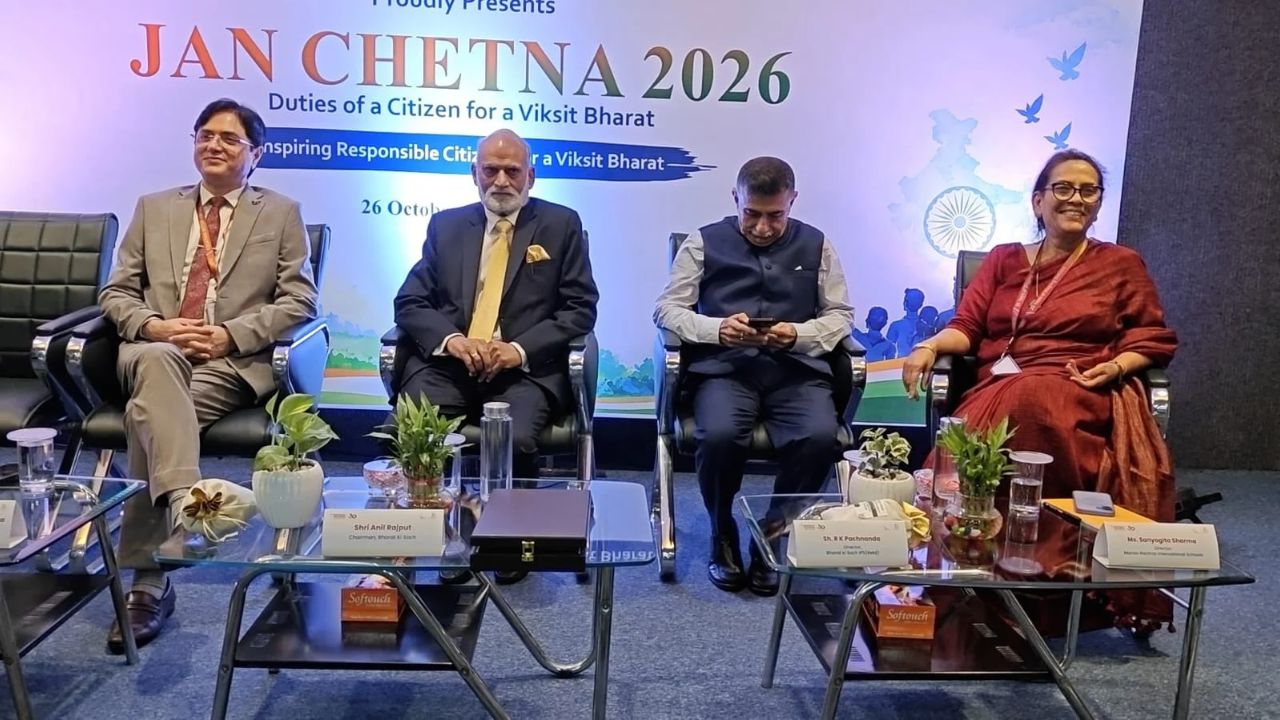
Bharat Ki Soch chairman Anil Rajput interacts with students during a Viksit Bharat-focused programme at Manav Rachna International School in Faridabad. (Img: X)
Faridabad: Building a developed India requires more than world-class infrastructure, economic growth and modern technology; it also demands strong moral values, responsible citizenship and a generation equipped to lead social change. This was the central message of a special educational initiative organised jointly by the Manav Rachna Centre for Peace and Sustainability and the Bharat Ki Soch think tank at Manav Rachna International School in Sector 43, Faridabad.
The programme, which began with a traditional lamp-lighting ceremony, brought together students from 12 reputed schools across Delhi-NCR, including six Manav Rachna International School campuses. The initiative sought to connect young learners with India’s civilisational heritage, ethical principles and the broader vision of Viksit Bharat, encouraging them to view nation-building as a shared responsibility rather than a task limited to the government.
During an exclusive interaction with Dynamite News, Anil Rajput, chairman of Bharat Ki Soch, outlined his perspective on the values-driven approach needed to achieve the vision of a developed India. He emphasised that national progress cannot be measured solely through skyscrapers, highways, industrial expansion or other visible indicators of infrastructure development. Equally important, he argued, is the country’s social and ethical capital, including integrity, mutual respect, civic responsibility and cultural awareness.
Rajput’s message placed human values and social conduct at the centre of the development debate. While physical infrastructure, technological advancement and economic opportunities remain essential components of national growth, he stressed the importance of strengthening India’s soft power through its people, traditions and ethical foundations.
The idea of a developed India, in this context, extends beyond material prosperity. It also involves nurturing citizens who respect others, act honestly, fulfil their civic duties and contribute constructively to their communities. Such values can help strengthen social cohesion and build a culture of accountability that complements the country’s economic and institutional progress.
Rajput also underlined that nation-building cannot be treated as the exclusive responsibility of elected representatives or government institutions. Every citizen has a role to play, and meaningful change begins when individuals translate principles into everyday actions.
He highlighted the importance of introducing these ideas at the school level, arguing that the foundations of responsible citizenship should be laid during childhood. Schools, families and community institutions can work together to help children understand the relationship between personal conduct, collective well-being and national development.
One of the key ideas discussed during the programme was the role of children in shaping society in the present, rather than being viewed only as the leaders of tomorrow.
Rajput observed that children can influence their parents, families and wider social circles through the values they learn and the behaviour they practise. Their curiosity, openness to new ideas and ability to question established habits can make them effective catalysts for positive change within households and communities.
This perspective places students at the centre of civic education, encouraging them to become active participants in social progress. When children learn about honesty, empathy, respect and responsibility, they can carry these principles beyond the classroom and influence everyday decisions at home and in their neighbourhoods.
The programme therefore highlighted the importance of moving beyond textbook-based learning towards a broader educational approach that integrates ethical reasoning, cultural awareness and practical citizenship. Such an approach can help students connect classroom lessons with real-life situations and understand how individual choices affect society.
The event also addressed concerns surrounding the growing influence of digital screens, social media and virtual environments on children’s lives. While digital platforms have expanded access to information and learning opportunities, the discussion emphasised the need to balance technology use with meaningful engagement, interpersonal relationships and an understanding of cultural traditions.
Participants highlighted the importance of introducing children to India’s civilisational heritage, traditional stories and ethical teachings while reinforcing values such as honesty, mutual respect and character development.
The objective was not simply to familiarise students with the past, but to help them understand how enduring principles can inform contemporary life. By connecting cultural knowledge with everyday responsibilities, educators can encourage young people to approach technology, relationships and social participation with greater awareness and maturity.
The discussion also underscored the role of parents and teachers in creating an environment where children can question, reflect and learn through constructive dialogue rather than relying entirely on digital content for information and entertainment.
A lively interactive session emerged as one of the highlights of the programme, with schoolchildren engaging directly with Rajput and raising questions about ancient stories, Indian culture and the responsibilities of a good citizen.
The students’ curiosity reflected an interest in understanding how traditional narratives and cultural values relate to modern life. Their questions also provided an opportunity to encourage critical thinking, dialogue and a deeper appreciation of the ethical principles that underpin responsible citizenship.
The interactive format gave students an opportunity to participate actively rather than remain passive listeners. By encouraging them to express their views and seek explanations, the session reinforced the importance of dialogue-based learning in developing confidence, awareness and civic understanding.
The participation of students from multiple schools across Delhi-NCR also created a platform for sharing perspectives and engaging with common questions about identity, responsibility and the future of Indian society.
The joint initiative by the Manav Rachna Centre for Peace and Sustainability and Bharat Ki Soch reflected an effort to bring value-based education into discussions on India’s long-term development aspirations.
The programme’s central message was that the journey towards Viksit Bharat must involve both material advancement and the development of responsible, ethically grounded citizens. By engaging children with cultural heritage, social responsibility and the importance of everyday civic conduct, such initiatives aim to connect the national development vision with the choices individuals make in their daily lives.
As India continues to pursue economic growth, technological innovation and stronger global standing, the emphasis on character, social harmony and responsible citizenship offers another dimension to the idea of national progress. The event in Faridabad placed schoolchildren at the heart of that conversation, presenting them not merely as the future of the country but also as participants capable of influencing society today.

