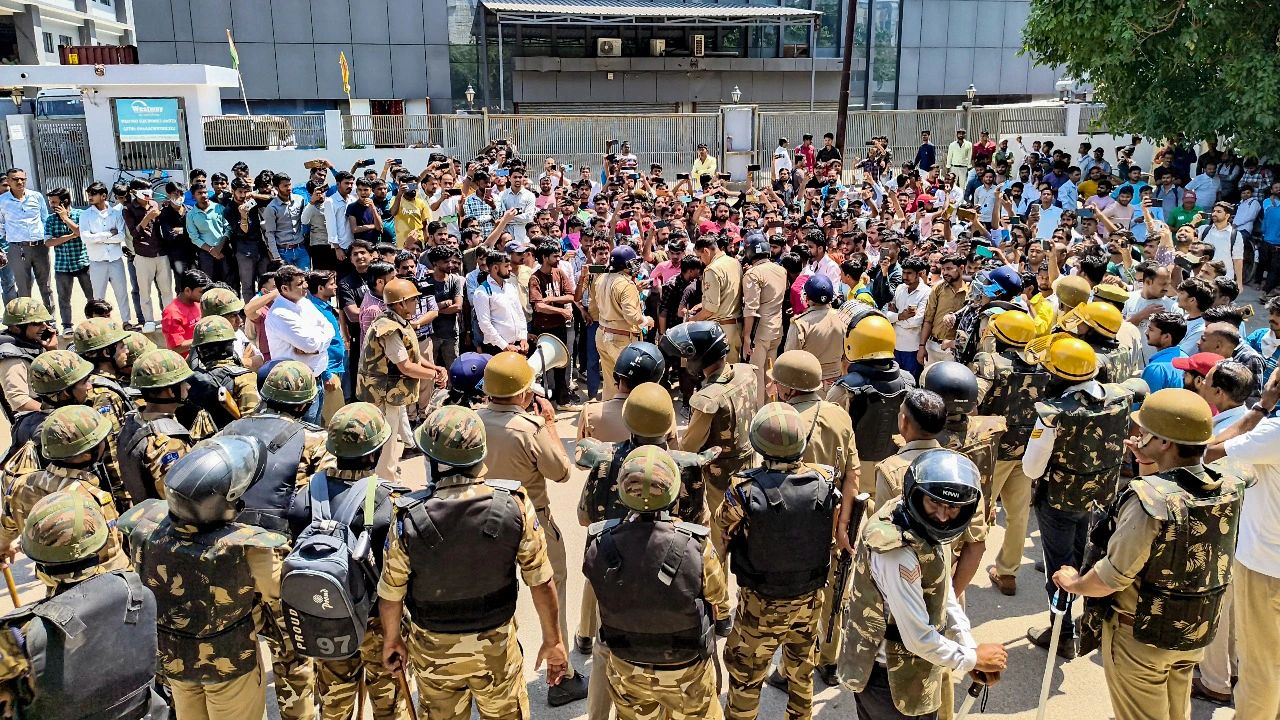
Noida-Faridabad wage protest
Noida: A wave of labour unrest that began in Noida, Uttar Pradesh, has spilled over into neighbouring industrial regions of Haryana, including Faridabad and Palwal, as thousands of factory workers took to the streets demanding fair and timely wage revisions.
What triggered the protests?
The immediate trigger appears to be a wage disparity dispute following Haryana’s announcement of a significant minimum wage increase. The state government had approved a 35% hike in minimum wages effective April 1, 2026, raising expectations among workers in adjoining industrial hubs, including Noida.
However, workers in Uttar Pradesh allege that many factories have not yet implemented comparable wage revisions or communicated clear timelines for compliance, leading to widespread frustration and distrust.
The unrest, which began in Noida on Monday, intensified over the next two days, with protests turning aggressive in several areas. Reports include incidents of stone-pelting, damage to public property, and the burning of vehicles, including police SUVs.
Protests spread to Haryana industrial belts
The agitation quickly spread to Haryana’s industrial regions, where approximately 7,500 workers in Palwal and Faridabad also staged demonstrations. While Haryana has already announced higher wage rates, workers there claim that many employers have failed to formally notify or implement the revised pay structure.
Labour representatives argue that the lack of transparency from factory management has worsened tensions. According to union voices, workers who had been earning significantly lower wages for years are now demanding immediate enforcement of the new pay rules.
What workers are demanding
The core demands of the protesting workers include:
Immediate implementation of revised minimum wages as announced by state governments
Equal pay structures across industrial regions to remove wage disparities between states
Clear written communication from employers regarding salary revisions
Strict enforcement of labour laws, including central minimum wage guidelines
Workers in Noida have also pointed to the wage gap between Uttar Pradesh and Haryana as a key reason for dissatisfaction, arguing that similar industrial work should not be compensated differently across neighbouring regions.
Wage revisions in Uttar Pradesh
In response to rising pressure, the Uttar Pradesh government also announced a wage increase for industrial workers in Gautam Buddha Nagar and Ghaziabad:
Unskilled workers: Rs 11,313 → Rs 13,690
Semi-skilled workers: Rs 12,445 → Rs 15,059
Skilled workers: Rs 13,940 → Rs 16,868
Despite this announcement, protests continued, with workers insisting that enforcement and clarity on implementation remain inadequate.
Police response and action taken
Following incidents of violence and property damage, police authorities registered seven FIRs and detained or arrested around 350 individuals. Officials have suggested that misinformation and poor communication between companies and workers played a significant role in escalating tensions.
The larger issue
At its core, the unrest reflects long-standing concerns over wage inequality, delayed implementation of labour reforms, and weak communication between employers and industrial workers in rapidly growing manufacturing zones across northern India.

