English
 English

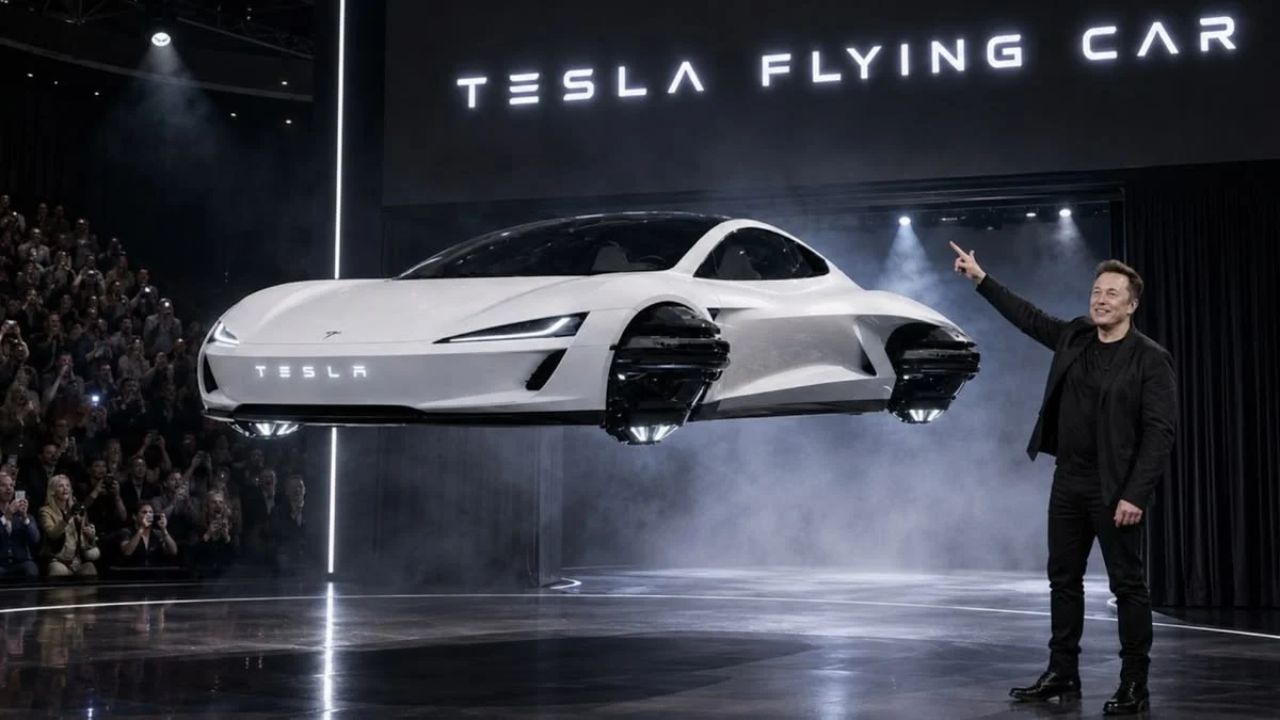
Tesla’s next-generation Roadster puts futuristic electric vehicle engineering in the spotlight as competition intensifies across the global automotive industry. (Img: X)
New Delhi: Tesla’s latest Roadster reveal has put the spotlight on a question far bigger than whether an electric sports car can take to the air: what does the future hold for the global automobile industry, and which manufacturers will lead it?
At an unveiling in Texas, Elon Musk’s electric vehicle company demonstrated a redesigned Roadster equipped with technology developed with SpaceX. The vehicle showcased dramatic manoeuvres involving cold-gas thrusters, including a brief airborne flip, alongside a system designed to generate suction beneath the car and hold it against an inverted surface.
The spectacle offered a glimpse of Tesla’s ambitions to push the boundaries of vehicle engineering. Yet its larger significance lies in the company’s evolving priorities at a time when the competitive landscape is being reshaped by Chinese manufacturers, advances in automation and the growing convergence of automobiles and artificial intelligence.
The Roadster occupies an unusual position in Tesla’s portfolio. First unveiled in 2017 as a high-performance electric sports car, the next-generation model has faced repeated delays, with production now indicated for 2028.
The latest demonstration has revived interest in the project, but the vehicle’s extraordinary capabilities remain distinct from the requirements of an ordinary production car. Tesla’s most radical Rocket configuration is listed as invitation-only and is not approved for public-road use.
For Musk, the Roadster also serves as a showcase for the company’s engineering ambitions. Tesla has increasingly directed attention towards autonomous driving, robotaxis and humanoid robots, signalling a possible transition from its traditional identity as an electric carmaker towards a broader technology and artificial intelligence enterprise.
That shift raises questions about the future of conventional car manufacturing within Tesla’s long-term strategy. While the Roadster can generate excitement around the brand, the company’s ability to deliver its wider ambitions will depend on translating technological demonstrations into commercially viable products.
The timing of Tesla’s announcement is significant because Chinese automakers have emerged as formidable competitors in the global electric vehicle market. Their strengths include manufacturing scale, battery expertise, cost management and the ability to bring new models to market rapidly.
As these manufacturers expand internationally, established Western companies face increasing pressure to defend their market share without sacrificing profitability. Competition is no longer restricted to vehicle performance; affordability, software, battery technology and production efficiency are becoming equally important determinants of success.
The challenge is particularly pronounced in Europe, where Chinese brands have gained visibility and intensified competition for established manufacturers. Their cost advantages have forced rivals to reassess product strategies and manufacturing economics.
Tesla itself helped accelerate the global transition towards electric mobility. However, the expansion of China's automotive industry has created a competitive environment in which the pioneering position of an electric vehicle manufacturer is no longer sufficient to guarantee market leadership.